

Outdoor adventures can be unpredictable. A familiar hiking trail can become difficult to navigate, changing weather can affect your plans, and a minor equipment problem can turn into a serious challenge when you’re far from help. Having the right survival tools can make these situations easier to manage and help you stay prepared when conditions change.
Whether you’re hiking, camping, exploring remote areas, or assembling an emergency preparedness kit, choosing practical outdoor survival equipment is an important part of planning. You don’t need an oversized collection of gear to prepare effectively. Instead, focus on versatile tools that help with navigation, lighting, fire-starting, hydration, shelter, repairs, and basic safety.
In this guide, we’ll explore 10 essential survival tools for outdoor emergencies, explain what to look for when choosing them, and discuss how each item can support different outdoor activities.
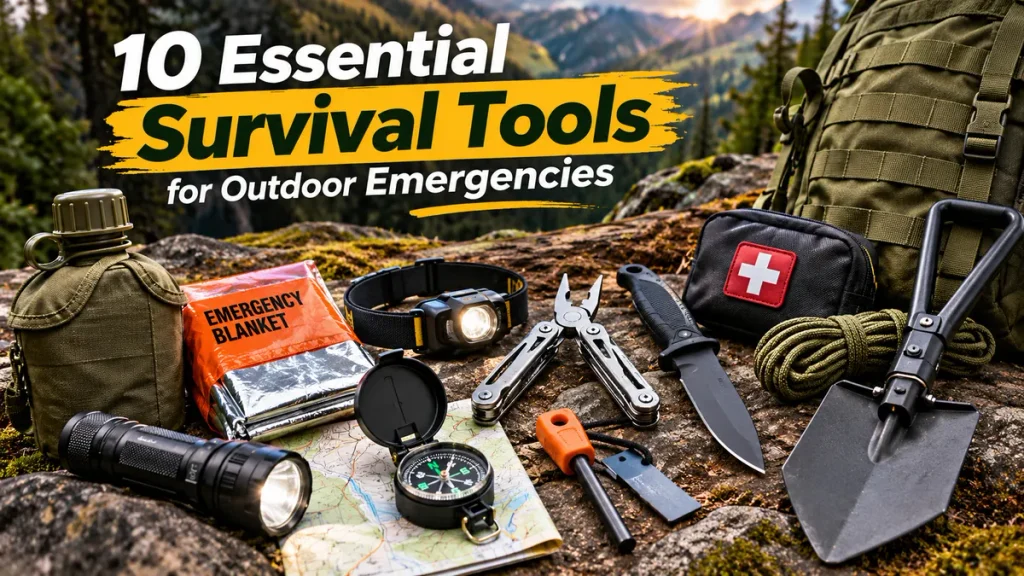
Why Are Survival Tools Important for Outdoor Activities?
Survival tools are designed to help manage unexpected situations when normal resources or assistance may not be readily available. A reliable flashlight can help you move safely after sunset, a navigation tool can help you identify your location, and an appropriate fire starter can provide an additional option for warmth and cooking where fires are permitted.
The right equipment depends on your destination, weather conditions, trip duration, and experience level. A short day hike may require a lightweight selection of essentials, while a remote camping trip may call for additional equipment and backup supplies.
The National Park Service recommends preparing for outdoor emergencies with essential systems covering navigation, illumination, first aid, fire, repair tools, hydration, and emergency shelter.
Rather than selecting equipment based only on appearance or the number of features, consider its practical purpose, reliability, portability, and ease of use.
10 Essential Survival Tools for Outdoor Emergencies
1. Multi-Tool for Versatile Outdoor Repairs
A multi-tool is one of the most practical additions to an outdoor survival kit. Instead of carrying several separate tools, a compact multi-tool combines different functions into one portable design.
Depending on the model, features may include pliers, screwdrivers, scissors, a can opener, and other utility components. These tools can help with minor equipment adjustments, opening packaged supplies, tightening loose components, and handling everyday outdoor repair tasks.
When choosing a multi-tool, consider the following features:
- Stainless steel construction for everyday durability.
- Secure locking mechanisms where applicable.
- Comfortable handles and accessible tool components.
- A practical combination of functions.
- Compact dimensions for convenient storage.
You don’t necessarily need the largest multi-tool available. Choose one with features that match your outdoor activities and learn how to operate each component before relying on it.
2. Fire Starter for Emergency Fire Preparation
A dependable fire starter can be useful when you need an additional source of ignition during outdoor activities. Depending on local regulations and conditions, fire can provide warmth, support cooking, and serve as an emergency signal.
Common fire-starting options include:
- Ferrocerium rods.
- Magnesium fire starters.
- Waterproof matches.
- Refillable lighters.
- Compact emergency fire-starting kits.
When comparing fire starters, look at ease of use, portability, ignition method, and performance in wet conditions. Some models require practice and suitable tinder to produce a sustained flame.
A ferro rod, for example, produces sparks when scraped with an appropriate striker. Magnesium fire starters use combustible magnesium shavings together with a spark-producing component.
Carrying two suitable ignition options can provide useful redundancy. However, always follow local fire restrictions, use designated fire areas where permitted, and completely extinguish fires before leaving.
3. Flashlight or Headlamp for Reliable Lighting
Lighting becomes especially important when outdoor activities continue after sunset or when you need to locate equipment in low-visibility conditions.
A flashlight provides focused illumination, while a headlamp keeps both hands available for other tasks. Both can be useful additions to a survival kit.
Before purchasing an outdoor light, consider:
- Brightness and adjustable lighting modes.
- Battery type and expected runtime.
- Water resistance.
- Size and carrying weight.
- Ease of operation with gloves.
- Availability of replacement batteries.
Rechargeable lights can be convenient for regular use, while battery-powered models offer another option when charging facilities are unavailable.
Always carry spare batteries or a suitable backup power source. Check your lighting equipment before leaving and avoid relying exclusively on a smartphone flashlight.
4. Compass and Physical Map for Navigation
Navigation is one of the most important parts of outdoor preparedness. Mobile navigation applications and GPS devices are useful, but electronic equipment can lose power, become damaged, or stop receiving a signal.
A physical map and compass provide an additional navigation method that does not depend on cellular coverage.
A basic navigation setup should include:
- A map covering your destination.
- A reliable compass.
- Knowledge of basic map-reading techniques.
- Offline maps stored on your phone when available.
- A backup navigation option for remote activities.
When selecting a compass, look for clear markings, a readable direction indicator, and a design suited to your intended use.
Before starting a trip, review your route and identify important landmarks. Understanding how to use a map and compass is just as important as carrying them.
For longer or remote trips, consider a suitable GPS device or satellite communication equipment as an additional navigation and communication option.
Be Prepared for the Unexpected! Explore Army Navy USA’s collection of outdoor survival gear, essential tools and emergency equipment to stay prepared for your next outdoor adventure.
5. Emergency Blanket for Lightweight Weather Protection
An emergency blanket is a compact piece of equipment that can provide an additional layer of protection during unexpected outdoor situations.
Many emergency blankets use reflective materials designed to reduce radiant heat loss. Their lightweight construction makes them easy to store in a backpack, vehicle emergency kit, or outdoor preparedness pack.
Emergency blankets can be useful when:
- Unexpected weather delays your return.
- You need an additional layer of protection from exposure.
- You are waiting for assistance.
- You need lightweight emergency equipment that takes up little storage space.
When choosing an emergency blanket, consider its dimensions, material, durability, packaging, and intended use.
Remember that an emergency blanket is not a replacement for suitable outdoor clothing or a properly rated sleeping system. Wind, rain, ground moisture, and cold conditions may require additional protection.
6. Water Purification Supplies for Safe Hydration
Access to drinking water is essential during outdoor activities. However, water collected from rivers, streams, lakes, and other natural sources should not automatically be considered safe to drink.
Water treatment supplies can help reduce certain risks associated with contaminated water, depending on the treatment method and the contaminants present.
Common options include:
- Water purification tablets.
- Portable water filters.
- Approved water treatment systems.
- Suitable water storage containers.
When selecting water treatment products, check which microorganisms and contaminants the specific product is designed to address. Different treatment methods have different limitations.
For example, some chemical treatments are effective against certain microorganisms but may not remove chemical contaminants or sediment. Filters also vary in their ability to address different contaminants.
Follow the manufacturer’s instructions for treatment time, dosage, and water conditions. If water is cloudy, follow the recommended pre-filtration or settling instructions.
Planning your water supply before departure is always preferable to depending entirely on finding natural water sources.
7. Survival Knife for General Utility Tasks
A suitable outdoor utility knife can help with everyday tasks such as cutting cord, preparing materials, and handling basic campsite activities.
Knife designs vary considerably, and the right option depends on the intended application.
Common styles include:
- Fixed-blade knives.
- Folding pocket knives.
- Drop-point utility knives.
- Straight-edge knives.
- Multi-purpose pocket knives.
When comparing outdoor knives, consider blade material, handle construction, overall dimensions, weight, corrosion resistance, and ease of maintenance.
A comfortable handle and a secure carrying arrangement are important considerations. A folding knife may be convenient for compact storage, while a fixed-blade design offers a different construction and carrying format.
Keep knives clean, dry, and properly stored. Use them only for their intended purposes, follow safe handling practices, and check applicable laws before carrying them.
8. Folding Shovel for Outdoor Utility Tasks
A folding shovel is a practical addition to certain camping and outdoor equipment setups. Its compact design makes it easier to transport than many traditional full-size tools.
Depending on the model and construction, a folding shovel may be useful for:
- Moving loose soil.
- Clearing small amounts of debris.
- Preparing an appropriate campsite surface.
- Handling basic outdoor maintenance tasks.
- Supporting permitted campsite activities.
When choosing a folding shovel, inspect the handle, locking mechanism, blade construction, folded dimensions, and overall weight.
A shovel should be appropriate for the work you intend to perform. Lightweight models are easier to carry, while heavier designs may offer different durability and handling characteristics.
Check local campsite regulations before digging or altering the ground. Avoid disturbing protected areas, vegetation, and archaeological or environmentally sensitive locations.
9. Emergency Whistle for Signaling and Communication
An emergency whistle is a small but useful signaling tool that can help attract attention when visibility is limited or verbal communication is difficult.
Unlike shouting, a whistle can produce a more consistent sound with less physical effort. It can also be easier for others to distinguish from ordinary outdoor background noise.
When selecting an emergency whistle, consider:
- Sound output and audibility.
- Compact size.
- Weather-resistant construction.
- A secure attachment point.
- Ease of access.
Keep the whistle somewhere accessible, such as on a backpack strap or another suitable carrying point.
Before heading into remote areas, understand the local emergency communication procedures and carry an appropriate communication device when necessary. A whistle is a backup signaling tool, not a replacement for emergency services or a reliable communication system.
10. Repair Kit for Unexpected Equipment Problems
Outdoor equipment can experience wear, loose connections, damaged straps, or minor failures during use. A small repair kit can help address some of these problems without requiring a complete replacement of the affected equipment.
Useful repair supplies may include:
- Duct tape.
- Utility cord.
- Zip ties.
- Small repair tools.
- Spare buckles or compatible fasteners.
- Basic sewing supplies.
- Equipment-specific replacement components.
The contents should reflect the equipment you plan to carry. For example, someone using a hydration pack may prioritize compatible hose or buckle repairs, while a camping setup may benefit from repair supplies for straps, shelter components, and other accessories.
Keep repair materials organized in a waterproof pouch so they remain accessible when needed.
A repair kit is most useful when you understand how to use its contents. Check your equipment before every trip and replace missing or damaged supplies.
How to Choose the Right Survival Tools
Not every outdoor adventure requires the same equipment. The best survival kit is built around realistic needs rather than collecting as many products as possible.
Before purchasing survival tools, consider these factors:
1. Intended Activity
Think about whether you will be hiking, camping, exploring remote areas, traveling, or preparing for household emergencies. Each activity has different equipment requirements.
2. Portability and Weight
Equipment should be practical to carry. Heavy or oversized tools can take up valuable storage space and make a backpack unnecessarily difficult to manage.
3. Material and Construction
Compare product materials, construction quality, closures, handles, and other specifications. Look for designs appropriate for your intended environment.
4. Ease of Use
A tool is only useful when you know how to operate it. Practice using your navigation equipment, fire starter, lighting, and other essential gear before an emergency occurs.
5. Backup Options
Consider carrying alternatives for critical functions such as lighting, navigation, and fire-starting. Backup equipment can be especially important during extended or remote outdoor activities.
Survival Tools Checklist: What to Carry
Use this quick reference when preparing your outdoor equipment:
| Survival tool | Main purpose |
|---|---|
| Multi-tool | General repairs and utility tasks |
| Fire starter | Emergency ignition |
| Flashlight or headlamp | Low-light visibility |
| Map and compass | Backup navigation |
| Emergency blanket | Additional exposure protection |
| Water purification supplies | Water treatment |
| Outdoor utility knife | General cutting tasks |
| Folding shovel | Outdoor utility work |
| Emergency whistle | Audible signaling |
| Repair kit | Minor equipment repairs |
Your final selection should also include suitable food, water, first aid supplies, weather-appropriate clothing, and emergency communication equipment.
How to Maintain Your Outdoor Survival Equipment
Buying survival tools is only the first step. Regular inspection and maintenance help ensure your equipment remains ready for its intended use.
Before each trip:
- Check batteries and recharge electronic devices.
- Inspect knife blades and clean them as directed by the manufacturer.
- Check fire starters and waterproof matches.
- Inspect emergency blankets and packaging.
- Review the condition of your water treatment supplies and expiration dates.
- Clean and dry hydration equipment according to manufacturer instructions.
- Check repair materials, cords, and attachments.
- Confirm that your map and navigation information are current.
After returning from an outdoor trip, clean equipment, dry items thoroughly, replace used supplies, and store everything in an appropriate location.
A simple maintenance routine can help prevent damaged or missing equipment from becoming an unexpected problem.
Final Thoughts
The right survival tools can make outdoor emergencies easier to manage by helping you navigate, communicate, stay hydrated, protect yourself from the elements, and address unexpected equipment problems.
Start with practical essentials such as a multi-tool, fire starter, flashlight, map and compass, emergency blanket, water treatment supplies, and repair equipment. Then adjust your setup according to your destination, weather conditions, trip duration, and personal requirements.
You do not need to carry every available survival product. Focus on equipment that serves a clear purpose, is suitable for your environment, and is easy to use when needed.
Explore outdoor survival tools and essential equipment at Army Navy USA to find practical additions to your outdoor gear collection.
Frequently Asked Questions
What are the most important survival tools for beginners?
Beginners should start with basic navigation equipment, a flashlight, first aid supplies, a suitable fire starter, water storage and treatment supplies, an emergency blanket, and a multi-purpose tool. Choose equipment appropriate for the planned activity and learn how to use it before departure.
What should I keep in an outdoor survival kit?
An outdoor survival kit should address navigation, lighting, hydration, first aid, shelter, weather protection, communication, and basic repairs. Its contents should depend on the environment, activity, trip duration, and number of people.
Is a multi-tool better than a survival knife?
They serve different purposes. A multi-tool combines several utility functions, while a knife is primarily designed for cutting tasks. Some outdoor kits benefit from carrying both, depending on weight, requirements, and applicable regulations.
Why should I carry a backup fire starter?
A backup ignition source provides another option if your primary fire starter becomes wet, damaged, lost, or difficult to use. Choose compatible options and practice using them safely.
How do I choose the right emergency blanket?
Compare the blanket’s dimensions, material, durability, packaging, and intended application. Consider the conditions you may encounter and remember that an emergency blanket does not replace proper shelter and suitable clothing.
How often should I inspect survival tools?
Check your equipment before every outdoor trip. Also establish a regular maintenance schedule to inspect batteries, replace expired supplies, clean tools, and ensure all essential equipment remains in working condition.
