

When temperatures start dropping, having the right clothing makes a noticeable difference in how comfortable you feel outdoors. Whether you’re working outside, camping, hiking or preparing for winter field activities, choosing suitable military cold weather gear can help you stay comfortable and manage changing conditions.
Military winter clothing is designed around practical layering, useful materials and functional designs. From thermal underwear and fleece jackets to insulated parkas, winter gloves and watch caps, each layer has a different purpose. You don’t necessarily need the heaviest jacket available. You need clothing that works together and suits the weather you’re going to face.
If you’re wondering what to wear in cold weather, this guide explains the essential clothing and equipment to consider, how to build a practical winter layering system and what to look for when shopping for cold weather gear.
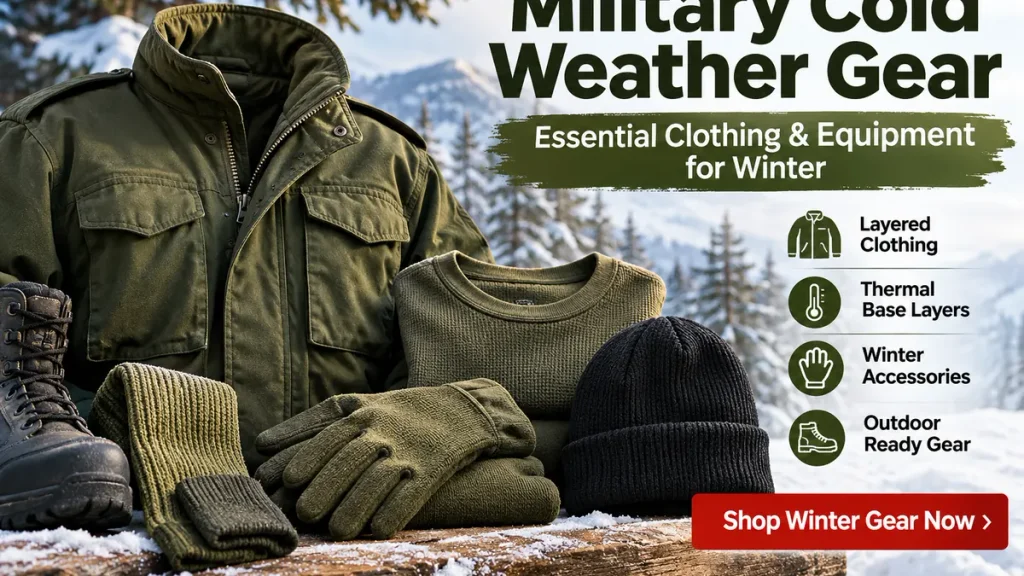
1. Why Is Military Cold Weather Gear Important?
Cold weather affects more than just your comfort. Spending extended periods outdoors in low temperatures can make ordinary clothing feel inadequate, especially when wind, rain or snow are involved.
A suitable cold weather clothing system helps you manage body temperature while allowing you to move comfortably. Instead of depending on one thick coat, military-style winter clothing uses multiple layers that can be adjusted as conditions change.
For example, someone working outdoors may need a thermal base layer, a warm mid-layer and an outer jacket. Someone hiking may prefer lighter layers that are easier to pack and adjust during activity.
The best military winter clothing depends on several factors:
- Expected temperature and weather conditions
- How long you’ll spend outdoors
- Whether you’ll be walking, working or standing still
- How much protection your outer layer provides
- Whether you need lightweight or heavier clothing
- The fit and compatibility of different clothing layers
Before buying winter gear, consider your activities and the conditions you’ll encounter. This makes it easier to choose useful clothing instead of purchasing items you may rarely wear.
2. Start With Thermal Base Layers
A good winter outfit starts underneath your regular clothing. Thermal base layers sit close to the skin and help manage moisture and comfort when temperatures drop.
If you’re spending time outdoors in winter, ordinary cotton T-shirts and lightweight pants may not provide the comfort you need. Thermal tops and bottoms are useful options for adding a dedicated layer beneath uniforms, workwear or everyday clothing.
What should you look for in thermal underwear?
When shopping for military thermal underwear, consider the following:
- Lightweight thermal layers: Useful when you need an additional layer without adding too much bulk.
- Midweight thermal clothing: A practical option for colder days and regular outdoor activities.
- Heavyweight thermal underwear: Worth considering when temperatures are particularly low or you spend extended periods outdoors.
- Comfortable fit: Base layers should fit comfortably underneath your other clothing without restricting movement.
You can also compare different styles, including crew-neck thermal shirts, zip-neck tops and thermal bottoms.
For example, Army Navy USA carries thermal clothing from Rothco ECWCS and Indera Mills, including silk-weight, midweight and heavyweight options.
Shopping tip: If you’re purchasing a complete winter outfit, consider matching thermal tops and bottoms rather than relying on only one base layer.
Explore Military Thermal Base Layers and compare thermal tops, bottoms and different weight options for your winter clothing setup.
3. Choose a Warm Military or Tactical Jacket
Your outer jacket is one of the most important parts of a winter clothing setup. It provides an additional barrier against the weather and helps complete your layering system.
There are several types of military winter jackets to consider, depending on your activities and preferences.
M-65 Field Jackets
M-65 field jackets are recognizable military-inspired outerwear styles. They are a popular choice for people who prefer a classic military appearance and practical everyday clothing.
When comparing M-65 jackets, check the lining, shell material, available sizes and whether the specific model is designed for colder weather. Not every M-65 jacket provides the same level of insulation.
Fleece Jackets
Fleece jackets are useful mid-layers for adding warmth beneath an outer shell. They can also be worn independently during cool weather.
A military fleece jacket is worth considering if you want something that can be combined with thermal clothing and a heavier jacket when temperatures fall further.
Insulated Jackets and Parkas
For colder conditions, insulated jackets and parkas provide another option. Compare the insulation, construction, fit and intended weather conditions before choosing.
Some jackets are designed for everyday winter wear, while others are made for demanding work environments or outdoor use.
Tactical Soft Shell Jackets
Soft shell jackets offer a different approach to outerwear. Depending on the product, they may provide features suited to wind, light moisture or active outdoor use.
Always review the manufacturer’s listed specifications instead of assuming every soft shell jacket offers the same weather protection.
Shopping tip: Think about how you’ll wear your jacket. If you plan to add a fleece and thermal layer underneath, check the sizing and fit before ordering.
Shop Military & Tactical Outerwear to compare field jackets, soft shells, insulated parkas and other winter outerwear.
4. Use Fleece and Hoodies for Additional Warmth
A jacket alone may not be enough for every winter activity. Adding a mid-layer gives you more flexibility when temperatures change throughout the day.
Fleece jackets and hoodies are two common choices for this purpose.
Fleece jackets are useful for layering because they can add warmth without necessarily making your outfit as bulky as a heavy winter coat.
Hoodies and sweatshirts provide another comfortable option for everyday wear, travel and outdoor activities. They can be worn over thermal tops or beneath suitable outerwear.
When choosing a mid-layer, consider:
- Fabric and material
- Overall thickness
- Fit beneath your jacket
- Ease of movement
- Available colors and sizes
- Whether you need a hood or prefer a collar
For example, Rothco fleece options and ECWCS-style fleece jackets offer military-inspired layering choices.
Avoid choosing a mid-layer that is so tight that it restricts movement or makes your outer jacket uncomfortable.
5. Don’t Overlook Winter Gloves
Your hands are exposed to cold air during many outdoor activities, so winter gloves deserve attention when planning your cold weather military gear.
The right gloves depend on what you will be doing. Someone working with tools may need a different design from someone walking, hiking or spending time outdoors.
Here are a few options to compare:
- Wool gloves: A traditional option for cold-weather wear.
- Glove liners: Lightweight layers that can be worn underneath compatible outer gloves.
- Insulated gloves: Worth considering for activities that involve extended exposure to low temperatures.
- Fingerless gloves: Provide access to your fingers for tasks requiring more dexterity, although they leave fingers exposed.
For example, Army Navy USA features Rothco wool glove liners and other glove styles.
When shopping for military winter gloves, consider fit, material, insulation and whether you need flexibility for handling equipment.
Browse Work Gloves and Apparel to compare available glove styles and other clothing accessories.
6. Protect Your Head, Ears and Neck
Winter accessories are easy to overlook when purchasing jackets and thermal clothing. However, a suitable hat and neck covering can make outdoor activities more comfortable.
Watch Caps and Knit Beanies
A military-style watch cap is a practical option for everyday cold-weather clothing. Knit beanies and wool caps are also worth considering.
Look for a comfortable fit that stays in place without feeling too tight.
Balaclavas and Face Coverings
Balaclavas and face coverings provide additional coverage around the face and neck. They can be useful when working outdoors or participating in winter activities.
Compare the material, coverage and fit, particularly if you plan to wear one beneath a hood or helmet.
Neck Gaiters
A neck gaiter is another useful accessory for covering the neck. It can be worn with jackets, hoodies and other winter clothing.
Shopping tip: Choose accessories based on your activity. A simple watch cap may be enough for everyday wear, while longer outdoor activities may call for additional face and neck coverage.
Explore Military and Tactical Headwear to find watch caps, knit beanies, balaclavas and other headwear options.
7. Select Winter Socks and Suitable Footwear
Cold feet can make an outdoor day uncomfortable, even when the rest of your clothing is suitable. Winter socks and appropriate footwear should therefore be part of your preparation.
When choosing military winter socks, consider:
- Material and fabric composition
- Cushioning and thickness
- Fit inside your boots
- Length and coverage
- Moisture management features listed by the manufacturer
Thicker socks are not automatically the best choice. If they make your boots too tight, they may reduce comfort.
Your boots also need to match the conditions. For wet or snowy environments, review the product specifications for waterproofing, insulation, traction and intended use.
For work environments, check whether your footwear needs additional safety features such as protective toes or slip-resistant soles.
Explore Military and Tactical Footwear to compare boots and socks for your winter activities.
8. Build a Practical Winter Layering System
One of the easiest ways to prepare for winter is to understand how different clothing layers work together.
Rather than wearing one extremely heavy jacket, you can build a clothing system that allows you to adjust your outfit depending on temperature and activity.
Here is a simple example:
Layer 1: Base Layer
Start with thermal underwear or a suitable base-layer top and bottom.
The purpose is to provide a comfortable first layer beneath your regular clothing.
Layer 2: Mid-Layer
Add a fleece jacket, hoodie or sweatshirt.
This layer provides additional warmth and can be adjusted depending on the weather.
Layer 3: Outer Layer
Finish with a suitable military jacket, tactical soft shell or insulated parka.
Choose the outer layer according to the expected wind, rain, snow and temperature.
Add Accessories
Complete your clothing setup with gloves, winter socks, a watch cap and a neck covering.
The exact combination depends on your activities. Someone walking regularly may prefer lighter clothing, while someone standing outdoors for long periods may need more substantial insulation.
Remember: Layering is about flexibility. You should be able to add or remove clothing without making your outfit uncomfortable.
9. What Military Cold Weather Gear Do You Need for Different Activities?
Not everyone needs the same winter clothing. Your shopping list should depend on how you plan to use your gear.
| Activity | Clothing and equipment to consider |
|---|---|
| Camping | Thermal base layers, fleece, suitable jacket, gloves and warm socks |
| Hiking | Lightweight layers, weather-appropriate outerwear, headwear and suitable boots |
| Outdoor work | Thermal clothing, work jacket, suitable gloves and work boots |
| Winter travel | Comfortable layers, hoodie, jacket and winter accessories |
| Field activities | Military-style base layers, fleece, suitable outerwear and practical accessories |
| Everyday winter wear | Thermal top, sweatshirt, jacket, beanie and suitable footwear |
For example, someone buying military cold weather clothing for outdoor work may prioritize a comfortable work jacket and gloves. A camper may need additional layers that are easy to pack and adjust.
Consider the duration of your activity, weather forecast and access to shelter before deciding what to purchase.
10. How to Choose the Right Military Winter Clothing
Before ordering winter gear, take a few minutes to compare product details.
Check the Material
Different materials have different characteristics. Review the fabric composition and construction rather than choosing only by appearance.
Compare Insulation
Not all jackets and parkas have the same insulation. Check whether the product description specifies lining, insulation type or intended temperature conditions.
Choose the Correct Size
Winter clothing often needs to accommodate additional layers. Check the sizing chart and consider how much room you need underneath your jacket.
Look at Weather Protection
If you expect rain, snow or strong winds, look for products with clearly listed waterproof, water-resistant or wind-resistant features.
These terms are not interchangeable, so read the specifications carefully.
Consider Your Budget and Actual Needs
You don’t need to purchase every winter accessory at once. Start with the clothing you need most, then add items according to your activities and local weather.
A practical winter wardrobe is one that works for your daily routine rather than one filled with unnecessary equipment.
11. Where to Buy Military Cold Weather Gear?
Finding the right winter clothing is easier when you can compare different product types, brands, sizes and materials in one place.
At Army Navy USA, you can explore military-inspired outerwear, thermal base layers, tactical jackets, fleece clothing, gloves and cold-weather headwear.
Some options worth checking include:
- Rothco ECWCS thermal clothing
- Indera Mills thermal base layers
- Rothco military fleece jackets
- Carhartt insulated jackets
- M-65 field jackets
- Winter watch caps and wool headwear
- Wool gloves and glove liners
Compare the listed product specifications, available sizes and current stock before making a purchase.
Ready to prepare for colder weather? Browse the Winter Work Essentials collection to explore jackets, hoodies, thermal layers and other seasonal clothing.
You can also visit Army Navy USA to explore military clothing, tactical gear, workwear and outdoor essentials.
Frequently Asked Questions
1. What is the best military cold weather gear for winter?
A practical winter setup usually includes thermal base layers, a fleece or sweatshirt, suitable outerwear, gloves, warm socks and headwear. The best combination depends on temperature, weather conditions and activity.
2. What should you wear under a military winter jacket?
A thermal shirt or base layer is a good starting point. You can add a fleece jacket or sweatshirt between the base layer and outer jacket when additional warmth is needed.
3. What is military thermal underwear?
Military thermal underwear is designed to be worn beneath regular clothing as a base layer. It comes in different weights and styles, including thermal shirts, pants and long underwear.
4. Are fleece jackets good for winter?
Fleece jackets can be useful mid-layers during winter. They are often worn beneath a suitable outer jacket or on their own in milder cold conditions. Check the specific product’s construction and intended use.
5. What is the difference between a field jacket and a winter parka?
A field jacket is generally a military-inspired jacket style, while a winter parka is typically designed with additional coverage and may include insulation. Their actual warmth and weather protection depend on the individual model.
6. How do I choose the right winter gloves?
Consider the activity, temperature, material, insulation and fit. For outdoor work, prioritize a glove that suits the tasks you perform. For general cold-weather use, compare wool gloves, liners and insulated styles.
7. Is layering better than wearing one heavy jacket?
Layering provides more flexibility because you can adjust your clothing as conditions change. A suitable base layer, mid-layer and outer layer can be more adaptable than relying on a single heavy garment.
8. What should I check before buying military winter clothing online?
Check the size chart, material, insulation, available colors, product features and return policy. Make sure the clothing is appropriate for the weather and activity you have in mind.
Final Thoughts
Preparing for winter doesn’t have to mean buying an entirely new wardrobe. Start with the essentials: a suitable thermal base layer, a comfortable mid-layer, appropriate outerwear and accessories that match your activities.
The right combination of military winter clothing, tactical jackets, thermal underwear and cold-weather accessories can help you prepare for colder days at work, outdoors or during your next adventure.
Explore the winter clothing and gear available at Army Navy USA, compare your options and build a setup that fits your needs.
Gear up for winter. Find your cold-weather essentials at Army Navy USA today.
