

Great trips start long before you reach the trailhead. They start with smart choices about what you carry. The right best camping gear keeps you warm, dry, fed, and safe—without weighing you down or draining your budget.
You don’t need to own every gadget on the shelf. You need equipment that matches your trip, your terrain, and your experience level. This guide is for weekend campers and first-timers alike. Here’s what you’ll learn:
Where to buy camping gear online without overspending
How to pick gear that fits your specific trip
Which camping essentials actually earn a spot in your pack
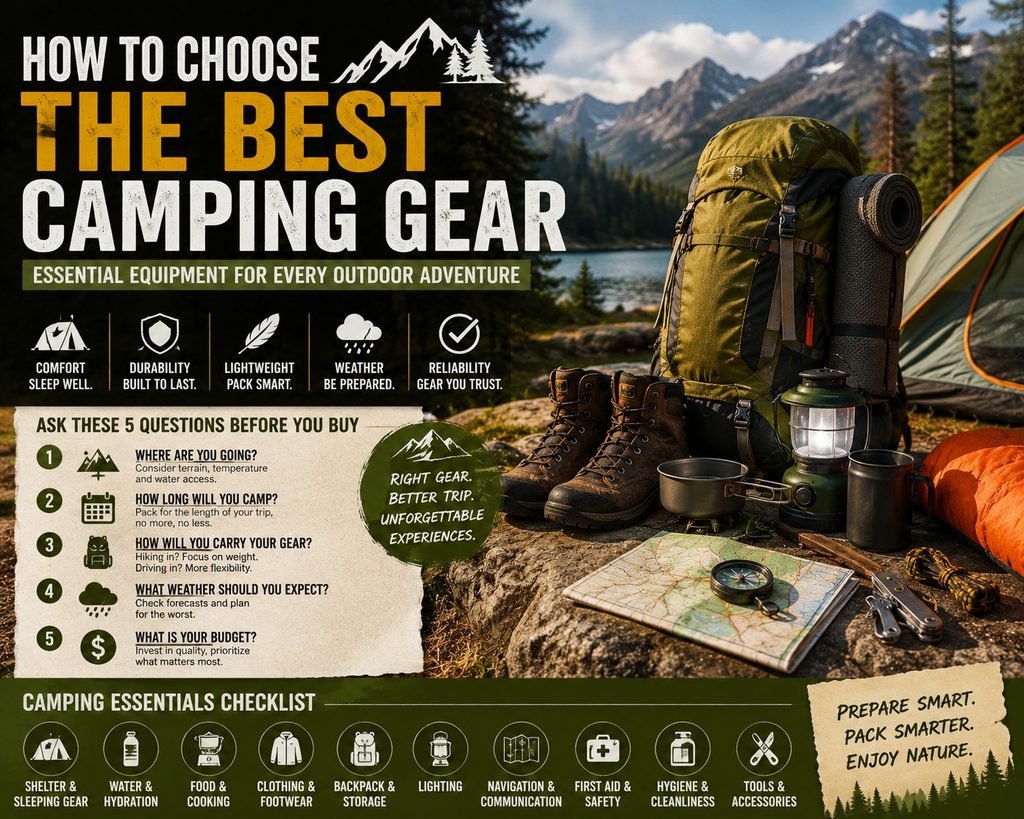
What Camping Gear Do You Actually Need?
The right camping equipment depends on where you’re going, how long you’ll be there, the weather, and whether you’re camping at an established campground or traveling farther into the outdoors.
For most trips, start with these basic categories:
- Shelter and sleeping equipment
- Water and hydration
- Food and cooking supplies
- Appropriate clothing
- Hiking or camping footwear
- Backpack or storage bags
- Lighting
- Navigation and communication equipment
- First aid and emergency supplies
- Personal hygiene items
- Basic outdoor tools
If you’re buying camping gear for beginners, don’t feel pressured to purchase everything at once. Start with the equipment you’ll use most often and add specialized items as your experience grows.
How Do You Choose the Best Camping Gear?
The best camping gear isn’t necessarily the most expensive gear. It should match your activity, environment, budget, and experience level.
Before you buy camping equipment, consider five questions:
1. Where Are You Going?
A summer campground requires different equipment from a remote mountain campsite. Think about terrain, temperature, rain, wind, and access to water.
2. How Long Will You Be Camping?
A one-night trip doesn’t require the same amount of equipment as a week-long adventure.
3. How Will You Carry Your Gear?
If you’ll be hiking to your campsite, weight and packability matter. If you’re driving directly to the campsite, you have more flexibility.
4. What Weather Should You Expect?
Check the forecast and prepare for reasonable changes in conditions. Your clothing, shelter, sleeping system, and footwear should all suit the environment.
5. How Often Will You Use It?
If you’re planning frequent trips, investing in durable camping gear can make more sense than repeatedly replacing inexpensive equipment.
Essential Camping Gear for Every Outdoor Adventure
1. Choose the Right Camping Backpack
A dependable backpack makes transporting your equipment much easier, particularly when your campsite isn’t close to your vehicle.
When choosing a camping backpack, consider:
- Capacity
- Fit
- Weight
- Organization
- Adjustable straps
- Accessibility
- Durability
For day trips, a smaller pack may be enough. Longer trips may require additional capacity for clothing, food, water, and shelter equipment.
If you’re combining hiking and camping, look for camping gear for hiking and camping that can be comfortably carried over longer distances.
The most important thing is not simply choosing the largest backpack. Choose a size that fits your trip and prevents you from carrying unnecessary equipment.
2. Prioritize Water and Hydration
Water should always be one of your first considerations when planning an outdoor trip.
Depending on your destination, you may need:
- Reusable water bottles
- Hydration packs
- Water containers
- Water purification equipment
- Collapsible storage
A hydration pack can be particularly convenient during hiking because you can drink without repeatedly stopping to remove your backpack.
If you’re looking to buy camping gear online, hydration equipment is one of the easiest categories to match to your specific activity because you can choose capacity and style based on trip length.
Shop Hydration Packs at Army Navy USA
3. Select Clothing for the Environment
The right clothing can make camping much more comfortable.
Instead of relying on one heavy layer, consider clothing that can be layered according to changing temperatures.
Useful camping clothing and gear may include:
- Moisture-managing base layers
- Durable outdoor pants
- Lightweight shirts
- Insulated layers
- Rain jackets
- Warm outerwear
- Hats and gloves
- Extra socks
For warm-weather trips, breathable clothing can help you stay comfortable. For cold-weather camping, insulation and layering become much more important.
Always bring an extra layer appropriate for the conditions, even when the forecast looks favorable.
4. Don’t Overlook Camping Footwear
Your footwear should match the terrain and the amount of walking you’ll be doing.
For established campsites, comfortable outdoor shoes may be sufficient. If you’re hiking several miles to reach camp, hiking boots or other supportive footwear may be a better choice.
When choosing camping footwear, consider:
- Terrain
- Traction
- Comfort
- Fit
- Weather resistance
- Weight
- Ankle support
For wet environments, waterproof footwear can help keep your feet dry. For warmer conditions, breathable footwear may be more comfortable.
Avoid taking brand-new footwear on a long trip without wearing it beforehand. A comfortable fit matters far more than how impressive a pair of boots looks.
5. Bring Lighting You Can Depend On
Once the sun goes down, reliable lighting becomes essential.
Consider carrying:
- Flashlights
- Headlamps
- Spare batteries
- Rechargeable lights
- Backup lighting
A headlamp can be particularly useful because it leaves both hands available while setting up camp, organizing equipment, or walking around your campsite.
When purchasing essential camping equipment, don’t forget backup batteries or another charging option when appropriate.
6. Pack Weather Protection
Weather can change quickly outdoors. A sunny afternoon doesn’t guarantee a dry evening.
Useful weather-protection items can include:
- Rain jackets
- Rain pants
- Ponchos
- Waterproof bags
- Tarps
- Extra clothing layers
- Weather-resistant storage
Good outdoor camping gear should help you remain comfortable when conditions don’t go exactly according to plan.
Keeping clothing and important supplies protected from moisture can also make a major difference during a wet trip.
7. Consider Food and Cooking Equipment
Food planning depends heavily on the type of camping trip you’re taking.
At a developed campsite, you may have access to cooking facilities or your vehicle. On a more remote trip, you’ll need to think more carefully about weight, preparation, storage, and cleanup.
Consider:
- Non-perishable food
- Easy-to-prepare meals
- Reusable food containers
- Appropriate cooking equipment
- Water for preparation
- Utensils
- Food-storage solutions
Choose food according to the length of your trip and the facilities available at your destination.
8. Keep First Aid and Emergency Gear Nearby
A first aid kit should be part of your camping essentials rather than something you leave behind because you’re trying to save space.
A basic kit can include:
- Adhesive bandages
- Gauze
- Medical tape
- Antiseptic supplies
- Disposable gloves
- Basic wound-care supplies
- Personal medications
You may also want to carry emergency items such as:
- Emergency blanket
- Whistle
- Flashlight
- Communication equipment
- Navigation tools
The exact contents should depend on your location, group size, activities, and potential risks.
For more extensive preparedness planning, your camping equipment can complement the supplies discussed in our survival gear guide.
9. Bring Navigation and Communication Equipment
Technology is useful outdoors, but you shouldn’t depend entirely on a phone.
Depending on your trip, consider carrying:
- Local maps
- Compass
- GPS device
- Phone with offline maps
- Portable power bank
- Emergency communication equipment
Before leaving, make sure someone knows where you’re going and when you expect to return, particularly if you’re traveling to a remote area.
10. Choose Useful Outdoor Tools
The best outdoor tools are versatile and easy to carry.
Depending on your trip, useful equipment may include:
- Utility cord
- Work gloves
- Multi-purpose tools
- Repair supplies
- Duct tape
- Basic campsite tools
Don’t pack tools simply because they appear on a generic camping equipment checklist. Think about the activities you’ll actually be doing and select equipment that serves a practical purpose.
What Camping Gear Should Beginners Buy First?
If you’re new to camping, start with the essentials rather than purchasing an expensive collection of specialized equipment.
A practical camping gear for beginners setup can include:
- Backpack or appropriate storage bag
- Water bottle or hydration system
- Weather-appropriate clothing
- Comfortable outdoor footwear
- Lighting
- Food and water supplies
- First aid kit
- Navigation tools
- Emergency supplies
- Basic outdoor equipment
As you take more trips, you’ll learn which equipment you actually use and which items aren’t necessary for your style of camping.
That experience is one of the best ways to build a personalized camping setup.
How Can You Choose Durable Camping Gear?
Durability matters when equipment will be exposed to dirt, moisture, rough surfaces, repeated use, and changing weather.
When comparing durable camping gear, look at:
- Material quality
- Stitching and construction
- Zippers and closures
- Reinforced areas
- Weight
- Ease of maintenance
- Warranty or manufacturer support when available
Don’t automatically choose the heaviest item because you assume it will last longer. A well-designed lightweight product can be more useful than bulky equipment that is difficult to carry.
What Is the Difference Between Camping Gear and Survival Gear?
Camping and survival gear overlap, but they serve different primary purposes.
Camping gear is generally chosen to make planned outdoor trips safer and more comfortable. It can include shelter, sleeping equipment, cooking supplies, clothing, hydration, lighting, and storage.
Survival gear is focused more on preparedness for unexpected situations and maintaining basic needs when normal resources or services aren’t available.
Many outdoor enthusiasts carry a combination of both. For example, a camping backpack may contain normal camping equipment along with an emergency blanket, first aid supplies, extra water, and communication equipment.
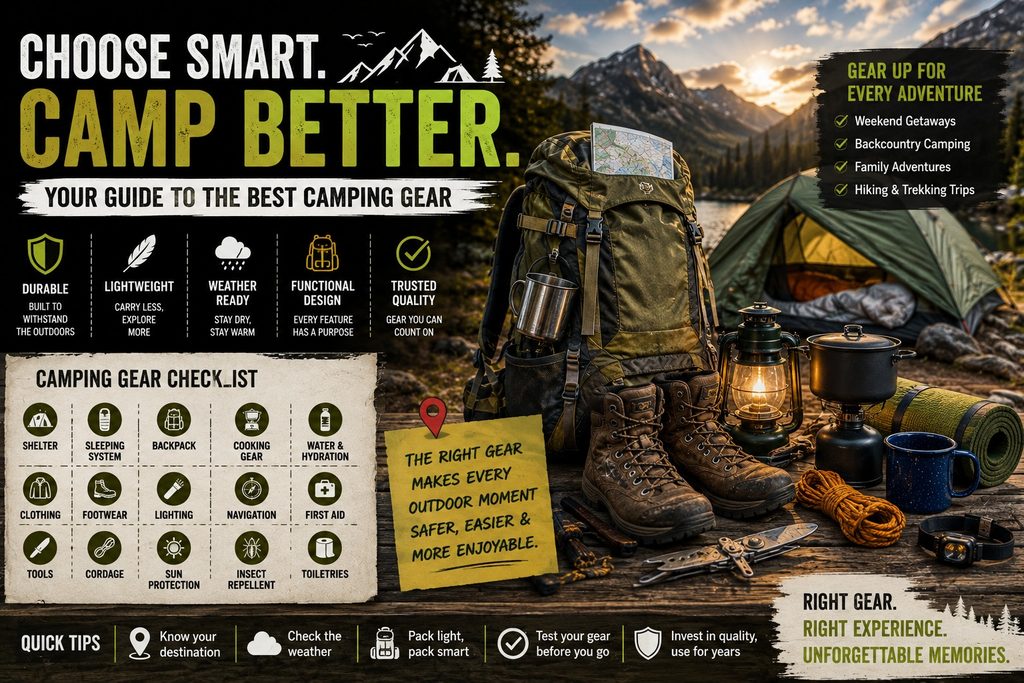
How Do You Pack Camping Gear Efficiently?
Good organization can make a camping trip much easier.
Keep frequently used items accessible and group similar equipment together.
For example:
Hydration: Water bottles and purification supplies
Clothing: Extra layers and socks
Emergency: First aid and emergency supplies
Lighting: Flashlight and spare batteries
Navigation: Map, compass, and GPS
Food: Snacks and meals
Use waterproof bags or appropriate storage containers for equipment that must remain dry.
Before leaving, make a quick inventory so you know what you have packed.
Where Can You Buy Camping Gear Online?
Once you’ve determined what you actually need, compare equipment based on quality, intended use, durability, comfort, and value rather than simply choosing the cheapest option.
Army Navy USA offers a wide selection of military, tactical, outdoor, survival, footwear, bags, and related equipment for people preparing for outdoor activities.
You can shop camping gear online at Army Navy USA and explore practical equipment for hiking, camping, outdoor adventures, and emergency preparedness.
For shoppers who prefer a physical store, Army Navy USA in Queens, NY also offers a local option for exploring military, outdoor, workwear, footwear, and related gear.
Camping Gear Quick Reference
Before your next trip, review the equipment that applies to your plans:
- Backpack or storage bag
- Water bottles or hydration system
- Water purification supplies
- Food and snacks
- Appropriate clothing
- Extra socks
- Outdoor footwear
- Rain protection
- Flashlight or headlamp
- Spare batteries
- First aid kit
- Emergency blanket
- Navigation equipment
- Communication equipment
- Basic outdoor tools
- Personal hygiene supplies
Your final packing list should always reflect your destination, weather, trip length, group size, and planned activities.
Final Thoughts
Choosing the best camping gear isn’t about buying the biggest or priciest kit. It’s about picking reliable equipment that fits how you actually spend time outdoors.
Nail the basics first—hydration, food, clothing, footwear, lighting, emergency supplies, navigation, and storage—then build from there. With each trip, you’ll fine-tune what earns a place in your pack and what stays home.
Ready for your next adventure? Shop camping gear online at Army Navy USA to find outdoor equipment, hydration solutions, footwear, bags, and survival supplies built to last.
Frequently Asked Questions
What camping gear do I need for my first trip?
Cover the basics first: shelter and sleep equipment, water, food, weather-appropriate clothing, footwear, lighting, a first aid kit, navigation tools, and simple emergency gear. Nail those, and you’re ready for most beginner trips.
What’s the most important camping equipment?
No single item wins for every trip. Water, shelter, food, proper clothing, first aid, lighting, and navigation are the categories you should never skip.
What should beginners buy first?
Focus your camping gear for beginners budget on items you’ll use every trip—hydration, shelter, clothing, footwear, lighting, food, first aid, and emergency supplies. Save the specialized gadgets for later.
How do I choose camping gear for hiking?
When you’ll carry everything on your back, weight and packability come first. Prioritize durable, comfortable camping gear for hiking, plus solid hydration and reliable weather protection for uneven terrain.
What should I pack for an outdoor camping trip?
A solid outdoor camping gear kit covers water, food, clothing, footwear, lighting, first aid, navigation, weather protection, emergency supplies, and organized storage. Adjust the details to your specific trip.
Is expensive camping gear always better?
Not at all. The best gear suits your environment, activity, experience, and budget. Judge each item by construction quality, durability, comfort, and value—not the price tag.
Where can I buy camping gear online?
You can shop camping gear online at Army Navy USA for outdoor, survival, hydration, footwear, and bag options across a wide range of activities.
