

Being prepared for an emergency or outdoor adventure starts with having the right equipment. You do not need to carry every piece of gear available. Instead, focus on practical, reliable supplies that address your most important needs, including water, food, shelter, first aid, lighting, communication, navigation, clothing, and essential tools.
A well-organized survival gear checklist can help you identify what you need before a camping trip, hiking adventure, emergency evacuation, power outage, or other unexpected situation. The right equipment will depend on your environment, the number of people you are preparing for, the length of time you need supplies, and the activities you plan to undertake.
This guide explains the essential items to include in a survival kit and how to build a practical setup without carrying unnecessary equipment.
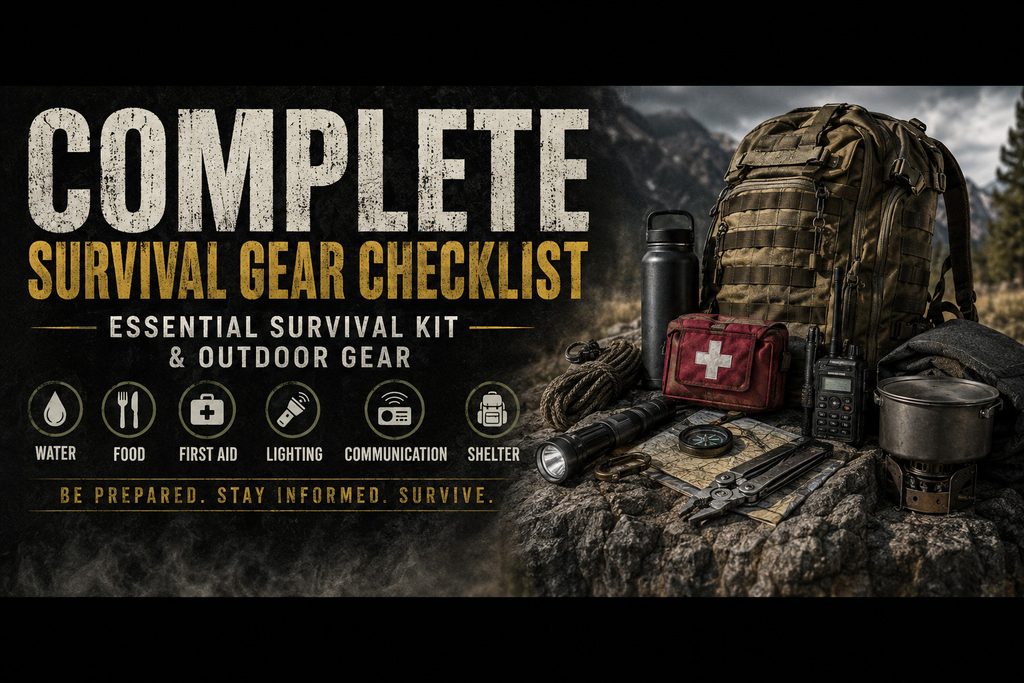
What Is Survival Gear?
Survival gear is equipment and supplies designed to help people stay safe, comfortable, informed, and self-sufficient when normal services or access to resources are disrupted.
Depending on your situation, survival gear can include:
- Water and hydration supplies
- Non-perishable food
- First aid supplies
- Flashlights and extra batteries
- Emergency blankets and shelter items
- Radios and communication equipment
- Navigation tools
- Backpacks and storage bags
- Weather-appropriate clothing
- Durable footwear
- Multi-purpose tools
- Hygiene and sanitation supplies
- Emergency signaling equipment
The most important principle is simple: choose gear based on your environment, activity, number of people, and expected duration.
What Should Be in a Survival Kit?
A basic survival kit should cover your most important needs before you add specialized equipment. FEMA’s Ready campaign recommends essentials such as water, non-perishable food, a flashlight, a battery-powered or hand-crank radio, extra batteries, a first aid kit, and a whistle.
1. Water and Hydration
Water should be one of the first priorities in any emergency preparedness kit.
For emergency planning, the American Red Cross recommends one gallon of water per person per day, with a three-day supply for evacuation and a longer supply for staying at home.
Depending on the situation, consider:
- Portable water containers
- Reusable water bottles
- Hydration packs
- Water purification supplies
- Collapsible water storage
For hiking, camping, and outdoor travel, hydration equipment should be lightweight and easy to access.
2. Emergency Food
Choose food that is shelf-stable, easy to store, and simple to prepare.
Good options for an emergency kit include:
- Ready-to-eat foods
- Energy bars
- Shelf-stable meals
- High-protein snacks
- Canned foods
- Foods that require little or no preparation
Keep a manual can opener with canned food when necessary. FEMA also recommends considering the needs of individual household members when building an emergency supply kit.
3. First Aid Supplies
A first aid kit is an essential part of both an emergency kit and an outdoor survival pack.
A basic kit may include:
- Adhesive bandages
- Gauze
- Medical tape
- Antiseptic supplies
- Disposable gloves
- Basic wound-care supplies
- Personal medications
- Necessary medical information
Your first aid supplies should reflect the size of your group, your activities, and any individual requirements.
Prepare with Army Navy USA
From survival and outdoor gear to hydration supplies, first aid kits, and essential equipment, Army Navy USA has practical gear to help you prepare for your next outdoor adventure or emergency situation. Shop online at Army Navy USA and find the essential gear you need to build a practical survival kit.
What Are the Most Important Outdoor Survival Gear Items?
Outdoor environments can change quickly, so your gear should help you manage weather, navigation, communication, shelter, hydration, and minor injuries.
4. Shelter and Weather Protection
Exposure to rain, wind, cold, or excessive heat can quickly turn an outdoor problem into a serious situation.
Useful items can include:
- Emergency blankets
- Rain ponchos
- Weather-resistant clothing
- Tarps or lightweight shelter materials
- Sleeping bags appropriate for the environment
- Hand warmers
- Extra socks
Your clothing and footwear should be appropriate for the season and terrain. Durable outdoor clothing can also help protect against changing weather conditions.
5. Lighting
A reliable light source is essential when visibility is limited.
Consider carrying:
- Flashlights
- Headlamps
- Spare batteries
- Rechargeable lights
- Backup lighting
Keep extra batteries or another charging option where practical. FEMA specifically lists flashlights and extra batteries among its recommended emergency kit supplies.
6. Communication
Communication equipment can help you stay informed and contact others when normal services are disrupted.
Depending on your needs, consider:
- Battery-powered radios
- Hand-crank radios
- Emergency communication devices
- Portable power banks
- Extra charging cables
- Whistles
A radio can be particularly useful when internet or cellular service is unavailable. The Red Cross also recommends battery-powered or hand-crank radios as part of a survival kit.
7. Navigation
Getting lost can turn a manageable outdoor problem into a dangerous situation.
Carry appropriate navigation equipment such as:
- Local maps
- Compass
- GPS device or phone with offline maps
- Backup navigation tools
Do not depend entirely on a smartphone. Batteries can run out, networks can become unavailable, and electronic devices can fail.
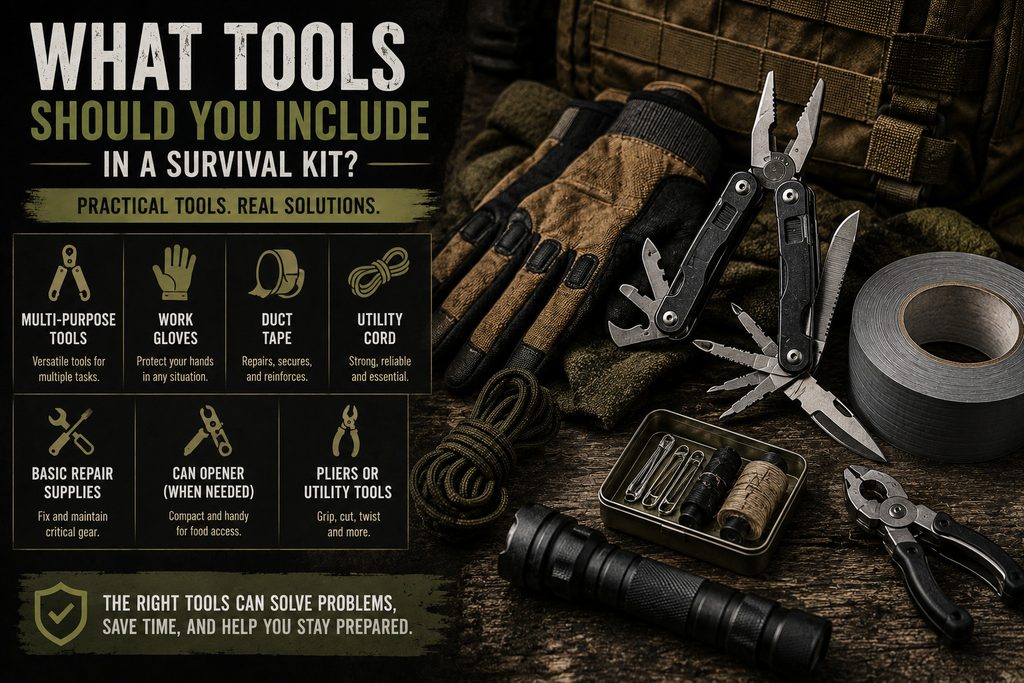
What Tools Should You Include in a Survival Kit?
Tools should solve practical problems without adding unnecessary weight.
Useful general-purpose equipment can include:
- Multi-purpose tools
- Work gloves
- Duct tape
- Utility cord
- Basic repair supplies
- Can opener when needed
- Pliers or appropriate utility tools
FEMA’s emergency supply checklist includes items such as a can opener, local maps, sanitation supplies, and tools for managing household utilities.
The best survival tools are the ones you understand how to use. Before relying on unfamiliar equipment during an emergency, learn its operation and limitations.
How Do You Build a 72-Hour Survival Kit?
A 72-hour survival kit is designed to provide essential supplies for a short-term emergency or evacuation.
Start with these categories:
Water: Plan enough drinking and sanitation water for your group.
Food: Choose non-perishable foods that are easy to prepare.
Light: Pack a flashlight, headlamp, and spare batteries.
First aid: Include a suitable first aid kit and personal medical supplies.
Communication: Add a radio, phone charger, power bank, or other appropriate communication equipment.
Shelter: Include weather protection and emergency blankets.
Clothing: Pack extra layers, socks, and weather-appropriate clothing.
Navigation: Carry maps and another navigation method.
Hygiene: Include personal sanitation and hygiene supplies.
Documents: Keep copies of important information and emergency contacts.
The Red Cross recommends adapting emergency supplies to the number of people involved and their individual needs.
What Should You Pack in an Outdoor Survival Backpack?
For hiking, camping, hunting, or other outdoor activities, your backpack should balance preparedness with weight.
A practical outdoor survival backpack may contain:
- Water bottle or hydration system
- High-energy food
- First aid kit
- Flashlight or headlamp
- Extra batteries
- Emergency blanket
- Rain protection
- Map and compass
- Communication device
- Multi-purpose tool
- Utility cord
- Extra socks
- Weather-appropriate clothing
- Personal hygiene supplies
Choose a backpack with enough capacity for your trip without automatically selecting the largest pack available. Organization matters because essential items should be easy to find when you need them.
How Do You Choose the Right Survival Gear?
The right survival gear depends on where you are going, how long you may need it, who you are preparing for, and what emergencies are realistic for your location.
Ask these questions before buying equipment:
What environment will I be in?
A desert, forest, urban area, winter environment, and coastal region can require very different equipment.
How long do I need to be prepared?
A day hike requires a different kit from a 72-hour emergency plan.
How many people am I preparing for?
Water, food, clothing, and medical supplies should be scaled to the group.
Can I carry everything?
Heavy equipment is not always better. Prioritize versatile items that serve multiple purposes.
Do I know how to use it?
Equipment is only useful when you understand how and when to use it.
Survival Gear vs. Emergency Preparedness Gear
Although these terms are often used interchangeably, there is a useful distinction.
Survival gear generally focuses on equipment that helps you manage immediate challenges such as shelter, hydration, navigation, lighting, and outdoor conditions.
Emergency preparedness gear is broader and may include household supplies, food, water storage, medical needs, sanitation items, important documents, communication equipment, and supplies for family members or pets.
A strong preparedness plan can include both.
The Red Cross recommends considering different types of emergencies—including natural disasters, power outages, accidents, and outdoor emergencies—when deciding what supplies belong in your kit.
How Often Should You Check Your Survival Kit?
A survival kit should not simply be packed and forgotten.
Review it periodically to check:
- Batteries
- Food expiration dates
- Water supplies
- Medications
- Clothing sizes
- Weather-appropriate equipment
- First aid supplies
- Chargers and cables
- Personal documents
- Pet or family-specific supplies
Replace damaged or expired items and adjust the kit when your household, location, activities, or seasons change.
It is also useful to keep different kits for different locations. FEMA recommends considering a full kit at home along with smaller portable kits for places such as workplaces or vehicles.
Survival Gear Checklist: Quick Reference
Use this checklist when building or reviewing your equipment:
- Water and hydration supplies
- Non-perishable food
- First aid kit
- Flashlight or headlamp
- Extra batteries
- Emergency radio
- Whistle
- Emergency blanket
- Rain protection
- Appropriate clothing
- Extra socks
- Durable outdoor footwear
- Navigation tools
- Multi-purpose tool
- Work gloves
- Hygiene supplies
- Phone charger or power bank
- Important documents
- Emergency contact information
- Personal medications and necessary medical items
Final Thoughts
A good survival kit is built around realistic needs rather than the idea that you must carry everything. Start with the essentials: water, food, first aid, lighting, communication, shelter, navigation, clothing, and practical tools.
Use this survival gear checklist as a starting point, then customize your equipment for your location, activities, group size, and expected conditions. The best gear is equipment you understand, can access easily, and can rely on when normal resources are unavailable.
Army Navy USA offers a wide range of outdoor, tactical, military, footwear, bags, and gear options that can help you build an equipment setup suited to your activities and preparedness needs.
Frequently Asked Questions
What is the most important survival gear?
Water, food, first aid supplies, lighting, communication equipment, shelter, navigation tools, and appropriate clothing are among the most important categories to consider when building a survival kit.
What should be in a basic survival kit?
A basic survival kit should include water, non-perishable food, a flashlight, spare batteries, first aid supplies, communication equipment, a whistle, weather protection, and equipment appropriate for your environment.
What should I include in a 72-hour survival kit?
A 72-hour kit should cover essential needs such as water, food, first aid, lighting, communication, shelter, clothing, navigation, hygiene, and important emergency information.
What survival gear should I take hiking?
For hiking, consider carrying water, food, a first aid kit, navigation tools, lighting, weather protection, communication equipment, extra clothing, and versatile tools appropriate for the terrain.
How can I make my survival kit lighter?
Choose versatile equipment, avoid unnecessary duplicates, select appropriately sized supplies, and prioritize items based on the environment and realistic risks you may encounter.
How often should I update my survival kit?
Review your kit periodically and replace expired, damaged, or depleted supplies. Also update clothing, food, medications, and seasonal equipment as your needs change.

1 Comment
Pingback: How to Choose the Best Camping Gear: Essential Equipment for Every Outdoor Adventure | Army Navy USA Blog