

When temperatures drop, the clothing underneath your workwear can make just as much difference as the jacket you wear over it. Whether you’re working on a construction site, maintaining equipment, loading deliveries, or spending hours outdoors, cold conditions can make ordinary work clothes uncomfortable. A regular T-shirt and work pants may not provide enough insulation, especially when you’re exposed to low temperatures for an entire shift.
That’s where thermal base layers for work become useful. Designed to be worn close to the skin, thermal underwear provides an additional layer beneath everyday clothing. Depending on the material and construction, it can help retain body heat, manage perspiration, and make it easier to stay comfortable without adding excessive bulk.
However, not every thermal garment is suitable for every job. Lightweight thermal shirts, heavyweight long underwear, synthetic base layers, and traditional cotton thermal sets all serve different purposes.
If you’re looking for the best thermal underwear for work, understanding fabric types, insulation levels, fit, and intended use will help you make a better choice.
1. What Is Thermal Underwear and Why Do Workers Wear It?
Thermal underwear, also called long underwear or a base layer, is designed to be worn underneath regular clothing. Unlike ordinary undershirts, thermal garments are made with fabrics and constructions intended to provide additional insulation and, depending on the material, manage moisture.
For outdoor workers, the right base layer can make winter clothing more practical. Instead of depending entirely on a thick coat, you can add warmth underneath your regular workwear.
A typical thermal set includes:
- Thermal shirt: Provides additional coverage across the chest, arms, and upper body.
- Thermal pants: Worn underneath jeans, cargo pants, or work trousers.
- Thermal top and bottom sets: Provide coordinated coverage for both upper and lower body.
Explore our selection of thermal base layers, including Rothco ECWCS thermals and Indera Mills thermal clothing, to find suitable options for your cold-weather clothing setup.
How Do Thermal Base Layers Work?
Thermal garments help create a comfortable layer between your skin and outer clothing. Their construction can help retain warmth while allowing moisture to move away from the skin when made with suitable moisture-managing fabrics.
This becomes particularly useful during physically demanding work. For example, a construction worker may sweat while carrying materials but become cold when standing still or taking a break. A suitable base layer can help manage moisture during these changes in activity.
The important thing is choosing a garment that matches your working conditions rather than simply purchasing the thickest option available.
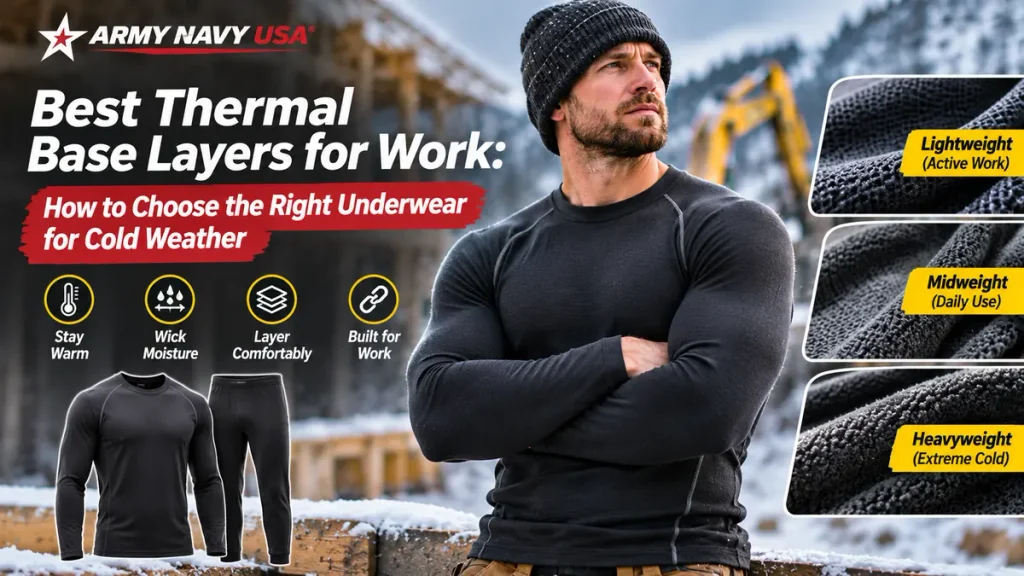
2. Lightweight vs. Midweight vs. Heavyweight Thermal Underwear
One of the most important decisions when buying thermal underwear for men is selecting the appropriate fabric weight.
Thermal clothing is commonly available in lightweight, midweight, and heavyweight options. These categories provide a useful starting point when comparing products, although actual warmth also depends on fabric composition, garment construction, fit, and the layers worn over it.
Lightweight Thermal Underwear
Lightweight thermal underwear is designed for situations where you need an additional layer without adding much bulk.
It is particularly useful for workers who remain physically active throughout the day.
Consider lightweight thermals when:
- You work indoors and occasionally move outside.
- Your job involves frequent walking, lifting, or physical activity.
- You need a thin layer underneath uniforms or work shirts.
- You want additional coverage without restricting movement.
Lightweight thermal shirts can also work well underneath sweatshirts, fleece jackets, and everyday work jackets.
Midweight Thermal Underwear
Midweight options provide a balance between insulation and everyday comfort. They are a practical choice for workers who regularly spend time outdoors during colder months.
Consider midweight thermal clothing when:
- You work outdoors for several hours.
- Temperatures are consistently cold.
- You need insulation underneath regular workwear.
- Lightweight garments do not provide enough warmth.
For many everyday winter activities, midweight thermal tops and bottoms offer a useful starting point.
Heavyweight Thermal Underwear
Heavyweight thermal underwear is designed for colder conditions where additional insulation is needed.
These garments are worth considering for workers who spend extended periods outdoors, particularly when physical activity is limited.
They can be useful for:
- Outdoor maintenance crews.
- Workers exposed to cold morning temperatures.
- Extended winter outdoor activities.
- Jobs involving long periods of standing or waiting.
Keep in mind that heavyweight clothing can become uncomfortable during strenuous work if it causes excessive sweating. Consider your activity level before choosing a thicker garment.
Buying tip: Do not select thermal underwear based on thickness alone. Think about how long you will remain outside, how much you move during your shift, and what other clothing you plan to wear.
3. Which Material Is Best for Thermal Underwear?
The fabric used in thermal clothing affects how it feels, manages moisture, and performs during everyday use. Some materials are better suited to active work, while others are preferred for insulation and comfort.
Here are the most common options to consider when shopping for thermal base layers for cold weather.
Polyester Thermal Underwear
Polyester is widely used in synthetic base layers because it is lightweight, durable, and can be engineered to move perspiration away from the skin.
For workers who regularly perform physical tasks, moisture management is an important consideration.
Benefits include:
- Lightweight construction.
- Quick-drying properties in many fabric designs.
- Good suitability for active use.
- Easy layering underneath work clothes.
- Availability in different weights and styles.
Polyester thermal shirts are a practical option for construction, warehouse, maintenance, and outdoor work.
Cotton Thermal Underwear
Cotton is known for its softness and familiar feel. Traditional waffle-knit thermal underwear is commonly associated with cotton or cotton-blend fabrics.
However, cotton has an important limitation in cold conditions: it absorbs moisture and dries relatively slowly.
When a worker sweats during physical activity, damp cotton can remain against the skin and contribute to heat loss.
For this reason, cotton is generally less suitable as the primary base layer for prolonged, sweaty work in cold environments.
It may still be appropriate for lighter indoor use or situations where moisture exposure is limited.
Wool Thermal Underwear
Wool is valued for its natural insulating properties and ability to manage moisture. Merino wool is a particularly popular choice for base layers because of its softness compared with many traditional wool fabrics.
Potential advantages include:
- Natural temperature regulation.
- Moisture management.
- Insulation in cold conditions.
- Reduced odor retention in many wool garments.
Wool base layers can be useful for people who spend extended periods outdoors. However, they may require more careful washing and maintenance than some synthetic alternatives.
Polypropylene Thermal Underwear
Polypropylene is a synthetic material used in moisture-managing base layers. It is lightweight and has low moisture absorption, making it useful for garments designed to move perspiration away from the body.
It is worth considering when selecting thermal clothing for physically active work.
Quick Material Comparison
| Material | Main Advantage | Best Use |
|---|---|---|
| Polyester | Lightweight and moisture-managing | Active outdoor work |
| Cotton | Soft and familiar feel | Light indoor use |
| Merino wool | Natural insulation and moisture management | Extended cold-weather wear |
| Polypropylene | Low moisture absorption | Active cold-weather layering |
| Fabric blends | Combination of different properties | Everyday versatility |
The best choice depends on the fabric construction and your working conditions, not just the material name on the product label.
4. Thermal Shirts vs. Thermal Pants: What Should You Wear?
When choosing thermal clothing for work, it is easy to focus on the upper body and overlook the importance of lower-body insulation.
Both thermal shirts and thermal pants have a role in a practical winter clothing system.
Thermal Shirts for Work
Thermal shirts are designed to fit underneath regular shirts, sweatshirts, uniforms, or jackets.
Common styles include:
- Crew-neck thermal shirts.
- Long-sleeve waffle-knit shirts.
- Lightweight synthetic base-layer tops.
- Zip-neck thermal tops.
A crew-neck thermal shirt is a straightforward option for everyday wear. Long-sleeve designs provide additional arm coverage, while zip-neck styles allow some adjustment around the neckline.
For workers who frequently move between indoor and outdoor environments, a lightweight or midweight thermal shirt can be particularly practical.
Thermal Pants and Long Johns for Work
Thermal pants, often called long johns, provide an additional layer underneath regular trousers.
They are useful for workers exposed to cold air, chilly floors, or extended outdoor conditions.
Consider thermal bottoms when:
- You work outdoors in low temperatures.
- Your regular work pants provide limited insulation.
- You spend considerable time standing in cold environments.
- You need additional warmth underneath cargo pants or jeans.
Look for comfortable waistbands, flexible fabric, and a fit that does not bunch up around the knees.
Practical recommendation: If you regularly work outside in cold weather, a matching thermal shirt and bottom set can provide more consistent coverage than wearing only an insulated top.
5. How to Choose Thermal Underwear for Different Types of Work
The best thermal underwear for a construction worker may not be the right choice for a mechanic or warehouse employee. Your work environment, movement, and exposure to the weather should guide your purchase.
Construction Workers
Construction work often involves lifting, bending, climbing, and moving materials across exposed job sites.
For these conditions, choose base layers that provide insulation without restricting movement.
A practical combination includes:
- Lightweight or midweight thermal shirt.
- Flexible thermal pants.
- Durable work trousers.
- Fleece sweatshirt or suitable insulated jacket.
Moisture management is particularly important because physical tasks can generate considerable perspiration.
Mechanics and Maintenance Workers
Mechanics often need clothing that fits comfortably underneath work uniforms or coveralls.
Bulky thermal garments can interfere with movement, particularly when reaching into tight spaces or working around equipment.
Consider lightweight synthetic thermals or comfortable midweight options depending on garage temperatures.
Pay attention to sleeve length, waistbands, and fabric thickness so that the garments sit properly underneath your work clothes.
Warehouse and Delivery Workers
Warehouse employees may experience different temperatures throughout a single shift. Heated indoor areas can feel comfortable, while loading docks and delivery areas may be much colder.
A removable clothing system works well in these situations.
Lightweight thermal tops and comfortable bottoms can provide an additional layer without making indoor work unnecessarily warm.
Landscaping and Outdoor Maintenance
Landscapers and outdoor maintenance crews may spend long periods exposed to wind, damp conditions, and changing temperatures.
Midweight thermal clothing can be a useful option, particularly when combined with suitable work pants and weather-resistant outerwear.
Workers should also consider moisture management when physical activity increases.
6. How Should Thermal Underwear Fit Under Work Clothes?
Fit is just as important as material when selecting thermal underwear for men.
A base layer should sit comfortably against the body without feeling restrictive. If it is excessively loose, fabric may bunch up underneath your regular clothing. If it is too tight, it can restrict movement and feel uncomfortable throughout a long shift.
Here are a few things to check before purchasing:
Shoulder and chest fit: The shirt should allow you to reach forward, lift your arms, and bend without pulling excessively across the shoulders.
Sleeve length: Sleeves should remain in position when you move your arms. Excessively long sleeves can bunch underneath work jackets.
Waist and hip fit: Thermal bottoms should stay comfortably in place without slipping during movement.
Knee flexibility: If your job involves kneeling or climbing, check that the fabric stretches comfortably around the knees.
Layering space: Your regular work clothes should fit properly over your thermal garments without compressing them excessively.
Always check the manufacturer’s sizing chart because measurements and fits vary between brands.
7. How to Wear Thermal Underwear With Your Winter Workwear
Thermal underwear is most useful when it is part of a complete clothing system.
Simply wearing a thick thermal shirt underneath an unsuitable jacket will not provide adequate protection in every environment.
A practical three-layer combination includes:
First Layer: Thermal Underwear
Start with a suitable thermal shirt and, when needed, thermal pants.
Choose the fabric weight according to temperature and physical activity.
Second Layer: Insulating Clothing
Add a fleece jacket, sweatshirt, or insulated mid-layer.
This provides additional insulation and can be removed when you become too warm.
Third Layer: Weather-Resistant Outerwear
Finish with an appropriate work jacket that protects against wind and precipitation.
For wet conditions, choose suitable waterproof outerwear rather than relying on an ordinary insulated jacket.
Complete your outfit with appropriate work gloves, warm socks, and footwear.
Remember that clothing should allow comfortable movement. Overly tight layers can reduce circulation and compress insulating garments.
8. Rothco ECWCS and Traditional Thermal Underwear: What Is the Difference?
When shopping for military-style thermal clothing, you may encounter products associated with ECWCS, or the Extended Cold Weather Clothing System.
ECWCS is a layered clothing system developed for cold-weather conditions. Its base-layer garments are designed to work as part of a wider clothing setup rather than as standalone winter outfits.
Traditional thermal underwear is generally simpler and focuses on providing an additional layer beneath everyday clothing.
Consider the following differences:
| Feature | ECWCS Base Layers | Traditional Thermal Underwear |
|---|---|---|
| Design | Part of a layered clothing system | Everyday insulating underlayer |
| Intended use | Cold-weather layering | General winter wear |
| Options | Vary by system generation and garment | Vary by fabric and weight |
| Clothing combination | Designed to work with additional layers | Usually worn under regular clothes |
If you are comparing military-style thermal clothing, look at Rothco ECWCS options alongside traditional thermal garments.
Army Navy USA carries thermal clothing from brands including Rothco and Indera Mills. Compare the available product descriptions, fabric composition, garment weight, and sizing before choosing.
9. Common Mistakes to Avoid When Buying Thermal Underwear
A little research before purchasing can prevent several common problems.
Choosing the thickest option automatically: Heavyweight thermals are not always the best choice. Active workers may become uncomfortable if their clothing traps too much heat.
Ignoring moisture management: A garment that feels warm when dry may become uncomfortable after heavy perspiration. Consider synthetic or wool-based options for demanding outdoor work.
Buying the wrong size: Thermal garments that are excessively loose can bunch underneath workwear, while overly tight clothing can restrict movement.
Wearing cotton in demanding cold conditions: Cotton absorbs moisture and dries slowly. Consider other materials when working hard in cold environments.
Ignoring lower-body coverage: Wearing a thermal shirt without considering your legs may leave you uncomfortable during long outdoor shifts.
Forgetting the rest of your clothing system: Thermal underwear is only one part of winter workwear. Suitable jackets, pants, gloves, socks, and footwear are also important.
10. How to Maintain Thermal Underwear for Longer Use
Thermal garments are often worn frequently during winter, so proper care helps maintain their comfort and condition.
Follow the care instructions on the product label, as different materials require different washing methods.
A few useful practices include:
- Wash thermal garments according to the manufacturer’s instructions.
- Avoid excessive heat when drying fabrics that may shrink or become damaged.
- Separate heavily soiled work clothing when necessary.
- Check seams, cuffs, and waistbands for wear.
- Make sure garments are completely dry before storing them.
- Avoid using harsh treatments that may damage specialized fabric finishes.
If your work involves significant perspiration, having an additional thermal shirt or set available can make it easier to change into dry clothing.
Frequently Asked Questions About Thermal Underwear for Work
1. What is the best thermal underwear for outdoor work?
The best option depends on your activity level and weather conditions. Lightweight synthetic base layers are useful for active work, while midweight or heavyweight garments may be more suitable for prolonged exposure to colder temperatures.
2. Should thermal underwear be tight or loose?
Thermal underwear should fit comfortably close to the body without restricting movement or circulation. Excessively loose garments can bunch underneath work clothes, while overly tight options may become uncomfortable.
3. Is polyester or cotton better for thermal underwear?
Polyester is generally more suitable for physically demanding cold-weather activities because it can be engineered to manage perspiration and dry relatively quickly. Cotton is comfortable but absorbs moisture and dries slowly.
4. Can you wear thermal underwear under regular work pants?
Yes. Thermal bottoms are designed to be worn underneath regular clothing, including jeans, cargo pants, and work trousers. Choose a comfortable fit that does not restrict movement.
5. Are heavyweight thermal shirts better for winter?
Not necessarily. Heavyweight thermal shirts provide additional insulation, but lightweight or midweight options may be more comfortable for workers who move frequently and generate body heat.
6. What is the difference between thermal underwear and long johns?
Thermal underwear is a general term for insulating base-layer garments. Long johns usually refer specifically to long thermal bottoms worn underneath trousers, although the terms are sometimes used interchangeably.
7. How many thermal layers should you wear for outdoor work?
A thermal base layer is generally the first layer in a three-layer clothing system. Add an insulating mid-layer and a suitable outer layer according to the weather and activity. The exact combination depends on working conditions.
8. Is military thermal underwear suitable for everyday work?
Military-style thermal garments can be suitable for everyday work when their material, weight, fit, and intended use match your requirements. Always review the individual product specifications.
Find the Right Thermal Base Layers for Your Next Workday
Choosing thermal underwear is not simply about finding the thickest garment available. The right choice depends on how cold your working environment gets, how much you move, and what you wear over your base layer.
Lightweight options are useful for active jobs, midweight garments offer a balance of insulation and flexibility, and heavyweight thermals provide additional coverage for colder conditions. Material selection also matters, particularly when your work involves physical activity and perspiration.
Before purchasing, consider the fabric, fit, weight, and compatibility with your existing workwear.
Looking for reliable thermal clothing for colder days? Explore the selection at Army Navy USA and compare thermal shirts, bottoms, and cold-weather essentials from brands such as Rothco and Indera Mills.
Find the right base layers for your winter clothing setup and get ready for the demands of your next workday.
Shop Thermal Clothing at Army Navy USA Today!
