

Combat boots for women are durable, ankle-supportive boots built with rugged outsoles, reinforced uppers, and lace-up or zip closures for stability across everyday, outdoor, work, and tactical use. The right pair balances fit, traction, and material — leather for durability, synthetic for weight savings — depending on how and where you’ll wear them.
Combat boots for women have moved well beyond the battlefield. Today, the category covers everything from black combat boots for women paired with jeans on a weekend errand run to women’s tactical boots built for long shifts on uneven terrain. What connects them all is a shared design purpose: stability, ankle support, and traction that holds up under repeated wear.
Choosing the right pair means understanding what actually defines a combat boot, how sizing and fit affect comfort, and which features matter most for your specific use case. This guide breaks down the terminology, the styles, and the practical decision points — fit, materials, traction, and care — so you can compare options with confidence before you buy.
What Are Combat Boots for Women?
Combat boots for women are ankle-to-mid-calf boots built with a reinforced upper, a lugged outsole, and a lace-up or side-zip closure designed for stability on varied terrain. The design traces back to military footwear, where durability and ankle support were non-negotiable requirements. That heritage is why the category still uses military-derived terms: upper (the boot’s outer material), outsole (the ground-contact sole), and lug pattern (the raised tread design that improves traction).
Modern women’s combat boots keep those core structural elements while adjusting the fit profile — narrower heel cups, adjusted calf width, and lighter overall builds — to match the fit of a woman’s foot and lower leg more accurately than a unisex boot typically does. You’ll find them marketed under several overlapping names: women’s military boots, women’s army boots, and tactical footwear for women. The terms are often used interchangeably, though “tactical” sometimes signals a lighter, faster-moving design intended for active use rather than parade or dress wear.
What Are the Popular Styles of Women’s Combat Boots?
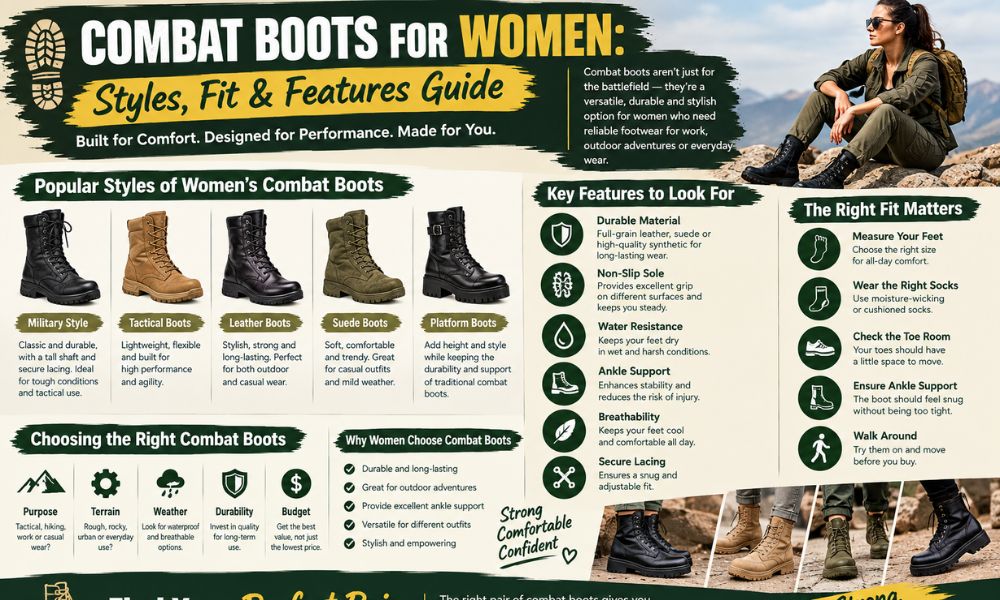
Popular styles of women’s combat boots include mid-calf lace-ups, ankle-height tactical boots, and jump-boot-inspired designs with a higher shaft. Each style trades off differently between ankle coverage, weight, and ease of entry.
- Mid-calf lace-up combat boots: The classic silhouette, typically 6–8 inches in shaft height, offering strong ankle support through a full lacing system.
- Ankle-height tactical boots: Lighter and quicker to put on, often chosen for everyday combat boots where all-day mobility matters more than maximum ankle coverage.
- Side-zip combat boots: Combine a zipper with laces for faster on/off, common in work and duty settings where speed matters.
- Jungle-style boots: Taller shaft, often with drainage or breathability features, suited to outdoor and wet-condition use.
If you’re comparing options across categories, browsing a dedicated tactical footwear selection makes it easier to see how these styles differ side by side before narrowing your choice.
What Key Features Should You Look for in Women’s Combat Boots?
The key features to look for in women’s combat boots are ankle support, outsole traction, upper material, and cushioning. These four elements determine how a boot performs under real conditions, not just how it looks on the shelf.
- Ankle support: A structured collar and full-height lacing stabilize the ankle joint, reducing rolled-ankle risk on uneven ground.
- Outsole and lug pattern: Deeper, multidirectional lugs improve grip on loose or wet surfaces; shallower patterns suit flat, indoor-adjacent environments.
- Upper material: Leather, synthetic, or a hybrid of both — each affects durability, weight, and break-in time.
- Midsole cushioning: The layer between the outsole and footbed that absorbs shock; more cushioning generally means more comfort over long wear periods.
- Waterproofing and breathability: Sealed seams and treated leather resist moisture, while mesh panels or vented linings help manage heat during warmer months.
- Toe box: The front portion of the boot housing the toes; a wider toe box reduces pressure points during extended wear.
How Should Combat Boots for Women Fit?
Combat boots for women should fit snugly through the heel and midfoot while allowing roughly a thumb’s width of space at the toe. This spacing prevents your toes from jamming forward during downhill movement or repeated stepping, which is a common cause of blisters and black toenails in ill-fitting boots.
Combat boot sizing often runs differently from standard shoe sizing because of the structured upper and thicker sole unit. It’s common to need a half size up from your everyday sneaker size to accommodate a thicker sock or slightly swollen feet after hours of wear. Pay attention to width as well as length — a boot that’s correct in length but too narrow through the forefoot will still cause discomfort, regardless of how well the ankle support performs.
Break-in period matters too. Leather combat boots typically require several wears before the material softens to the shape of your foot, while synthetic uppers tend to feel closer to their final fit right out of the box.
Are Women’s Combat Boots Comfortable?
Women’s combat boots can be comfortable when fit, cushioning, and break-in are properly matched to your foot and use case. Comfort in this category isn’t a single fixed trait — it’s the result of several design choices working together correctly.
A well-fitted boot with adequate midsole cushioning and a supportive footbed will feel noticeably different from a boot that’s simply been sized down from a men’s version. This is one reason women’s-specific combat boot construction exists at all: narrower heel cups and adjusted volume through the instep prevent the internal shifting that causes friction and hot spots during a full day of wear. If you’re new to the category, reading fit notes carefully before purchase — and breaking boots in gradually rather than wearing them for a full shift on day one — will make a meaningful difference in how comfortable they feel over time.
What Are the Best Combat Boot Features for Different Uses?
The best combat boot features depend on whether you need everyday combat boots, outdoor durability, workplace protection, travel convenience, or tactical performance. Matching the feature set to the use case avoids paying for capabilities you won’t use, or worse, under-equipping yourself for demanding conditions.
- Everyday wear: Lightweight combat boots for women with a low-to-moderate lug pattern and a comfortable break-in curve suit daily errands and casual styling.
- Outdoor activities: Boots for outdoor activities benefit from deeper lug patterns, waterproof membranes, and reinforced toe caps for rocky or wet trails.
- Work environments: Boots for work may require ANSI-rated safety toes, oil-resistant outsoles, and durable combat boots built from full-grain leather for repeated daily use.
- Travel: Prioritize a lighter synthetic build and a boot that transitions between walking long distances and standing for extended periods.
- Tactical use: Women’s tactical boots for duty or training settings typically combine side-zip entry, reinforced ankle support, and abrasion-resistant materials for fast movement.
Browsing a full range of military gear and apparel alongside footwear can help you coordinate boots with the rest of a work or outdoor kit, rather than shopping the two separately.
Leather vs. Synthetic Combat Boots for Women: Which Is Better?
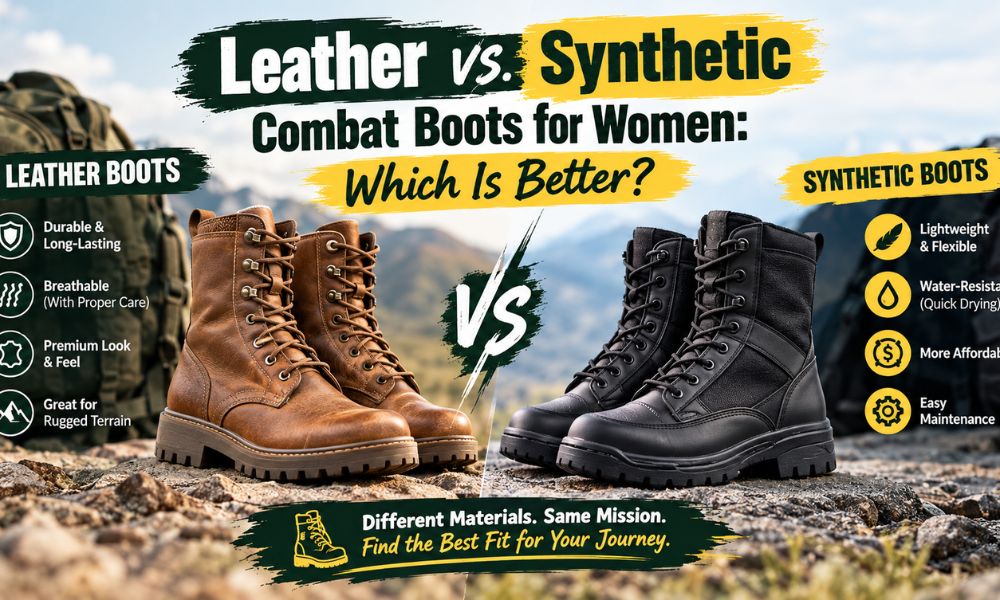
Leather combat boots for women generally offer greater long-term durability and structure, while synthetic combat boots are lighter and require less break-in time. Choose leather if you prioritize longevity and don’t mind an adjustment period; choose synthetic if immediate comfort and reduced weight matter more than years of heavy use.
Full-grain leather uppers resist abrasion well and tend to mold to your foot shape over time, which is why many duty and work-focused boots still use it as a primary material. Synthetic uppers — often nylon or polyurethane blends — dry faster after exposure to moisture and weigh less per boot, which matters over a full day of walking or standing. Some boots use a hybrid construction, pairing a leather toe and heel with synthetic side panels, aiming to balance durability with weight savings.
How Do You Care for Women’s Combat Boots?
Caring for women’s combat boots involves regular cleaning, conditioning leather uppers, and drying boots properly after exposure to moisture. Consistent care extends the usable life of the boot and preserves the materials that provide support and traction.
- Remove debris after each wear. Brush off dirt and dry mud before it works into seams and stitching.
- Condition leather uppers periodically. A leather conditioner keeps the material supple and helps prevent cracking over time.
- Clean synthetic uppers with mild soap and water. Avoid harsh solvents that can degrade coatings or waterproof treatments.
- Air dry away from direct heat. Direct heat sources can warp soles and dry out leather too quickly.
- Check outsoles for wear. Replace boots once lug depth has worn down significantly, since traction diminishes as tread flattens.
- Store boots upright with shape retained. Boot trees or stuffed paper help maintain form during storage.
Frequently Asked Questions About Combat Boots for Women
Do combat boots for women run true to size?
Not always. Combat boots often run slightly narrower or require a half size up compared to regular sneakers, due to the structured upper and thicker sole. Checking a brand’s specific sizing notes before purchase helps avoid an uncomfortable fit.
Are women’s combat boots good for wide feet?
Many combat boot styles are built with a moderate toe box that suits medium to wide feet, though sizing varies by brand and construction. Checking width options or reading fit-specific reviews before buying is the most reliable way to confirm.
Can combat boots for women be worn in the rain?
Yes, provided the boots have waterproofing features like sealed seams or treated leather. Boots without waterproof treatment may hold up in light moisture but aren’t designed for prolonged wet conditions.
What’s the difference between combat boots and tactical boots for women?
Combat boots typically emphasize ankle support and durability in a traditional lace-up silhouette, while tactical boots often prioritize lighter weight and faster movement for active duty-style use. There’s overlap between the two categories, and some boots are marketed under both terms.
How long do durable combat boots typically last?
Lifespan depends heavily on materials, frequency of use, and care, with leather combat boots generally outlasting synthetic ones under heavy daily wear. Regular cleaning and conditioning, as outlined above, extends usable life significantly.
Are lightweight combat boots as supportive as heavier models?
Lightweight combat boots for women can still offer strong ankle support if they retain a structured collar and proper lacing system. Weight savings usually come from the outsole and upper material rather than a reduction in support features.
What should I look for when buying black combat boots for women?
Beyond color, focus on the same core features — ankle support, outsole traction, and upper material — since black combat boots for women span the same range of construction quality as any other color option. Don’t let color choice override fit and function considerations.
Key Takeaways
- Combat boots for women combine a reinforced upper, lugged outsole, and ankle support for stability across everyday, outdoor, work, and tactical use.
- Proper combat boot fit allows a thumb’s width of toe room while staying snug through the heel and midfoot.
- Leather combat boots offer greater durability; synthetic options offer lighter weight and less break-in time.
- Matching features like waterproofing, lug depth, and cushioning to your specific use case improves comfort and performance.
- Regular cleaning, conditioning, and proper storage extend the lifespan of durable combat boots significantly.
Find Your Next Pair of Combat Boots
Choosing the right combat boots for women comes down to matching fit, materials, and features to how you’ll actually use them — whether that’s daily wear, outdoor terrain, workplace demands, or tactical settings. Explore a full range of women’s combat boots and tactical gear built for durability and performance, and pair your next boots with the rest of your military and tactical equipment in one place.
