

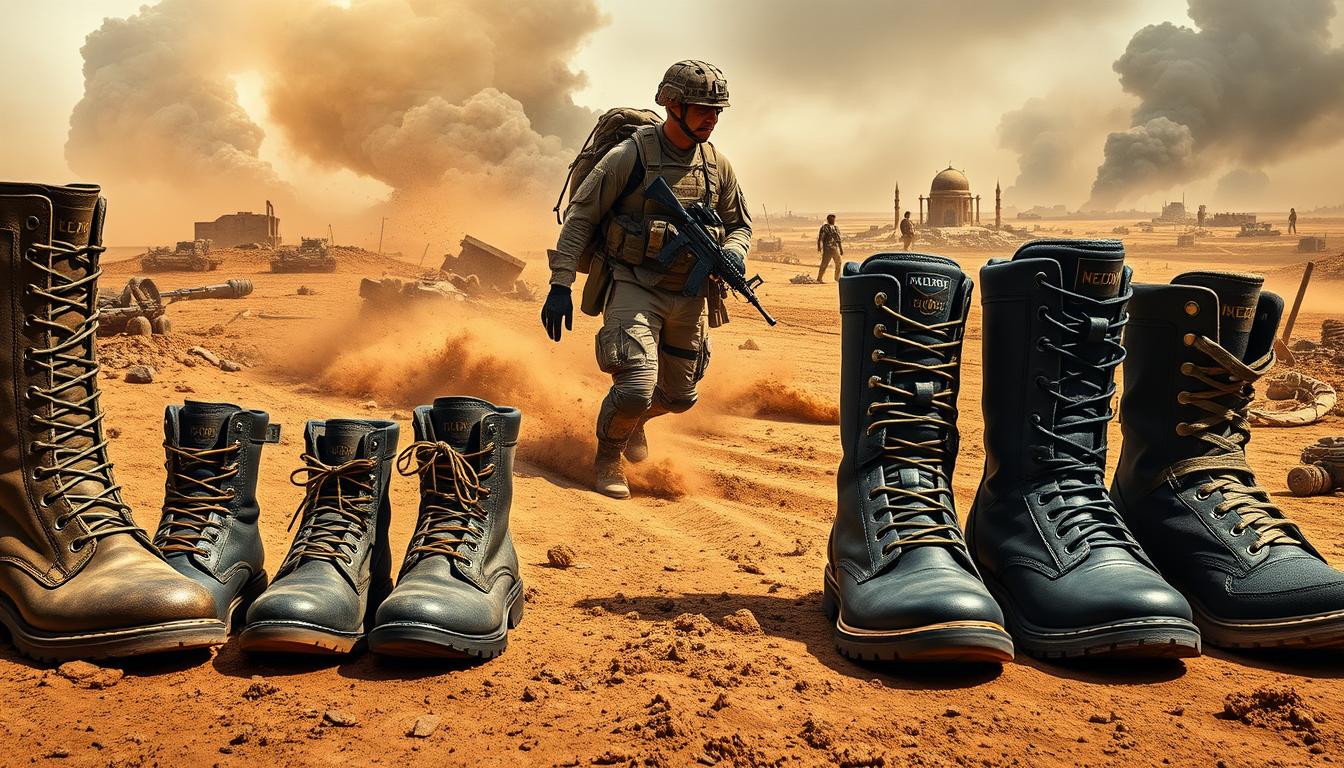
Imagine a soldier marching through rugged terrain, relying on a sturdy pair of boots to protect their feet. This simple yet essential piece of footwear has come a long way since its early days. What began as a necessity for soldiers during the Civil War has transformed into a versatile option for people today.
During World War I, the Pershing boot was introduced, featuring hobnails for better grip. This marked a turning point in design, focusing on durability and support. Over time, innovations like waterproofing and reinforced soles made these boots more adaptable to harsh environments.
Today, military-inspired boots are not just for combat. They’ve become a popular choice for outdoor enthusiasts and professionals alike. Their blend of leather and modern materials ensures comfort and longevity, making them a reliable option for various needs.
Key Takeaways
- Military boots originated as essential footwear for soldiers during the Civil War.
- World War I introduced the Pershing boot, a significant design improvement.
- Innovations like waterproofing and reinforced soles enhanced functionality.
- Modern military-inspired boots are versatile and used in everyday life.
- These boots combine durability and comfort, making them a popular choice.
Historical Foundations of Military Footwear
The journey of military footwear began long before the modern era, rooted in necessity and innovation. Early soldiers often relied on self-purchased boots, which varied widely in quality and fit. During the War of 1812, the U.S. government stepped in to provide standardized footwear, marking the first significant intervention in military boot design.
By the time of the Civil War, military footwear had evolved into a more uniform style. The “Brogan” boot became a staple for troops, offering durability in harsh conditions. However, poorly fitting boots remained a challenge, leading to discomfort and injuries among soldiers. This issue highlighted the need for better design and construction methods.
Traditional boot-making shifted from handsewn to pegged construction during this period. This change improved durability and allowed boots to withstand rugged terrain. The use of leather and reinforced soles became standard, ensuring better support and longevity.
U.S. Military Boots in Early Conflicts and the Civil War
Early military boots were often handmade, with little attention to fit or comfort. Soldiers in the War of 1812 faced harsh weather and terrain, making reliable footwear essential. The government’s move to standardize boots during this time was a turning point in military footwear history.
During the Civil War, the “Brogan” boot became widely used. Its simple design and sturdy construction made it ideal for combat. However, the lack of proper sizing led to widespread foot problems among troops. This period underscored the importance of design improvements for military boots.
Traditional Construction Methods and the Munson Last
Edward Munson’s groundbreaking work in the early 20th century revolutionized military boot design. His study of foot anatomy led to the creation of the Munson Last, a template that ensured better fit and support. This innovation prioritized comfort and performance, addressing the challenges soldiers faced with poorly fitting boots.
Munson’s research also influenced the use of advanced materials and construction techniques. His work laid the foundation for modern military boots, emphasizing durability and adaptability. Today, these principles continue to shape the design of combat boots, ensuring they meet the needs of soldiers in diverse environments.
World War Milestones and Design Innovations
The demands of trench warfare and airborne operations led to groundbreaking innovations in boot design. During World War I, soldiers faced extreme conditions that exposed the limitations of early footwear. Mud, water, and harsh weather required boots that could withstand these challenges while providing comfort and protection.
Trench Boots, Pershing Boots, and Lessons from WWI
Trench warfare was a severe testing ground for military boots. Soldiers often suffered from trench foot, a painful condition caused by prolonged exposure to wet and cold environments. To address this, the Pershing boot was introduced in 1918. It featured iron heel plates and improved waterproofing, making it more durable and effective in muddy conditions.
Hobnail designs were also added to the soles for better traction. These small metal studs provided grip in waterlogged trenches, reducing the risk of slips and falls. The Pershing boot became a symbol of innovation, setting new standards for military footwear.
Paratrooper and Combat Boot Advancements During WWII
World War II brought new challenges, particularly for airborne troops. Paratrooper boots were designed with unique features to support air assault operations. These boots had reinforced ankles and soles to absorb the impact of landing, ensuring support and stability for soldiers.
The M-43 combat boot emerged as a significant advancement during this period. It incorporated the Munson last for a better fit and used high-quality leather for durability. The design also focused on comfort, allowing soldiers to wear the boots for extended periods without discomfort.
- WWI trench conditions led to the development of the Pershing boot with iron heel plates and waterproofing.
- Hobnail soles provided essential traction in muddy, waterlogged environments.
- Paratrooper boots were designed with reinforced ankles and soles for air assault operations.
- The M-43 combat boot introduced the Munson last and enhanced materials for better performance.
- Lessons from both wars influenced modern designs, emphasizing durability, support, and comfort.
Evolution of Tactical Boots
Over time, the design of military-inspired footwear has shifted to meet the demands of modern users. From heavy leather constructions to lightweight synthetic materials, these changes reflect advancements in technology and user needs.
One of the most significant shifts has been in material choices. Traditional boots relied on thick leather, which provided durability but added weight. Today, synthetic compounds like nylon and rubber offer a lighter alternative without compromising strength. This transition has made boots more comfortable for extended wear.
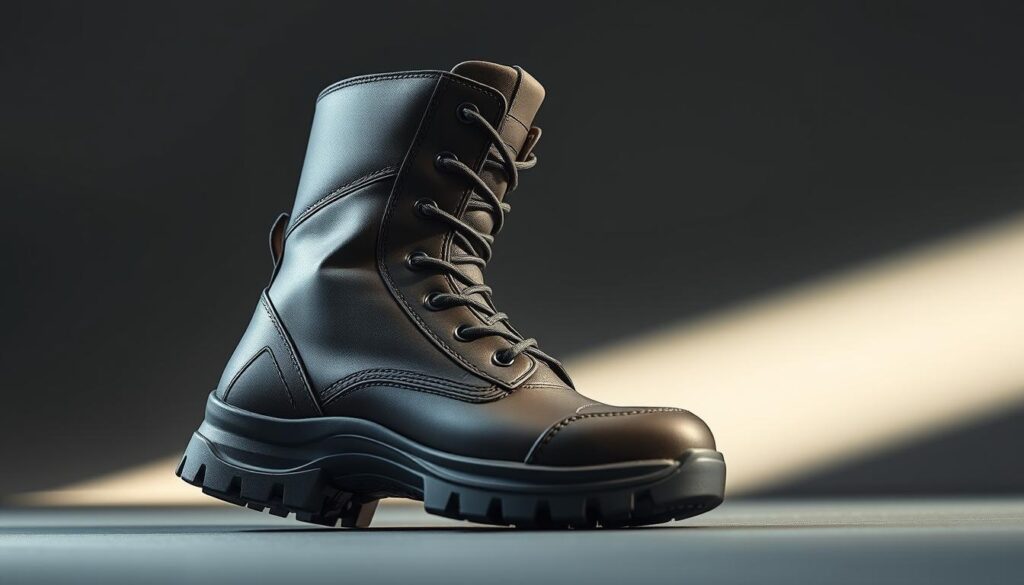
Another key improvement is in sole technology. Early designs focused on basic traction, but modern soles combine durability with enhanced grip. Features like deep lugs and broad pads ensure stability on various terrains, from rocky paths to muddy fields.
The needs of soldiers have also influenced design. In the past, boots were primarily about protection. Now, they emphasize comfort and flexibility. Ergonomic enhancements, such as padded collars and breathable linings, make them suitable for both combat and everyday use.
- Materials evolved from heavy leather to lightweight synthetics for better performance.
- Modern soles combine durability with advanced grip for diverse terrains.
- Designs now prioritize comfort and flexibility alongside protection.
- Boots are tailored for both military and civilian needs, ensuring versatility.
This ongoing process of innovation ensures that military-inspired footwear remains a reliable choice for various activities. Whether for combat or casual wear, these boots continue to balance performance with style.
Modern Adaptations and Commercial Influences
Today’s tactical boots blend cutting-edge technology with timeless design, making them a favorite for both professionals and casual wearers. Advances in materials and construction have transformed these boots into versatile footwear suitable for various environments.
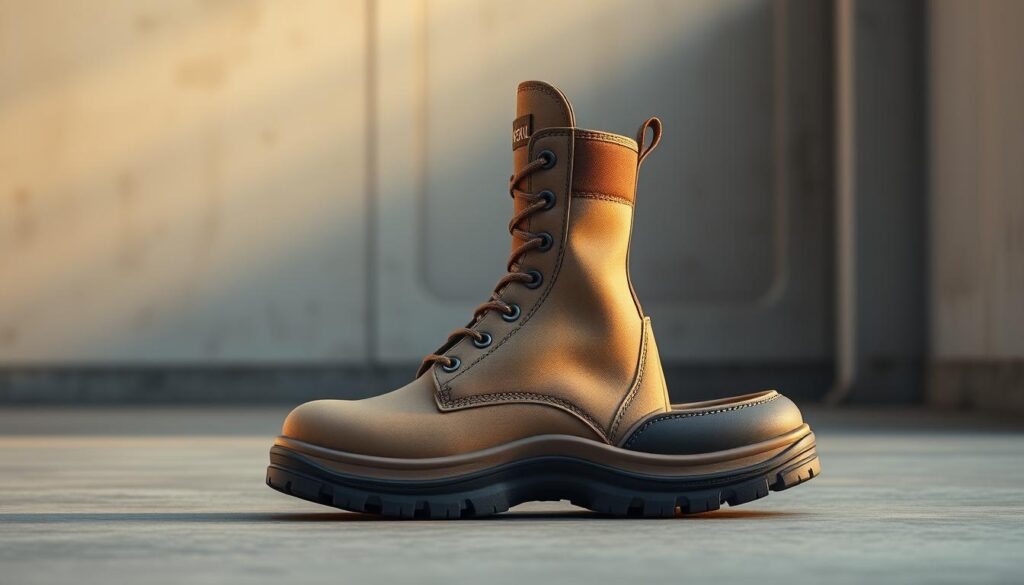
Integration of Advanced Materials and Waterproofing Technologies
Modern boots now incorporate materials like Gore-Tex and synthetic rubber, offering enhanced waterproofing and breathability. These innovations ensure durability in harsh weather while maintaining comfort for extended wear.
Traditional leather has been complemented by lightweight synthetics, reducing the overall weight without sacrificing strength. This shift allows users to move more efficiently, whether on rugged terrain or city streets.
From Military Use to Everyday Footwear and Heritage Revival
Once reserved for soldiers, tactical boots have found a place in everyday fashion. Brands like Oakley, Danner, and Nick’s Handmade Boots have revived classic designs with modern materials, appealing to both history enthusiasts and style-conscious consumers.
Heritage styles, inspired by vintage military boots, are now available with contemporary upgrades. Features like adjustable support systems and enhanced stitching cater to today’s diverse needs, ensuring both functionality and aesthetic appeal.
From the battlefield to the streets, these boots continue to evolve, merging military-grade performance with everyday practicality. Their enduring popularity is a testament to their adaptability and timeless design.
Global Perspectives on Military Boot Design
Military boot design has been shaped by diverse global influences, reflecting unique needs and environments. While the U.S. has pioneered many innovations, other countries have contributed equally groundbreaking solutions. By examining international developments, we gain a deeper understanding of how boots are tailored to meet specific challenges.
Comparing U.S. Innovations with International Developments
In the U.S., military boots have evolved to prioritize durability and comfort. Features like the Munson Last and advanced materials set a high standard. However, European militaries have also made significant strides. For example, the German Bundeswehr combat boot emphasizes lightweight construction and breathability, ideal for varied terrains.
Similarly, the French “Botte Félin” model incorporates modular designs, allowing soldiers to adapt their footwear to different missions. These innovations highlight how international approaches often focus on versatility and adaptability.
Material Selection and Construction Techniques
Material choices vary widely across countries. While the U.S. often uses high-quality leather and synthetic blends, European designs frequently incorporate advanced textiles like Gore-Tex for enhanced waterproofing. These differences reflect varying environmental demands, from the arid deserts of the Middle East to the humid jungles of Southeast Asia.
Construction techniques also differ. For instance, British military boots often feature double stitching for added durability, while Italian models focus on ergonomic designs for prolonged wear. These variations demonstrate how global perspectives drive innovation.
Climate, Terrain, and Tactical Demands
Climate and terrain play a crucial role in shaping boot features. In colder regions, insulation and waterproofing are prioritized. In contrast, jungle boots emphasize breathability and quick-drying materials. These adaptations ensure that soldiers can perform effectively in any environment.
For example, the Bundeswehr’s desert boots feature reinforced soles for stability on sandy terrain, while the French “Botte Félin” includes anti-slip treads for wet conditions. These designs showcase the importance of tailoring footwear to specific needs.
Global Trends Inspiring U.S. Innovations
Understanding international boot design helps refine U.S. approaches. Features like modular components and advanced textiles are increasingly incorporated into American models. This cross-pollination of ideas ensures that combat boots continue to evolve, offering better performance and comfort for soldiers worldwide.
By learning from global trends, we can create boots that meet the diverse demands of modern warfare. This collaborative approach ensures that footwear remains a critical tool for success on the battlefield.
Conclusion
From the trenches of World War I to the modern streets, military-inspired footwear has undergone remarkable transformations. Early designs like the Pershing boot set the stage for durability and functionality, while innovations in materials and construction have shaped today’s versatile styles.
Modern combat boots blend heritage with cutting-edge technology. Advanced leather and synthetic materials ensure durability, while ergonomic designs prioritize comfort and performance. These boots are no longer just for soldiers; they’ve become a staple for outdoor enthusiasts and professionals alike.
We invite you to explore the rich history and modern adaptations of military-inspired footwear. Whether for rugged terrain or everyday wear, these boots embody a perfect balance of tradition and innovation. Discover the legacy and quality that continue to define this iconic footwear.
FAQ
What were the key features of U.S. military boots during the Civil War?
During the Civil War, U.S. military boots were primarily made of leather and designed for durability. They featured a simple construction with minimal ankle support, as the focus was on withstanding harsh conditions rather than comfort or advanced design.
How did World War I influence the design of military boots?
World War I introduced trench boots, which were designed to handle muddy and wet conditions. These boots featured improved waterproofing and thicker soles to protect soldiers from trench foot and other weather-related issues.
What advancements were made in military boots during World War II?
WWII saw the development of paratrooper boots and combat boots with enhanced ankle support and durability. These boots were tailored for specific terrains and combat needs, such as jungle boots for tropical environments.
How have modern tactical boots evolved for everyday wear?
Modern tactical boots now incorporate advanced materials like nylon and rubber for lightweight comfort and durability. They also feature waterproofing technologies and ergonomic designs, making them suitable for both military use and daily activities.
What role does the Munson Last play in boot design?
The Munson Last revolutionized boot design by introducing a foot-shaped last that provided better fit and comfort. This innovation is still used today in many military and tactical boots.
How do U.S. military boot innovations compare to international designs?
U.S. military boots often emphasize durability and terrain-specific features, while international designs may focus on lightweight materials and unique patterns. Both approaches aim to meet the needs of soldiers in diverse environments.
What materials are commonly used in today’s tactical boots?
Today’s tactical boots often use a combination of leather, nylon, and rubber. These materials provide a balance of durability, comfort, and weather resistance, making them versatile for various conditions.
Why are jungle boots designed differently from standard combat boots?
Jungle boots are specifically designed for tropical environments. They feature breathable materials, drainage systems, and lightweight construction to handle heat, moisture, and uneven terrain effectively.
