

Military uniforms are designed for more than appearance. The right uniform needs to suit the environment, allow comfortable movement, handle regular wear and provide practical features for the job. Whether you’re looking for military clothing, tactical apparel, BDU uniforms or durable everyday workwear, understanding the differences can make choosing the right option much easier.
However, not all military uniforms are the same. Some are designed for field use, others for training or everyday duty, and some are better suited to outdoor activities and demanding work environments.
So, what should you look for when buying a military uniform? Fabric, fit, camouflage pattern, construction and intended use all matter.
In this guide, we’ll explain the main types of military uniforms, compare popular fabrics, discuss camouflage patterns and share practical tips to help you choose the right military clothing.
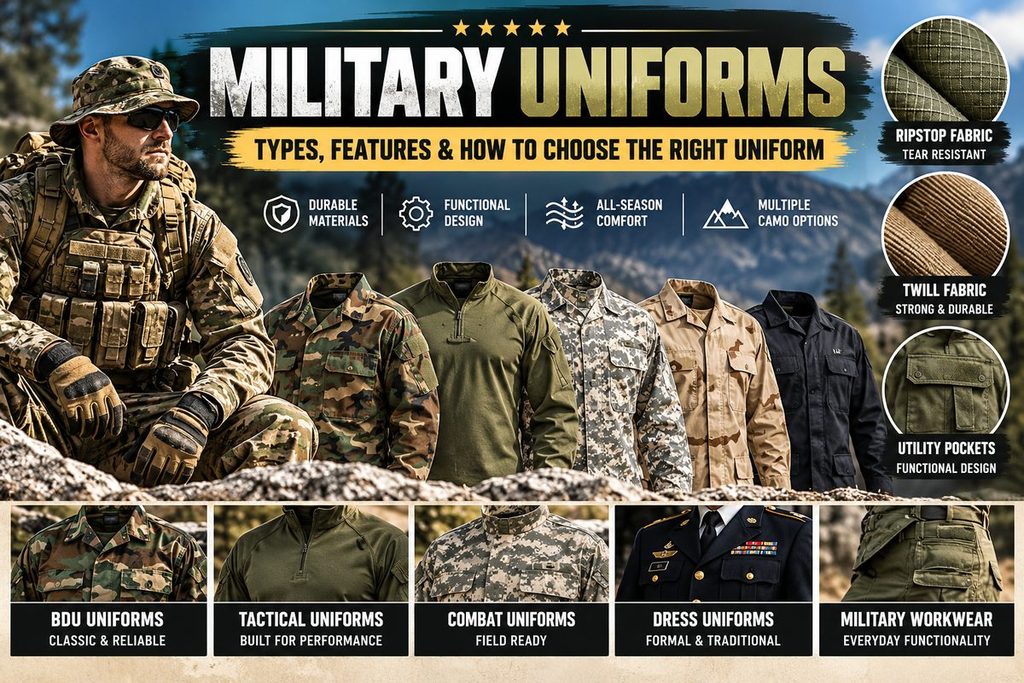
What Are Military Uniforms?
Military uniforms are clothing systems designed for members of the armed forces. They provide a consistent appearance and are selected according to duties, environments and organizational requirements.
Depending on their purpose, military uniforms may prioritize durability, comfort, mobility, weather protection or a formal appearance.
For example, a field uniform needs to handle outdoor conditions and frequent movement. A dress uniform, on the other hand, focuses more on appearance and formal presentation.
Today, military-style clothing is also popular outside military settings. Outdoor enthusiasts, campers, workers and people who appreciate functional apparel often look for military-inspired shirts, tactical pants, cargo clothing and durable outerwear.
When shopping for military uniforms, it’s important to distinguish between official service uniforms and commercially available military-style apparel. Commercial products may share similar designs or features, but they are not automatically approved for official military use.
Different Types of Military Uniforms
Before choosing military clothing, consider what type of uniform you actually need. Different designs serve different purposes, and selecting the right category helps narrow down your options.
1. Battle Dress Uniforms (BDUs)
Battle Dress Uniforms, commonly called BDUs, are field-style military uniforms traditionally associated with practical outdoor use.
A typical BDU set includes a button-front shirt and matching trousers. Depending on the design, it may feature chest pockets, adjustable cuffs, reinforced areas and a relaxed fit.
BDU clothing is popular among people who need functional apparel for outdoor activities, work and recreational use.
Common BDU features include:
- Button-front shirt designs
- Multiple storage pockets
- Durable fabric construction
- Adjustable cuffs and waist features
- Camouflage and solid-color options
- Matching shirts and trousers
When choosing BDU clothing, pay attention to fabric weight, stitching, sizing and the type of activity you’ll be doing.
If you’re comparing different styles, explore our BDU Shirts collection to find options that suit your clothing preferences and intended use.
2. Tactical Uniforms
Tactical uniforms are designed around functionality, mobility and practical use. They are commonly associated with law enforcement, security work, training and outdoor activities.
Unlike traditional uniform designs, tactical clothing may include features intended to support active movement and equipment use.
Depending on the product, these features can include:
- Reinforced knees and elbows
- Flexible fabric panels
- Multiple utility pockets
- Adjustable waistbands
- Durable stitching
- Breathable materials
Tactical uniforms are not all built the same way. Some are designed for demanding professional environments, while others are intended for general outdoor or recreational use.
Before purchasing, check the manufacturer’s specifications rather than assuming every tactical uniform offers the same level of protection or durability.
3. Combat Uniforms
Combat uniforms are designed for military field environments and are generally associated with practical clothing systems that support movement and everyday field activities.
They often feature functional pockets, durable fabrics and camouflage patterns suited to particular environments.
Modern combat clothing can vary considerably in construction. Some designs focus on traditional uniform styling, while others incorporate more specialized materials and features.
For everyday buyers, commercially available combat-style clothing can offer a practical option for outdoor activities, camping and rugged work. However, it should not be confused with officially issued or approved military equipment.
4. Dress Uniforms
Dress uniforms are intended for formal military occasions, ceremonies, official events and other situations where presentation is important.
They are different from field uniforms because appearance takes priority over features such as large storage pockets or rugged construction.
Dress uniforms may include formal jackets, trousers, shirts, insignia and other accessories depending on the service and occasion.
If you’re shopping for clothing to use in professional or ceremonial settings, always check the applicable dress requirements before purchasing.
5. Military-Inspired Workwear and Outdoor Clothing
Military-inspired clothing has also become popular among people who need practical everyday apparel.
Cargo pants, utility shirts, field jackets and rugged trousers often take inspiration from traditional military designs.
These products can be useful for:
- Outdoor work
- Camping and hiking
- General utility activities
- Travel and everyday wear
- Recreational outdoor use
The main advantage is functionality. Multiple pockets, durable fabrics and comfortable cuts can make these clothing styles practical for a variety of activities.
Military Uniform Fabrics: Which Material Should You Choose?
Fabric is one of the most important factors when buying military uniforms. It affects comfort, breathability, weight, durability and how a garment performs during regular use.
Here are some common materials found in military-style clothing.
Cotton
Cotton is a natural fabric known for its softness and breathability.
It can be comfortable for everyday wear, particularly in warm conditions. However, cotton generally absorbs moisture and can take longer to dry than many synthetic fabrics.
Best suited for: Everyday clothing, casual wear and situations where comfort is a priority.
Cotton-Polyester Blends
Cotton-polyester blends combine cotton’s familiar feel with some of polyester’s practical properties.
Depending on the fabric composition, these blends may offer easier care, better shape retention and quicker drying than comparable cotton-only garments.
Best suited for: Regular workwear, outdoor clothing and everyday military-style apparel.
Ripstop Fabric
Ripstop fabric is made using a reinforced weave that creates a visible grid pattern. The construction helps limit the spread of small tears.
It is commonly used in outdoor clothing, tactical apparel and BDU-style garments.
Best suited for: People looking for lightweight clothing with a fabric construction designed to resist tearing.
Twill Fabric
Twill is a weaving pattern recognized by its diagonal texture. It is widely used in workwear, trousers and military-style clothing.
Depending on its weight and fiber composition, twill can provide a substantial feel and good everyday wear performance.
Best suited for: Workwear, utility clothing and people who prefer a more substantial fabric.
Ripstop vs. twill: Which is better?
Neither is automatically better. Ripstop is known for its reinforced grid construction, while twill is valued for its distinctive weave and range of fabric weights.
Your choice should depend on the garment’s construction, material composition, climate and intended use.
Understanding Military Camouflage Patterns
Camouflage is one of the most recognizable features of military clothing. Different patterns are developed around particular environments, colors and visual conditions.
However, camouflage is not simply about choosing a design that looks good. The surrounding environment should influence your choice.
Woodland Camouflage
Woodland camouflage generally uses a combination of green, brown and darker shades.
It is visually associated with forested and heavily vegetated environments. Woodland patterns are also popular in military-inspired clothing and outdoor apparel.
Desert Camouflage
Desert camouflage usually features tan, beige, brown and other lighter shades.
These colors are associated with dry, sandy and rocky environments.
Digital Camouflage
Digital camouflage uses pixel-like shapes rather than traditional organic patterns.
Different digital patterns are developed for different environments, so the colors and layout can vary.
Solid Colors
Not every military-style uniform needs a camouflage pattern.
Solid colors such as olive drab, black, khaki and navy are popular choices for workwear, outdoor clothing and everyday use.
Buying tip: Choose a camouflage pattern or solid color based on where and how you intend to wear the clothing. Also check whether your workplace or organization has specific uniform requirements.
How to Choose the Right Military Uniform
Once you understand the different uniform types, the next step is choosing a product that meets your needs.
Here are seven factors worth checking before placing an order.
1. Start With Your Intended Use
Think about what you need the uniform for.
Are you buying clothing for outdoor work, camping, hiking, training or everyday wear?
A lightweight BDU shirt may suit casual outdoor activities, while a more structured tactical uniform may be a better fit for demanding work environments.
Start with the activity rather than choosing a product based only on its appearance.
2. Check the Fabric and Construction
Read the product specifications carefully.
Look for the material composition, fabric weight where available, stitching details and reinforced areas.
A garment with strong construction and suitable materials is generally a better choice for regular use than one selected purely for its appearance.
Also consider care instructions. Some fabrics require more attention during washing and drying.
3. Get the Right Fit
Fit affects both comfort and mobility.
A uniform that is too tight can restrict movement, while an oversized garment may feel uncomfortable and interfere with daily activities.
Before ordering:
- Check the manufacturer’s size chart.
- Measure your chest, waist and inseam where required.
- Compare your measurements with the listed garment sizes.
- Check whether the product has a regular, relaxed or fitted cut.
- Review any sizing guidance provided by the manufacturer.
Do not assume that every military uniform follows the same sizing system. Sizing can differ between brands and product lines.
4. Consider the Weather
Your local climate should influence your fabric choice.
For warm conditions, lightweight and breathable materials may feel more comfortable. For cooler weather, heavier clothing and suitable layering options may be more practical.
If you regularly work outdoors, consider whether the garment is suitable for the temperatures and conditions in which you plan to wear it.
Remember that a standard military-style uniform is not necessarily waterproof, insulated or designed for extreme weather.
Check the actual product specifications before relying on those features.
5. Look at Pocket Design and Storage
Pockets are a practical part of many military uniforms.
Chest pockets, cargo pockets and utility compartments can help organize everyday essentials.
However, more pockets do not always mean a better garment. Consider whether the pocket placement, size and closures are useful for your activities.
For example, someone working outdoors may prefer accessible utility pockets, while someone purchasing clothing for casual wear may prefer a simpler design.
6. Check Brand and Product Specifications
Different manufacturers use different materials, patterns, cuts and construction methods.
Before purchasing, review the product description, available sizes and manufacturer information.
Avoid assuming that two uniforms with similar appearances have identical specifications.
If you are comparing several products, look at their fabric composition, pocket design, sizing and intended use rather than relying on the product title alone.
7. Compare Price With Practical Value
Price matters, but it should not be the only deciding factor.
A lower-priced uniform may be suitable for occasional use, while someone who wears work clothing regularly may prefer a product with construction and materials suited to frequent use.
Compare the features that matter to you and choose an option that fits your requirements and budget.
Common Mistakes to Avoid When Buying Military Uniforms
Even when a uniform looks right, a few overlooked details can lead to an unsuitable purchase.
Watch out for these common mistakes:
- Choosing the wrong size: Always check the manufacturer’s sizing chart rather than guessing.
- Ignoring fabric composition: Two similar-looking uniforms can feel and perform differently.
- Buying based only on camouflage: Pattern and appearance should not replace practical considerations.
- Overlooking the climate: Fabric weight and breathability matter when working or spending time outdoors.
- Assuming all tactical clothing is protective: A tactical appearance does not automatically mean a garment offers specialized protection.
- Ignoring product descriptions: Check the listed features, available sizes and care instructions before ordering.
Taking a few minutes to compare these details can help you make a more informed buying decision.
Where to Find Military and Tactical Clothing
Once you know what type of clothing you need, finding the right product becomes easier.
Army Navy USA offers military-inspired apparel, tactical clothing, footwear and outdoor gear for customers looking for practical clothing and equipment.
Whether you’re comparing BDU-style apparel, military clothing or utility-focused workwear, explore the available product collections to find options that match your preferences.
Ready to upgrade your gear?
Browse our military clothing and tactical apparel selections to compare available styles, materials and features.
Looking for field-style apparel?
Shop BDU Shirts and find options designed around practical styling and everyday functionality.
You can also explore our Tactical Clothing and Military Surplus selections for more outdoor and utility-inspired gear.
Frequently Asked Questions About Military Uniforms
1. What are the different types of military uniforms?
Common types include battle dress uniforms (BDUs), tactical uniforms, combat uniforms, dress uniforms and military-inspired workwear. Each serves a different purpose, from field activities to formal occasions.
2. What is the difference between BDU and tactical uniforms?
BDUs are traditionally associated with field-style clothing and typically include a shirt and trousers with practical pockets. Tactical uniforms may include additional functional features such as reinforced areas, flexible panels and specialized pocket designs. The exact features depend on the manufacturer and product.
3. Which fabric is best for military uniforms?
There is no single best fabric for every situation. Cotton offers a familiar, breathable feel, cotton-polyester blends combine different fabric properties, ripstop uses a reinforced grid weave, and twill is known for its diagonal construction. Choose according to your intended use and climate.
4. Are military uniforms suitable for everyday wear?
Military-inspired clothing can be suitable for everyday wear, outdoor activities and certain types of work. However, official military uniforms may have specific rules governing their use. Check applicable requirements before wearing official-style uniforms in restricted or regulated settings.
5. How should military uniforms fit?
Military-style clothing should allow comfortable movement without being excessively tight or loose. Check the manufacturer’s size chart and compare your body measurements with the listed sizing information before ordering.
6. What is the difference between woodland and desert camouflage?
Woodland camouflage generally uses darker greens and browns associated with vegetated environments. Desert camouflage typically uses lighter tan, beige and brown shades suited to dry environments.
7. How do I care for military uniforms?
Always follow the garment’s care label. Washing temperature, detergent recommendations and drying instructions can vary depending on fabric composition and construction. Avoid assuming that every military-style garment can be washed in the same way.
Final Thoughts
Choosing the right military uniform comes down to understanding what you need from it. Fabric, fit, construction, camouflage and practical features all influence how comfortable and useful a garment will be.
Whether you’re considering BDU shirts, tactical uniforms, combat-style clothing or military-inspired workwear, take time to compare the available options and read the product specifications.
A good buying decision is not about choosing the uniform with the most features. It’s about finding clothing that suits your intended use, feels comfortable and offers the functionality you actually need.
Explore Army Navy USA’s military clothing and tactical apparel selections to find products that fit your everyday, outdoor or workwear requirements.
