

When temperatures drop, choosing the right winter clothing becomes more important than simply putting on another jacket. Whether you’re working outdoors, hiking, camping, or spending long hours in cold weather, the layers you wear underneath your outerwear can make a noticeable difference in comfort.
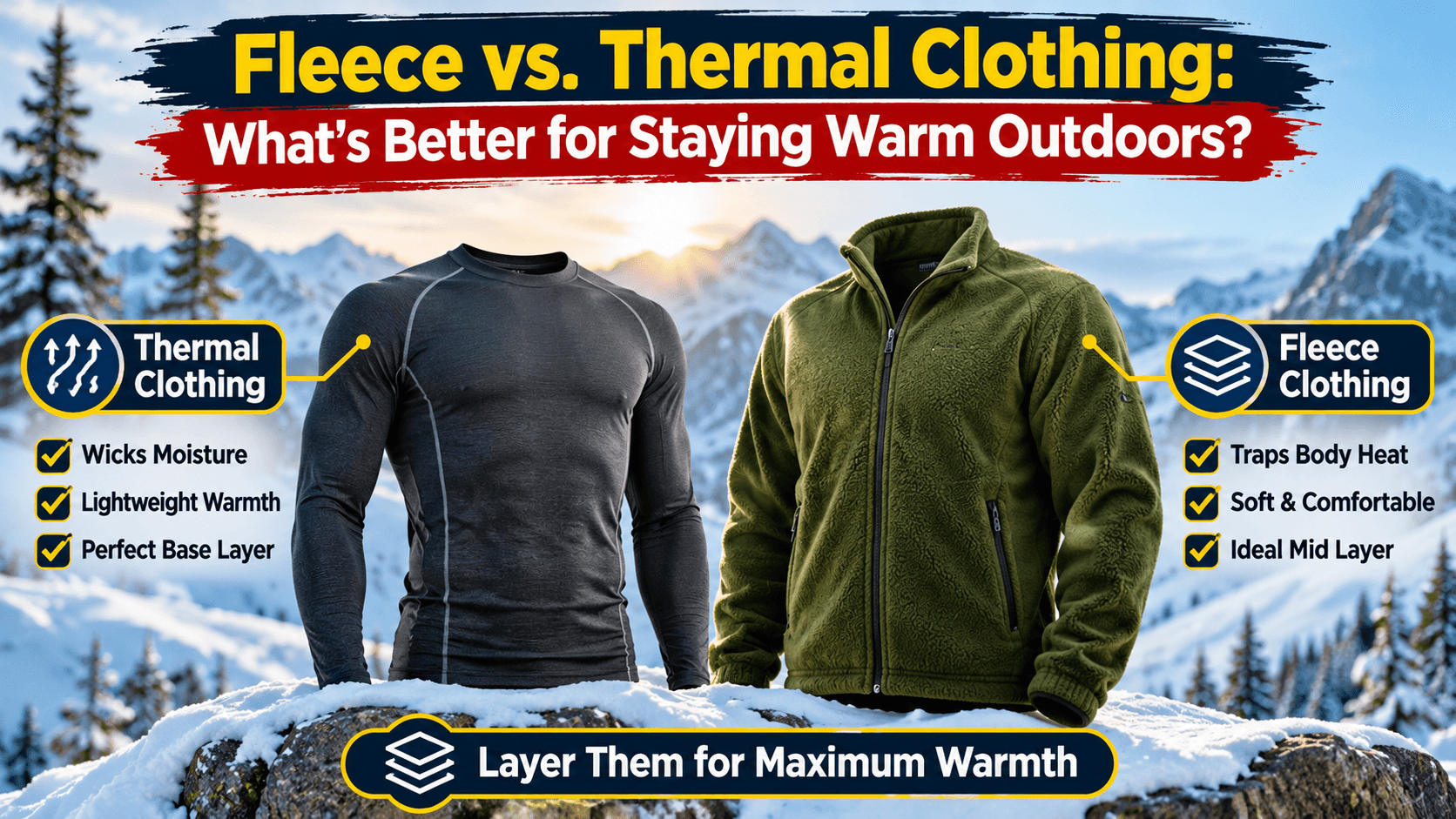
Two popular choices for cold-weather dressing are fleece and thermal clothing. Both help you stay warm, but they work differently. Thermal clothing is designed primarily to sit close to your skin, manage perspiration, and provide a layer of insulation. Fleece, on the other hand, is commonly worn over a base layer to trap warm air and provide additional insulation.
So, which is better: fleece or thermal clothing? The answer depends on the temperature, your activity level, and how much protection you need.
In this guide, we’ll compare fleece vs. thermal clothing, explain their materials and benefits, and show you how to combine both for better warmth during outdoor activities and demanding workdays.
1. What Is Thermal Clothing?
Thermal clothing is designed to help maintain body warmth in cold conditions. It is usually worn directly against the skin as the first layer in a winter clothing system.
Unlike ordinary undershirts, thermal base layers are made with fabrics that help manage moisture while providing some insulation. This matters because sweating during physical activity can leave your skin damp. When you slow down or stop moving, that moisture can make you feel cold.
Thermal clothing helps address this problem by moving perspiration away from the skin, allowing it to evaporate through the layers above.
Common Types of Thermal Clothing
Thermal clothing comes in different styles and fabric weights, depending on the conditions in which you plan to wear it.
- Thermal Shirts: Long-sleeve tops designed to provide coverage and warmth beneath regular clothing.
- Thermal Pants: Base-layer bottoms worn under work pants, jeans, tactical trousers, or outdoor clothing.
- Thermal Underwear: Close-fitting garments designed for cold-weather comfort.
- Long Johns: Traditional thermal bottoms that provide additional coverage for the legs.
- Performance Base Layers: Lightweight or midweight garments designed for moisture management during physical activities.
Benefits of Thermal Clothing
Thermal clothing is particularly useful when you need warmth without adding unnecessary bulk.
Its main advantages include:
- Moisture Management: Many synthetic and wool thermal fabrics wick perspiration away from the skin.
- Lightweight Warmth: Thermal garments provide insulation without requiring a thick outer layer.
- Comfortable Layering: Their close-fitting construction makes them easy to wear beneath everyday clothing and workwear.
- Flexible Movement: Most thermal base layers are designed to fit comfortably without restricting normal movement.
- Versatile Use: They work well for outdoor jobs, winter travel, hiking, camping, and everyday cold-weather wear.
For people who spend hours outdoors, a suitable thermal base layer can make a significant difference in overall comfort.
2. What Is Fleece Clothing?
Fleece is a soft, insulating fabric commonly made from polyester. It is designed to trap air within its structure, helping retain the warmth your body produces.
Unlike thermal clothing, which is generally worn next to the skin, fleece is most commonly used as a middle layer. It can be worn over a thermal shirt and underneath a jacket or weather-resistant outer layer.
Fleece is popular because it offers warmth without the weight of many traditional winter fabrics. It also dries relatively quickly and allows air to circulate, making it useful for outdoor activities where your body temperature changes throughout the day.
Common Types of Fleece Clothing
Fleece garments are available in several styles and thicknesses.
- Fleece Jackets: Versatile insulating layers for everyday wear, hiking, and outdoor work.
- Fleece Pullovers: Comfortable mid-layers that can be worn over thermal shirts.
- Fleece Hoodies: Casual options that provide additional warmth around the upper body and head.
- Fleece Vests: Sleeveless insulating garments that keep the torso warm while allowing greater arm mobility.
- Tactical Fleece Jackets: Functional outer or mid-layers designed for field activities and demanding environments.
Fleece also comes in different weights. Lightweight fleece works well for mild cold and active use, while heavier fleece provides additional insulation when temperatures fall.
Explore fleece pullovers, jackets, and workwear tops for practical layering options.
Benefits of Fleece Clothing
Fleece is a popular choice for people who need an insulating layer without wearing a heavy winter coat.
Its main benefits include:
- Effective Insulation: Fleece traps warm air and helps reduce heat loss.
- Lightweight Construction: It offers useful warmth without the weight of many traditional winter garments.
- Quick Drying: Polyester fleece generally dries faster than many heavier fabrics.
- Breathability: Many fleece garments allow excess body heat and moisture vapor to escape.
- Comfort: Soft fabric makes fleece comfortable for extended wear.
- Easy Layering: It fits naturally over thermal shirts and beneath suitable jackets.
One limitation is that ordinary fleece is not necessarily windproof or waterproof. Strong winds can pass through some fleece fabrics, reducing their insulating effectiveness. A wind-resistant or waterproof outer layer may be needed in exposed conditions.
3. Fleece vs. Thermal Clothing: What Is the Difference?
Although fleece and thermal clothing are both associated with winter warmth, they have different jobs.
The most important distinction is how each garment fits into a layering system.
Thermal clothing works primarily as a base layer, helping manage moisture close to the skin. Fleece generally works as an insulating middle layer, helping retain body heat.
Here’s how they compare.
| Feature | Thermal Clothing | Fleece Clothing |
|---|---|---|
| Main Purpose | Moisture management and base-layer warmth | Insulation and heat retention |
| Typical Position | Next to the skin | Middle layer |
| Material | Polyester, merino wool, polypropylene, blends | Usually polyester |
| Fit | Close-fitting | Regular or relaxed |
| Warmth | Varies by fabric and weight | Varies by fleece thickness and construction |
| Moisture Management | Designed to wick moisture in many styles | Generally dries quickly and offers breathability |
| Wind Protection | Limited | Limited in standard fleece |
| Best Use | Under everyday clothes and outdoor layers | Over thermals and beneath outerwear |
Which One Provides More Warmth?
There isn’t a universal winner. A heavyweight thermal garment may provide more insulation than a very lightweight fleece, while a thick fleece jacket may offer substantially more warmth than a lightweight thermal shirt.
Their performance depends on fabric weight, construction, fit, and the conditions in which you wear them.
However, for a practical winter layering system, combining thermal clothing with a fleece layer is often more effective than relying on either one alone.
4. Is Fleece Warmer Than Thermal Underwear?
This is one of the most common questions when shopping for winter clothing.
The answer depends on what you’re comparing.
A thick fleece jacket generally provides more standalone insulation than a lightweight thermal shirt. However, thermal underwear is designed to be worn close to the body, not to replace a dedicated insulating jacket.
Think about their different roles:
- Thermal underwear provides a comfortable first layer and helps manage perspiration.
- Fleece adds insulation by trapping warm air around your body.
- An outer jacket protects against wind, rain, and snow, depending on its construction.
For example, wearing a thermal shirt under a fleece jacket creates two complementary layers. Adding a weather-resistant jacket over both provides another level of protection when conditions become colder or windier.
Rather than asking which garment is warmer, consider which combination will work best for your outdoor activity.
5. Which Is Better for Outdoor Work?
Outdoor workers face different challenges from people who spend only a short time outside. Construction workers, maintenance crews, security personnel, warehouse staff, and field workers may experience changing temperatures throughout their shifts.
The right winter clothing needs to provide warmth without making physical tasks uncomfortable.
Thermal Clothing for Outdoor Work
Thermal base layers are a practical choice for workers who need warmth beneath their regular uniforms or work clothes.
They are particularly useful during:
- Early morning shifts.
- Cold warehouse and storage work.
- Outdoor maintenance.
- Security and patrol duties.
- Construction and equipment handling.
A thermal shirt beneath a work uniform can provide an additional layer without significantly changing the fit of the clothing.
Fleece for Outdoor Work
Fleece works well when workers need additional insulation during colder shifts.
A fleece jacket or pullover can be worn over a thermal shirt and removed when temperatures rise or physical activity increases.
For outdoor jobs involving wind or rain, a suitable protective outer layer should be added.
Workers looking for additional cold-weather clothing can browse workwear and outdoor work clothing for practical options.
6. Fleece vs. Thermal Clothing for Hiking and Camping
Outdoor recreation requires clothing that adapts to changing weather and activity levels.
A person hiking uphill may generate considerable body heat, while someone sitting at a campsite in the evening can become cold quickly. Wearing the same combination throughout the day may not be comfortable.
For Hiking
Thermal base layers help manage moisture during movement. Lightweight or midweight fleece can provide insulation when temperatures are low, especially during breaks or exposed sections of a trail.
Avoid wearing too many heavy layers while hiking uphill. Excessive sweating can leave your clothing damp and make you uncomfortable when you stop.
For Camping
Camping often involves long periods of sitting or standing still, particularly in the evening and early morning.
A warmer thermal base layer combined with a midweight or heavyweight fleece jacket can provide useful insulation.
If temperatures are particularly low, add an insulated jacket and suitable wind or rain protection.
For Everyday Outdoor Activities
For walking, travel, shopping, and other everyday activities, a lightweight thermal shirt beneath a fleece pullover may be sufficient in mild cold conditions.
When the weather becomes colder, you can add a suitable jacket without changing your entire outfit.
7. Understanding the Three-Layer Winter Clothing System
One of the most practical ways to stay comfortable outdoors is to dress in layers.
Instead of relying on one thick jacket, a layering system uses different garments to manage moisture, retain warmth, and protect against weather.
Layer 1: Base Layer – Manage Moisture
The first layer sits directly against your skin.
Thermal shirts and bottoms made from suitable synthetic fabrics or merino wool help move moisture away from the body.
Choose a comfortable fit that allows the fabric to sit close to your skin without restricting movement.
Browse military thermal underwear and base layers for options in different weights and styles.
Layer 2: Middle Layer – Retain Body Heat
The middle layer provides insulation.
Fleece jackets, pullovers, and insulating vests are popular choices because they trap warm air while remaining relatively lightweight.
Choose the thickness according to the temperature and your activity level.
For additional options, explore work jackets, fleece, and insulated outerwear.
Layer 3: Outer Layer – Protect Against Weather
The outer layer protects the clothing underneath from environmental conditions.
Depending on the weather, this could be a wind-resistant jacket, waterproof shell, insulated parka, or durable work jacket.
A waterproof outer layer is particularly useful in wet conditions, while wind-resistant construction helps reduce heat loss in exposed environments.
The advantage of this system is flexibility. You can remove the fleece when you’re active, add it during breaks, or wear your outer jacket when wind and rain become a concern.
8. Which Materials Should You Choose for Winter Clothing?
The material matters just as much as the type of garment.
Different fabrics provide different levels of insulation, moisture management, durability, and comfort.
Polyester
Polyester is widely used in thermal base layers and fleece garments.
It is lightweight, dries relatively quickly, and can be designed to wick moisture away from the skin. Polyester fleece is also popular because its structure traps insulating air.
Merino Wool
Merino wool is a natural option for thermal base layers.
It provides insulation, manages moisture, and is often valued for odor resistance during extended wear. It is a good choice for hiking, camping, and multi-day outdoor activities.
Cotton
Cotton is comfortable for everyday wear, but it is generally not the best choice for a base layer during cold-weather activities that involve sweating.
It absorbs moisture and dries relatively slowly, which can leave fabric damp against the skin.
For active outdoor use in cold conditions, moisture-managing synthetic fabrics or wool are usually better choices.
Fleece
Most modern fleece garments use polyester fibers.
Their soft, raised construction helps trap air, creating insulation without requiring a heavy fabric. However, standard fleece should not be treated as a substitute for waterproof or windproof outerwear.
9. Common Mistakes When Choosing Winter Clothing
Even expensive winter clothing may not perform well if the layers are unsuitable for the conditions.
Here are a few mistakes worth avoiding.
Choosing Thickness Instead of Function
A thicker garment isn’t automatically the best choice. A breathable base layer and suitable insulating layer can be more comfortable than wearing one heavy garment.
Wearing Cotton as the Base Layer
Cotton can retain sweat and take a long time to dry. For cold-weather activities, choose moisture-managing thermal fabrics instead.
Ignoring Wind and Rain
Fleece provides insulation, but standard fleece does not offer complete protection against strong winds or rain. Choose an appropriate outer jacket when weather conditions require it.
Wearing Too Many Layers
Excessive insulation during physical activity can cause overheating and sweating. Adjust your clothing as your activity level changes.
Choosing the Wrong Fit
Thermal base layers should fit comfortably against the skin. Fleece should leave enough room for the layers underneath without becoming excessively loose or restrictive.
10. Fleece or Thermal Clothing: What Should You Buy?
If you’re deciding between fleece and thermal clothing, start by considering where and how you’ll use it.
Here is a simple buying guide.
| Your Requirement | Recommended Clothing |
|---|---|
| Everyday winter layering | Thermal shirt and fleece pullover |
| Cold outdoor work | Thermal base layer and fleece jacket |
| Hiking and trekking | Moisture-wicking thermal base layer and lightweight fleece |
| Winter camping | Midweight or heavyweight thermals and insulating fleece |
| Cold, windy conditions | Thermal base layer, fleece, and wind-resistant jacket |
| Wet and cold weather | Thermal base layer, insulating fleece, and waterproof outerwear |
If you work outdoors regularly, investing in both thermal clothing and fleece gives you more flexibility throughout the winter.
You can adjust your layers according to the weather, your workload, and how much warmth you need.
Explore the Winter Work Essentials collection to find cold-weather clothing, including thermal base layers, fleece, hoodies, and work jackets.
Frequently Asked Questions
1. Is fleece better than thermal clothing?
Fleece and thermal clothing serve different purposes. Thermal clothing is generally designed as a base layer for moisture management and warmth, while fleece provides insulation as a middle layer. Combining both is often a practical choice for cold-weather activities.
2. Can you wear fleece over thermal underwear?
Yes. Wearing a fleece jacket over thermal underwear is a common winter layering combination. The thermal layer sits close to your skin, while fleece provides additional insulation.
3. Is thermal clothing enough for winter?
Thermal clothing may be sufficient in mild cold conditions, depending on its weight and your activity. In colder temperatures, you will generally benefit from adding an insulating fleece layer and suitable outerwear.
4. Does fleece keep you warm when wet?
Fleece generally retains more of its insulating ability when damp than some other insulating materials and dries relatively quickly. However, wet clothing can still make you uncomfortable, so protecting your layers from heavy rain is important.
5. What is the best thermal clothing for outdoor work?
Look for thermal shirts and bottoms made from moisture-wicking polyester, merino wool, or suitable fabric blends. Consider the garment’s weight, fit, breathability, and compatibility with your work uniform.
6. Should thermal clothing be tight or loose?
Thermal base layers should fit close to the body without feeling restrictive. A comfortable fit helps maintain contact with the skin and allows the garment to perform its intended moisture-management function.
7. Can you wear a fleece jacket as your outer layer?
Yes, in mild and relatively dry conditions. However, standard fleece does not provide reliable protection against strong winds or rain. In exposed conditions, wear a suitable protective shell over it.
8. Which is better for extreme cold: fleece or thermal underwear?
Neither should be relied on alone for extreme cold. A suitable thermal base layer, an insulating middle layer, and weather-appropriate outerwear provide a more complete clothing system. Additional protection for your head, hands, and feet is also important.
Final Thoughts
When it comes to fleece vs. thermal clothing, the best choice isn’t necessarily one or the other. Both have an important place in a practical winter wardrobe.
Thermal clothing provides a foundation for cold-weather layering by managing moisture and adding lightweight insulation. Fleece builds on that foundation by trapping warm air and helping your body retain heat.
For outdoor workers, hikers, campers, and anyone spending extended periods in cold conditions, combining both can provide a comfortable and adaptable solution.
The key is choosing clothing that suits your activity, fits properly, and works together as a complete layering system. With the right combination of thermal base layers, fleece, and protective outerwear, you can stay more comfortable when winter temperatures drop.
