

Choosing the right work jacket is about more than finding something warm to wear. The right jacket should match your working conditions, provide suitable weather protection, allow comfortable movement and hold up to the demands of your daily routine. Whether you work in construction, manufacturing, warehousing, maintenance or outdoor environments, your outerwear can make a noticeable difference in everyday comfort.
With so many options available, choosing between insulated work jackets, waterproof work jackets, canvas jackets, soft-shell styles and lightweight workwear can be confusing. Each type serves a different purpose, and the best choice depends on your job, climate and personal preferences.
This guide explains how to choose a work jacket by comparing insulation, fabric, weather protection, fit and practical features. You’ll also learn what to look for when shopping for durable workwear and how to find a jacket suited to your working environment.
1. Consider Your Working Environment First
Before comparing materials or insulation, think about where and how you work. A jacket designed for someone working outdoors in winter may not be suitable for someone spending most of the day inside a warehouse.
Your working environment determines which features matter most.
Construction and outdoor work: Construction workers and outdoor professionals often need durable work jackets that can handle regular movement, changing weather and contact with rough surfaces. Canvas and duck jackets are popular options for demanding work environments.
Warehouse and industrial work: Workers moving between indoor and outdoor areas may prefer lightweight work jackets or midweight insulated styles. Flexible fabrics and comfortable fits are useful when performing repetitive tasks.
Cold-weather jobs: If you regularly work in low temperatures, consider insulated work jackets with quilted or thermal linings. The appropriate insulation depends on the temperature and activity level.
Wet and rainy conditions: Waterproof or water-resistant work jackets can help manage exposure to rain and moisture. Look for construction and closures suited to the conditions you face.
High-visibility environments: Roadside, construction and other visibility-sensitive jobs may require high-visibility workwear. Always check the applicable workplace requirements and safety standards before choosing a jacket.
The goal is to choose workwear that matches your actual job rather than paying for features you may not need.
2. Understand Different Types of Work Jacket Insulation
Insulation is one of the most important factors when choosing a winter work jacket. It helps retain body heat, but different insulation designs offer different levels of warmth and flexibility.
Insulated Work Jackets
Insulated work jackets are designed to retain warmth in colder conditions. They commonly feature synthetic fill, quilted construction or thermal linings.
They are worth considering for:
- Outdoor construction work during colder months
- Warehouse duties in unheated spaces
- Maintenance and equipment work outdoors
- General cold-weather activities
When comparing insulated jackets, check the lining material, insulation type, jacket weight and overall construction. A heavier jacket isn’t automatically warmer or more suitable for your job.
Sherpa-Lined Work Jackets
Sherpa-lined jackets feature a soft, fleece-like lining that adds warmth and comfort. Some styles use sherpa lining throughout the body, while others include it in selected areas.
These jackets are a practical option for workers who need an additional layer during cold mornings and winter shifts.
Look for a comfortable fit that allows room for a shirt or sweatshirt underneath without restricting movement.
Fleece and Lightweight Work Jackets
Fleece jackets and lightweight workwear are useful when you need an extra layer without the bulk of a heavily insulated coat.
They work well for:
- Mild temperatures
- Indoor and outdoor transitions
- Layering under heavier outerwear
- Active jobs where freedom of movement matters
A lightweight jacket may also be more comfortable when temperatures change throughout the day.
How to Choose the Right Insulation
Think about the temperature, wind exposure and physical activity involved in your job. Workers who move constantly may generate more body heat than those who remain stationary.
Instead of automatically selecting the thickest jacket, choose insulation that matches your daily conditions.
3. Compare Work Jacket Fabrics Before Buying
The outer fabric affects durability, comfort, weight and resistance to everyday wear. Understanding the differences helps you select a jacket that suits your working conditions.
Cotton Canvas and Duck Fabric
Canvas and duck fabrics are popular choices for heavy-duty work jackets. They are valued for their sturdy construction and suitability for demanding everyday use.
Common benefits include:
- Durable woven construction
- Suitability for regular workwear use
- Structured feel
- Compatibility with insulated linings
- Practical styling for job sites and everyday wear
Duck canvas jackets are particularly popular among construction workers, tradespeople and outdoor professionals.
If you need a jacket for demanding work conditions, compare the fabric weight, stitching, reinforcements and lining rather than relying on the word “heavy-duty” alone.
Polyester Work Jackets
Polyester is widely used in workwear because it can provide a lightweight construction and practical weather-resistant options.
Depending on the design, polyester jackets may offer:
- Lightweight comfort
- Quick-drying properties
- Easy layering
- Water-resistant finishes
- Flexible outerwear designs
Check the product specifications to understand whether a particular polyester jacket is water-resistant, waterproof or simply designed for everyday use.
Nylon Work Jackets
Nylon is commonly used in lightweight outerwear and weather-oriented jackets. It can provide a practical balance between weight and durability.
Some nylon work jackets feature additional coatings or specialized construction for improved resistance to moisture and wind.
Compare the specific product details before choosing one for wet or demanding environments.
Soft-Shell Fabrics
Soft-shell work jackets are designed with flexibility and comfort in mind. Depending on their construction, they may offer stretch, wind resistance and some protection against light moisture.
They can be suitable for active work environments where freedom of movement is important.
However, soft-shell jackets are not automatically waterproof. Check the manufacturer’s specifications before relying on one for prolonged exposure to rain.
4. Choose Between Waterproof, Water-Resistant and Windproof Jackets
Weather protection is another important consideration when buying workwear.
These terms describe different capabilities, so understanding them can help you avoid choosing the wrong jacket.
Waterproof work jackets: Designed to provide a higher level of protection against water penetration. Look for waterproof construction, sealed seams and suitable closures when working in wet conditions.
Water-resistant work jackets: These are designed to resist some moisture, such as light rain or occasional splashes. They may not provide sufficient protection during prolonged or heavy rainfall.
Wind-resistant work jackets: These help reduce wind penetration and can improve comfort in exposed environments. They may be useful when working outdoors in cool or windy conditions.
Rain jackets: Lightweight rain jackets are designed primarily for wet-weather protection. Some styles can be layered over regular work clothes or insulated jackets.
When shopping for waterproof work jackets, pay attention to the product’s stated protection level and construction. A water-resistant finish should not be treated as equivalent to fully waterproof protection.
5. Find the Right Work Jacket Fit
A work jacket should fit comfortably while allowing you to perform everyday tasks. A jacket that is too tight can restrict movement, while an oversized design may become inconvenient during active work.
Consider these fit factors before buying.
Shoulder and Chest Fit
The shoulder seams should sit comfortably, and the chest should allow you to move your arms without pulling or excessive tightness.
If you regularly wear a sweatshirt or thermal layer underneath, consider leaving enough room for additional clothing.
Sleeve Length
Sleeves should provide suitable coverage when you extend your arms or bend your elbows.
Check whether the cuffs are adjustable, elastic or rib-knit, depending on the jacket design.
Jacket Length
A shorter work jacket may provide greater flexibility when bending or sitting. Longer jackets can offer additional coverage, particularly in colder conditions.
Choose a length that suits your work activities.
Relaxed vs. Regular Fit
- Regular fit: A balanced silhouette for everyday wear and moderate layering.
- Relaxed fit: Provides additional room through the body for comfortable movement and layering.
- Loose fit: Offers more room but should not interfere with tools, equipment or workplace activities.
Always check the manufacturer’s size chart because sizing can differ between brands and styles.
6. Look for Practical Work Jacket Features
Beyond fabric and insulation, small design details can make a work jacket more convenient.
Here are some features worth comparing:
Utility pockets: Multiple pockets provide storage for everyday essentials such as small tools, pens and personal items.
Zipper and snap closures: Full-length zippers make jackets easy to put on and remove. Storm flaps and snap closures may provide additional coverage.
Adjustable cuffs: Help create a more secure fit around the wrists and can improve comfort when layering.
Hoods: Hooded work jackets provide additional coverage during outdoor activities. Removable or adjustable hoods offer added flexibility.
Reinforced construction: Reinforced seams and stress points can be useful in workwear designed for regular demanding use.
High-visibility details: Reflective elements and bright colors can improve visibility in appropriate environments. Check workplace requirements before selecting safety apparel.
Lining and ventilation: Consider whether the jacket provides enough warmth without becoming uncomfortable during active work.
Prioritize features that support your actual routine instead of choosing a jacket simply because it has more pockets or additional details.
7. Best Work Jacket Styles for Different Jobs
There isn’t one work jacket that suits every profession. Different occupations require different combinations of comfort, durability and weather protection.
| Work environment | Jacket style to consider |
|---|---|
| Construction | Canvas or insulated duck work jacket |
| Warehousing | Lightweight or midweight work jacket |
| Outdoor maintenance | Water-resistant or weather-ready jacket |
| Cold-weather work | Insulated or sherpa-lined jacket |
| Roadside work | Compliant high-visibility outerwear |
| Active jobs | Flexible soft-shell work jacket |
These are general recommendations. The best choice depends on your local weather, workplace rules and the specific demands of your job.
Work Jackets for Construction Workers
Construction workers often need durable outerwear that can handle regular movement and exposure to demanding environments.
Canvas work jackets, insulated duck jackets and selected soft-shell designs are worth comparing.
Look for comfortable shoulder movement, practical pockets and a fit that works with your other work clothing.
Work Jackets for Warehouse Workers
Warehouse environments can involve frequent movement between indoor and outdoor areas.
A lightweight or midweight jacket may provide sufficient warmth without unnecessary bulk. Consider flexible fabrics, comfortable sleeves and easy-to-manage closures.
Work Jackets for Outdoor Professionals
Outdoor workers may face changing temperatures, wind and rain throughout the day.
A weather-resistant jacket, waterproof outer layer or insulated work coat may be suitable depending on the conditions.
Consider layering options so you can adjust your clothing when the weather changes.
8. Consider Trusted Workwear Brands
When shopping for a work jacket, comparing established workwear brands can help you narrow down your options.
Army Navy USA carries workwear from brands including:
Carhartt: Known for workwear styles such as duck jackets, insulated outerwear and practical everyday work clothing.
Dickies: Offers workwear apparel with options for different everyday and job-related needs.
Rothco: Provides military-inspired outerwear, field jackets and practical clothing styles.
Snap N Wear: Offers jackets and outerwear, including selected high-visibility and insulated styles.
Tru-Spec: Provides tactical and utility-oriented clothing options.
Big Bill: Offers work clothing designed for different professional environments.
When comparing brands, focus on the individual product specifications, fabric, insulation, construction and fit. Brand reputation alone does not guarantee that a particular jacket is suitable for every job.
9. How Much Should You Spend on a Work Jacket?
Work jacket prices vary depending on the fabric, insulation, brand, construction and additional features.
Rather than choosing the cheapest or most expensive option automatically, consider the value of the jacket for your working conditions.
Before purchasing, compare:
- Material and construction quality
- Insulation and lining
- Weather protection
- Pockets and functional details
- Available sizes and fit
- Product specifications and care instructions
A lightweight jacket for occasional use has different requirements from an insulated jacket worn throughout a cold outdoor workday.
Think about how frequently you’ll wear the jacket and which features are genuinely important. This will help you choose workwear that fits your needs and budget.
10. How to Care for Your Work Jacket
Proper care can help maintain the appearance and condition of your work jacket.
Follow the manufacturer’s care instructions because different fabrics and linings require different cleaning methods.
Here are some general maintenance tips:
- Check the care label before washing or cleaning.
- Remove loose dirt and debris after regular use.
- Close zippers and fasteners before washing when the care label allows it.
- Avoid harsh cleaning products unless specifically permitted.
- Dry the jacket according to its material and care instructions.
- Store it in a clean, dry place.
- Inspect seams, cuffs, closures and pockets regularly.
For jackets with specialized water-resistant finishes, follow the manufacturer’s instructions for maintaining the coating.
Taking care of your outerwear can help keep it ready for regular use.
11. Work Jacket Buying Checklist
Before purchasing a work jacket, use this checklist to compare your options.
- Does the jacket suit my working environment?
- Is the insulation appropriate for the temperature?
- Is the fabric suitable for regular use?
- Do I need waterproof or water-resistant protection?
- Does the fit allow comfortable movement?
- Are the sleeves and jacket length suitable?
- Does it have enough practical storage?
- Is the jacket compatible with my other work clothing?
- Have I checked the size chart and care instructions?
- Does it meet any applicable workplace safety requirements?
Comparing these details before ordering can help you avoid buying a jacket that doesn’t match your daily requirements.
Frequently Asked Questions About Work Jackets
What is the best material for a work jacket?
The best material depends on your working conditions. Cotton duck and canvas are popular for durable workwear, while polyester and nylon are commonly used in lightweight and weather-oriented outerwear.
Are insulated work jackets worth buying?
Insulated work jackets are useful when you regularly work in cold environments. They help retain warmth and can make outdoor shifts more comfortable. Choose the insulation according to the temperature and your activity level.
What is the difference between a canvas and a soft-shell work jacket?
Canvas jackets generally feature a sturdy woven fabric suited to regular workwear use. Soft-shell jackets focus more on flexibility and comfort, with weather resistance depending on their construction.
Are waterproof work jackets better than water-resistant jackets?
Neither is automatically better for every situation. Waterproof jackets are intended for stronger wet-weather protection, while water-resistant jackets may be sufficient for light moisture and occasional exposure.
How should a work jacket fit?
A work jacket should allow comfortable movement through the shoulders, chest and arms. It should also leave enough room for additional layers when necessary without becoming excessively loose.
Can I wear a work jacket for everyday use?
Yes. Many work jackets have versatile designs suitable for everyday wear, commuting and outdoor activities. Canvas jackets, bomber styles and soft-shell outerwear are common examples.
Final Thoughts: Find the Right Work Jacket for Your Needs
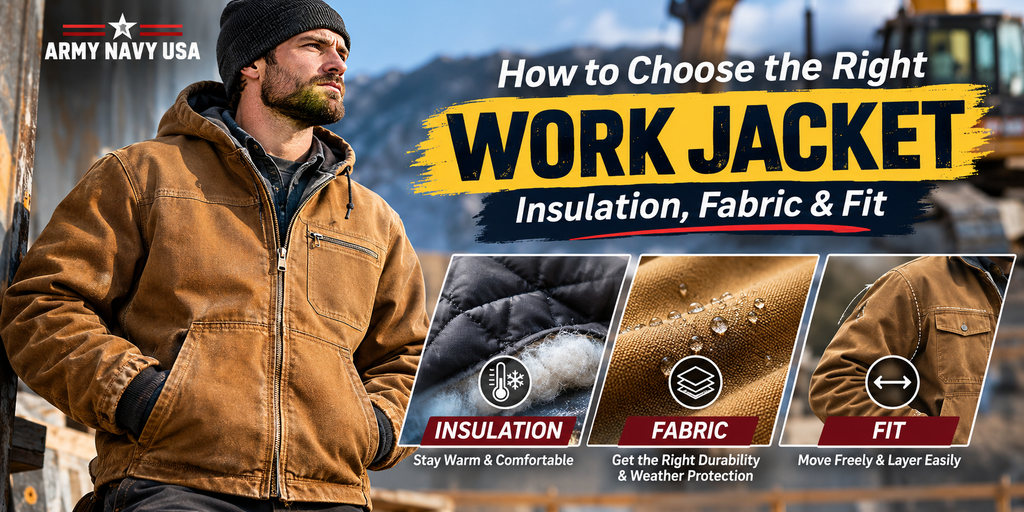
Choosing the right work jacket comes down to understanding your working environment and comparing the features that matter most. Insulation determines how much warmth you need, fabric affects durability and comfort, and the right fit allows you to move comfortably throughout the day.
Whether you’re looking for an insulated work jacket for winter, a canvas jacket for demanding tasks, a waterproof option for rainy conditions or a lightweight layer for everyday work, take time to compare the available styles and product specifications.
The best work jacket isn’t necessarily the thickest or most expensive. It’s the one that matches your job, weather conditions, fit preferences and daily requirements.
Find Your Next Work Jacket at Army Navy USA
Looking for dependable outerwear for your next workday? Explore the selection of work jackets and work outerwear at Army Navy USA. Compare insulated styles, canvas jackets, weather-ready outerwear and options from recognized workwear brands.
Find a style that matches your work environment, preferred fit and seasonal needs.Explore Work Outerwear
