

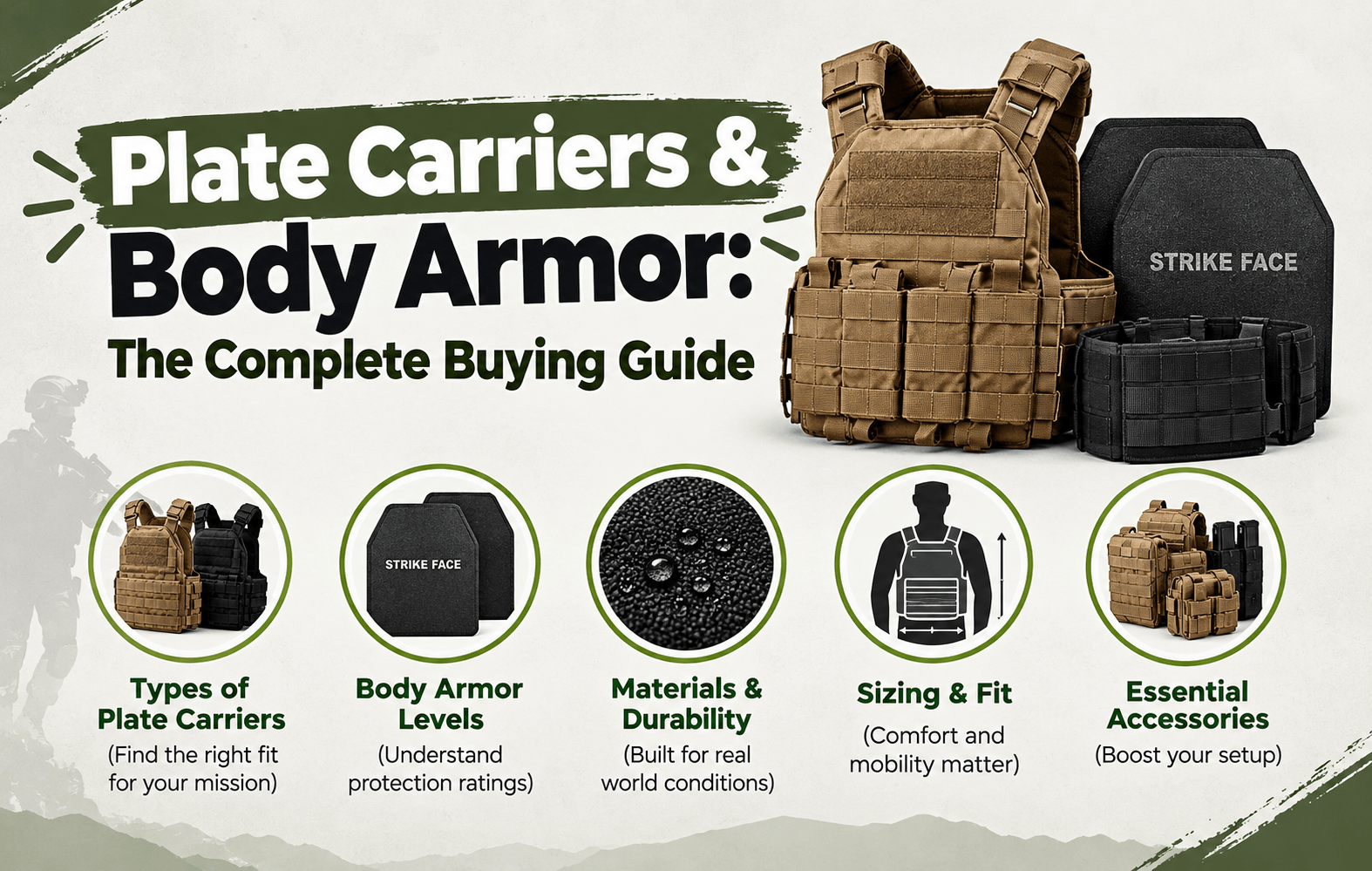
A plate carrier is a vest designed to hold hard armor plates in front and rear pockets, with optional side plate pockets and MOLLE webbing for gear. The carrier itself is not armor—you must buy compatible ballistic or training plates separately. Choose a plate carrier based on plate size, fit, weight, and intended use.
Buying your first plate carrier can feel overwhelming. Between MOLLE webbing, cummerbunds, SAPI-cut plates, and a dozen brand-specific sizing charts, it’s easy to make a costly mistake—like ordering a carrier that doesn’t fit your plates, or assuming your new vest comes with armor when it doesn’t. If you’re just starting to explore your options, browsing plate carriers and tactical vests can help you get a sense of the range of styles, sizes, and configurations available.
This guide breaks down everything you need to know before you buy. You’ll learn what a plate carrier vest actually does, how it differs from a Kevlar vest, and how to match a carrier to the right armor system. We’ll also cover a practical buying checklist, common mistakes, and how to choose the right setup for training, professional, or recreational use.
One rule matters above all else: a plate carrier alone does not provide ballistic protection. Protection comes from certified armor plates, and you should always verify specifications, compatibility, and local laws before purchasing.
What Is a Plate Carrier Vest?
A plate carrier vest is a wearable platform built to hold hard armor plates against the front and rear of the torso. Most carriers also include optional side plate compartments, giving you flexible coverage depending on your needs.
The front and rear plate pockets are the core of any carrier. You slide a rated armor plate into each pocket, and the carrier holds it securely in place. Side plate pockets, when included, add protection to the ribs and flanks.
Nearly all modern carriers use MOLLE webbing—rows of durable nylon straps that let you attach pouches, magazines, medical kits, and other gear. This modularity is why the same carrier can serve a range of missions.
Two other components keep the carrier stable on your body:
- Cummerbund: An adjustable band that wraps around your midsection, securing the carrier and often holding side plates.
- Shoulder straps: Padded, adjustable straps that carry the vertical load and let you fine-tune plate height.
Here’s the part many first-time buyers miss: the carrier and the armor plate are separate components. A carrier is essentially a “holder.” On its own, it offers no ballistic protection. You must add certified armor plates to create a functional body armor system.
Plate Carrier vs. Kevlar Vest: What’s the Difference?
A plate carrier holds rigid hard armor plates, while a Kevlar vest uses flexible soft armor panels. They protect against different threats, weigh different amounts, and suit different jobs. Many users combine both in a single system.
The confusion between these two is common, so here’s a clear breakdown.
| Feature | Plate Carrier (Hard Armor) | Kevlar Vest (Soft Armor) | Combination System |
| Armor type | Rigid hard plates | Flexible soft panels | Both plates and panels |
| Coverage | Front, rear, optional sides | Wraps the torso | Broad plus rigid zones |
| Weight | Heavier per plate | Lighter, more flexible | Heaviest overall |
| Flexibility | Stiff over plate areas | High, moves with body | Moderate |
| Typical use | Training, tactical, professional | Concealable, everyday wear | Professional, high-threat roles |
| Compatibility | Requires matching plates | Sized panels | Requires both to match |
Soft armor is prized for its flexibility and lower profile, which is why it appears in concealable vests. Hard armor plates are rigid and heavier, but they’re designed to stop higher-velocity threats when properly rated. A combination system pairs a carrier with both plates and soft panels for layered coverage.
Always confirm the specific threat rating of any armor with the manufacturer before relying on it. Coverage type, weight, and intended application should drive your choice.
What Is a Ballistic Plate Carrier?
A ballistic plate carrier is a carrier specifically designed and sized to hold rated hard armor plates in its front, rear, and optional side compartments. The term describes the carrier’s purpose, not a guarantee of protection—protection depends entirely on the plates you install.
When shopping for a ballistic armor carrier, focus on these compatibility factors:
- Front and rear plate pockets: Confirm they accept the plate cut and size you plan to use.
- Side plate pockets: Optional, but useful if you need flank coverage.
- Plate dimensions and thickness: Common sizes include 10″x12″ and 10″x13″; check both dimensions and thickness clearance.
- Carrier sizing: Match the carrier to your torso, not just your shirt size.
- Manufacturer compatibility data: Reputable brands publish which plate sizes and cuts a carrier accepts.
The carrier must match the intended armor system. A carrier built for medium SAPI/ESAPI-style plates won’t properly hold oversized or differently cut plates. When the fit is wrong, plates can shift, reducing both comfort and effective coverage.
How to Choose the Right Plate Carrier
Use this checklist to evaluate any plate carrier before buying:
- Fit and sizing: Match the carrier to your torso length and chest measurement.
- Plate compatibility: Verify the exact plate size and cut the carrier accepts.
- Weight and mobility: Heavier setups protect more but tire you faster—balance the two.
- MOLLE configuration: Ensure there’s enough webbing for the gear you carry.
- Cummerbund design: Look for adjustability and, if needed, side plate capability.
- Shoulder strap adjustability: Padded, adjustable straps improve comfort and load distribution.
- Ventilation and padding: Breathable mesh reduces heat buildup during long wear.
- Quick-release features: Some carriers let you shed the vest fast in emergencies.
- Durability and materials: Reinforced stitching and rugged nylon hold up under use.
- Intended use: A range setup and a professional loadout have very different demands.
Plate Carrier Features to Look For
Not every feature matters for every user, but these are the ones worth understanding:
- MOLLE webbing: Rows of nylon straps for attaching pouches and accessories.
- Adjustable shoulder straps: Fine-tune plate height and comfort.
- Quick-release buckles: Allow rapid removal in emergencies.
- Detachable or adjustable cummerbund: Adds fit precision and side plate options.
- Plate pockets: Front and rear compartments sized for specific plate cuts.
- Side plate compatibility: Extends coverage to the flanks.
- Breathable mesh padding: Improves airflow and reduces fatigue.
- Emergency drag handle: Lets another person move a downed wearer.
- Hook-and-loop panels: For patches, ID, and modular attachments.
- Hydration compatibility: Routes a hydration hose for long operations or training.
How Should a Plate Carrier Fit?
A plate carrier should sit high enough to protect vital organs without restricting your arms or breathing. The front plate should cover from roughly the top of the sternum, and the carrier should feel snug but not crushing.
Fit priorities include comfort, adjustability, correct plate placement, and freedom of movement. You want to be able to shoulder a pack, raise your arms, and move naturally. If the carrier rides too low or shifts as you move, adjust the shoulder straps and cummerbund.
Because sizing varies between brands, always follow the manufacturer’s sizing instructions for your specific carrier. What counts as “medium” for one company may differ from another.
Common Plate Carrier Buying Mistakes
Avoid these frequent errors:
- Skipping plate dimensions: Buying a carrier without confirming it fits your plate size and cut.
- Assuming armor is included: Most carriers ship without plates—budget for them separately.
- Choosing on looks alone: Color and camo matter less than fit and function.
- Ignoring weight: A heavy setup you can’t move in defeats the purpose.
- Buying the wrong size: Torso length, not shirt size, drives carrier fit.
- Overloading MOLLE: Too much gear adds weight and slows you down.
- Overlooking ventilation and comfort: Long wear exposes poor padding fast.
- Failing to verify specs: Manufacturer data prevents compatibility surprises.
- Assuming universal fit: Not all plates fit all carriers.
Choosing the Right Plate Carrier for Your Needs
Different users have different priorities. Here’s how to think about it:
- Training and range use: Choose a comfortable, affordable carrier that fits standard training plates. Ventilation and adjustability matter most for long sessions.
- Tactical and outdoor applications: Prioritize MOLLE capacity, durability, and load-bearing comfort for extended wear.
- Professional users: Law enforcement, security, and first responders should focus on quick-release systems, correct plate compatibility, and reliable fit for duty conditions.
- Airsoft and recreational use: A lighter, budget-friendly carrier with plenty of MOLLE for pouches works well. Rated ballistic plates aren’t necessary for these applications.
- Users prioritizing lightweight gear: Look for a lightweight plate carrier with minimal bulk and breathable padding to reduce fatigue.
Shop Plate Carriers & Tactical Vests at Army Navy USA
Army Navy USA carries a broad selection of plate carriers and armor carriers from trusted brands including Rothco, Condor, Propper, and 5ive Star Gear. You’ll find MOLLE webbing, adjustable straps, plate pockets, cummerbunds, and quick-release systems across the range.
One popular option is the Rothco Black Low Profile Plate Carrier Vest (55890). It’s built to fit medium or large SAPI/ESAPI plates up to 10″x13″ and includes:
- 7 rows of MOLLE webbing on the front and back
- Hook-and-loop adjustable shoulder straps (2.13″ wide)
- An adjustable cummerbund with buckle closures
- Breathable mesh ventilation panels
- Hydration hose integration
- A drag handle
Note that soft and plate armor are not included with the 55890—you’ll add compatible plates separately.
Ready to gear up? You can shop plate carriers and tactical vests, explore protective gear like helmets and pads, or browse tactical and utility vests for the full lineup.
Frequently Asked Questions About Plate Carriers & Body Armor
What is a plate carrier vest?
A plate carrier vest is a wearable platform that holds hard armor plates in front and rear pockets, with optional side compartments. It typically features MOLLE webbing, an adjustable cummerbund, and shoulder straps. The carrier holds armor but provides no ballistic protection on its own.
What is the difference between a plate carrier and a Kevlar vest?
A plate carrier holds rigid hard armor plates, while a Kevlar vest uses flexible soft armor panels. Plate carriers are typically heavier and suited to tactical or professional use, while Kevlar-style soft armor is lighter, more flexible, and often concealable. Some systems combine both.
Does a plate carrier come with armor plates?
Usually not. Most plate carriers, including the Rothco 55890, ship without armor. You must purchase compatible ballistic or training plates separately. Always confirm what’s included before buying.
How do I know what size plate fits my carrier?
Check the manufacturer’s specifications for the carrier’s plate pocket dimensions. Common sizes include 10″x12″ and 10″x13″. The Rothco 55890, for example, fits medium or large SAPI/ESAPI plates up to 10″x13″. Match both the plate size and cut to the carrier.
Are all ballistic plates compatible with every plate carrier?
No. Plates come in different sizes, cuts, and thicknesses, and carriers are sized to fit specific plate dimensions. Always verify compatibility using the manufacturer’s data before purchasing either component.
What should I look for when buying a plate carrier?
Prioritize correct fit and sizing, plate compatibility, weight and mobility, MOLLE configuration, cummerbund adjustability, ventilation, and durability. Match these features to your intended use, whether that’s training, professional duty, or recreation.
Is a lightweight plate carrier better?
It depends on your needs. A lightweight plate carrier improves mobility and reduces fatigue, making it ideal for training, airsoft, and users who value comfort. Professionals needing heavier loadouts or more MOLLE capacity may prefer a fuller-featured carrier. Choose based on your mission, not weight alone.
