

The right pair of tactical boots can make a big difference when your day involves long hours on your feet, uneven ground, changing weather, or demanding work conditions. Unlike ordinary everyday footwear, tactical boots are built with durability, stability, traction, and practical performance in mind.
But choosing the best tactical boots for men isn’t simply about picking the toughest-looking pair. A boot that works well for a security job may not be the best choice for hiking, while someone looking for everyday outdoor footwear may prefer a lighter and more flexible design.
The best tactical boots are the ones that match the way you actually plan to use them. Factors such as fit, weight, ankle support, traction, breathability, waterproofing, and overall construction can all affect how comfortable a boot feels throughout the day.
This guide explains what to look for when shopping for tactical boots and how to choose a pair for work, hiking, outdoor activities, training, or everyday wear.
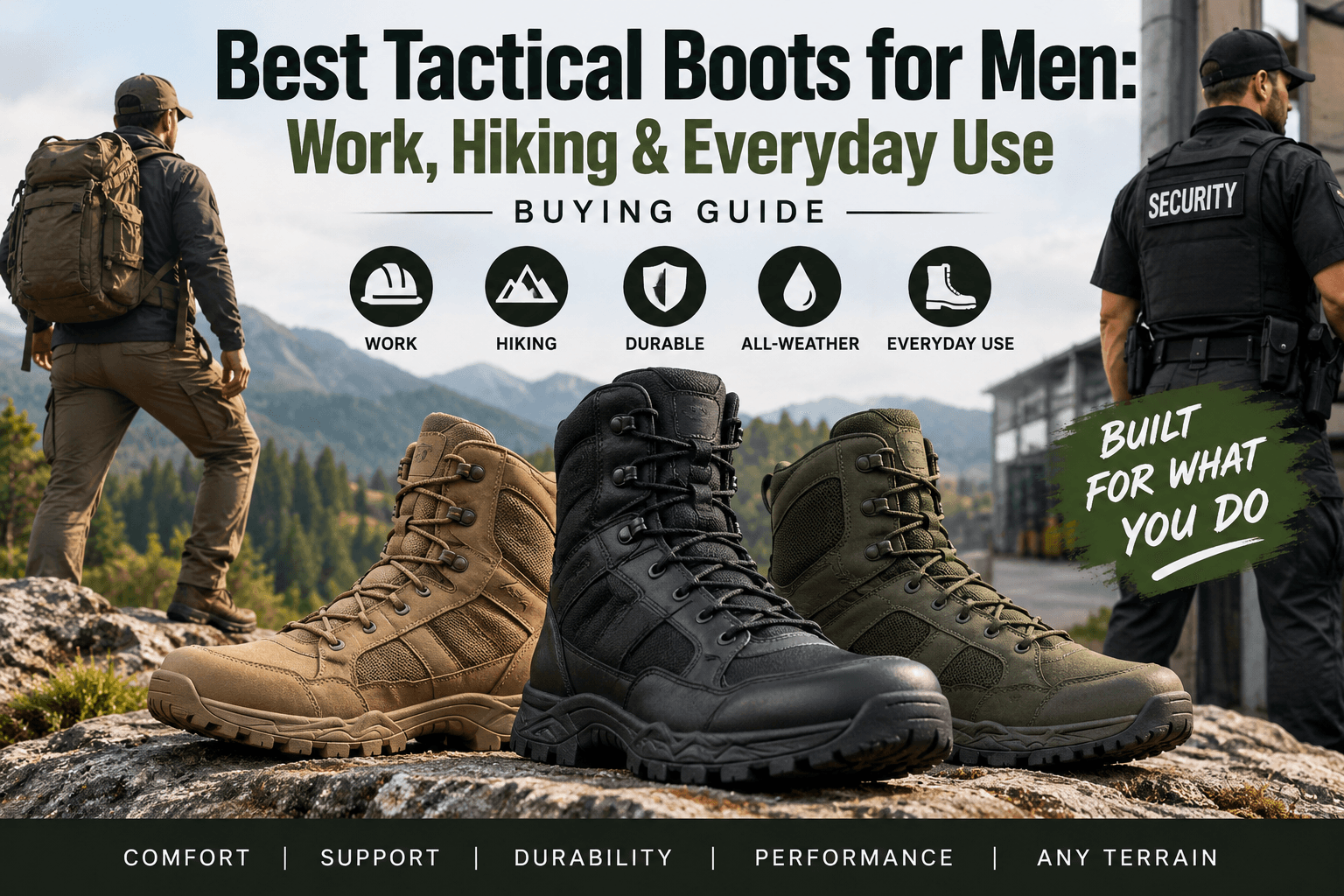
What Are Tactical Boots?
Tactical boots are rugged footwear designed for people who need a combination of durability, comfort, stability, and traction. They are commonly associated with military, law enforcement, security, outdoor work, training, and other activities where dependable footwear is important.
Modern tactical boots come in many different styles. Some are lightweight and breathable for warmer weather, while others feature waterproof construction for wet conditions. Some designs include side zippers for quicker entry and removal, while traditional lace-up boots can provide a more adjustable fit.
One of the biggest advantages of tactical footwear is its versatility. A good pair can provide the support needed for a long workday while still being suitable for outdoor activities or everyday use.
However, there is no single boot that is perfect for everyone. Your choice should depend on the terrain, weather, activity, and amount of time you expect to spend wearing the boots.
What to Look for in the Best Tactical Boots
Before buying tactical boots, consider the features that matter most for your intended use. A few minutes spent comparing construction and specifications can help you find a pair that feels better and performs more reliably.
Comfort and Fit
Comfort should be one of your first considerations, particularly if you expect to wear tactical boots for long hours on your feet.
Look for a design that provides enough room for your toes without allowing excessive movement inside the boot. Your heel should stay reasonably secure, while the upper should hold your foot comfortably without creating pressure points.
Cushioning can also make a noticeable difference during extended wear. If you spend most of your day standing or walking, look for tactical boots with supportive footbeds and cushioning designed to reduce fatigue.
The best tactical boots for men aren’t necessarily the heaviest or most heavily constructed. In many situations, a comfortable boot that you can wear all day is a better choice than one that feels unnecessarily bulky.
Ankle Support
Tactical boots typically extend higher around the ankle than many casual shoes. This additional coverage can provide a more secure feel when walking on uneven surfaces.
If you regularly work outdoors or move across rough terrain, tactical boots with good ankle support may be worth considering. A secure fit around the ankle can help keep the boot stable as you walk, climb, or move over changing surfaces.
At the same time, make sure the boot doesn’t restrict your natural movement. The ideal amount of support depends on your activity and personal preference.
Traction and Outsole
A dependable outsole is particularly important when tactical boots are used outdoors.
Look for tread patterns designed to provide traction on the surfaces you expect to encounter. Outdoor workers, hikers, hunters, and people who regularly walk on uneven terrain may benefit from boots with aggressive tread and durable outsoles.
If you’re shopping for tactical boots for work, also consider the types of surfaces you normally encounter. Smooth indoor floors, gravel, dirt trails, wet pavement, and muddy terrain can all require different levels of traction.
Waterproofing and Weather Protection
Weather can quickly change the requirements for your footwear.
Waterproof tactical boots can be useful for people who regularly work or spend time outdoors in rain, wet grass, mud, or other damp conditions. A waterproof design can help keep your feet more comfortable when conditions become wet.
However, waterproofing isn’t always necessary. If you live or work in a hot environment, breathability may be more important than maximum water resistance.
Consider your typical conditions before choosing between waterproof and breathable tactical boots.
Weight and Breathability
Heavy-duty construction can provide durability, but weight matters when you’re walking or standing for many hours.
Lightweight tactical boots are often a good choice for people who need greater mobility or spend a lot of time moving. They can also be useful for hiking, training, and everyday outdoor activities.
Breathability is another consideration, particularly during warm weather. Breathable tactical boots can help improve airflow and reduce the uncomfortable feeling that can come with wearing heavy footwear in hot conditions.
The best balance depends on your environment. Cold and wet conditions may call for more protection, while warm-weather activities may favor a lighter design.
Tactical Boots for Work
Tactical boots can be a practical option for many types of work where durability, comfort, and traction are important.
People working in security, warehouses, outdoor environments, maintenance, transportation, and other physically demanding jobs may spend much of the day walking or standing. For these situations, comfortable tactical boots for long hours can be a useful alternative to ordinary footwear.
When choosing tactical work boots, focus on the features that directly match your workplace.
For example, someone working outdoors may prioritize waterproofing and aggressive traction, while someone working primarily indoors may prefer lightweight construction and cushioning.
If your job has specific safety requirements, always check the individual boot specifications before purchasing. Features such as safety toes, electrical hazard protection, or other workplace certifications should never be assumed simply because a boot is described as tactical.
Looking for tactical footwear for work, outdoor use, or everyday activities? Explore the selection at ArmyNavyUSA to compare different tactical boot styles and features for your needs.
Tactical Boots for Hiking and Outdoor Use
Tactical boots can also be useful for hiking and outdoor activities, particularly for people who want footwear that combines rugged construction with a practical design.
When choosing tactical boots for hiking, pay attention to weight, flexibility, traction, and ankle support. A boot that is too heavy or stiff can become uncomfortable during a long trail, while insufficient traction can make uneven or slippery terrain more difficult to navigate.
Waterproof tactical boots can be particularly useful in wet environments, but they aren’t always the best option for every hike. In hot and dry conditions, a breathable and lightweight boot may provide greater comfort.
For camping, hunting, outdoor adventures, and general trail use, think about the environment you’ll encounter. Rocky ground may require strong traction and support, while easier trails may allow you to prioritize flexibility and weight.
Tactical boots aren’t automatically hiking boots simply because they have a rugged appearance. Look at the actual construction and specifications to determine whether a particular pair is suitable for your activity.
Tactical Boots for Everyday Wear
Tactical boots aren’t limited to work or outdoor activities. Many people choose them for everyday wear because they appreciate their rugged appearance and supportive construction.
For everyday use, comfort should usually take priority over extreme features. A lightweight tactical boot with breathable materials may be easier to wear for errands, walking, travel, and casual outdoor activities.
If you plan to wear tactical boots regularly, consider how easily they pair with your normal clothing as well as how they feel after several hours.
A versatile pair of tactical boots for everyday wear can provide a useful combination of durability and practicality without requiring you to own different footwear for every outdoor activity.
Tactical Boots vs. Military Boots
The terms tactical boots and military boots are sometimes used interchangeably, but they don’t always describe exactly the same type of footwear.
Military-style boots are generally associated with military uniforms, field use, and rugged environments. Tactical boots can have a broader range of applications, including security, law enforcement, outdoor work, training, hiking, and everyday use.
Some tactical boots may closely resemble military boots, while others are designed specifically for lightweight mobility or particular weather conditions.
When comparing tactical boots vs. military boots, focus less on the label and more on the actual features. Consider the outsole, materials, weight, ankle coverage, waterproofing, cushioning, and intended use.
The right boot is ultimately the one that fits your requirements rather than simply the one with the most rugged description.
How to Choose the Right Tactical Boots
If you’re unsure what type of tactical boots to buy, start with your main activity.
For work: Look for durability, comfort, traction, and features appropriate for your work environment.
For hiking: Prioritize traction, ankle support, flexibility, and manageable weight.
For wet weather: Consider waterproof construction and materials designed for damp conditions.
For hot weather: Look for lightweight construction and breathable materials.
For everyday wear: Choose comfort, versatility, and a weight you won’t mind wearing regularly.
For demanding outdoor activities: Focus on durability, traction, support, and weather protection.
There’s no reason to choose features you don’t need. A lightweight boot may be more practical than a heavy-duty model if you mainly use it for everyday walking. Likewise, someone working outdoors in wet conditions may benefit more from waterproofing and traction than from a particularly lightweight design.
How Should Tactical Boots Fit?
A proper fit is essential for comfortable tactical boots.
Your toes should have enough room to move naturally without sliding around inside the boot. Your heel should remain reasonably secure when walking, and the boot should feel supportive around the foot and ankle without creating uncomfortable pressure.
Remember that socks can affect how your boots fit. If you normally wear thick tactical or hiking socks, try boots with the type of socks you expect to use.
It’s also worth remembering that feet can swell slightly during the day. If possible, evaluate the fit later in the day rather than relying only on how the boots feel first thing in the morning.
Don’t assume that a tight boot will become perfectly comfortable after breaking in. Some materials may soften with use, but the basic fit should feel appropriate from the beginning.
How to Break In Tactical Boots
Some tactical boots may require a short break-in period before they reach their full level of comfort.
Start by wearing them for shorter periods around the house or during easy activities. Gradually increase your wearing time instead of immediately using a new pair for an entire day of demanding activity.
Pay attention to areas where friction develops. Wearing suitable socks can help reduce discomfort while the boots become more flexible.
Avoid methods that could damage the materials, particularly if the manufacturer provides specific care instructions. Following the manufacturer’s recommendations is generally the safest approach.
How to Care for Tactical Boots
Proper care can help keep tactical boots looking and performing better over time.
Remove dirt and debris after outdoor use, especially if you’ve been walking through mud or wet terrain. Allow wet boots to dry naturally and follow the manufacturer’s cleaning recommendations for the specific materials.
Avoid excessive heat when drying footwear because it can damage certain materials, adhesives, or finishes.
For leather tactical boots, use appropriate leather-care products when recommended. For synthetic materials, follow the manufacturer’s cleaning instructions instead of applying products designed for other materials.
Regular cleaning is particularly important for boots used in muddy, dusty, or wet environments.
Final Thoughts
Choosing the best tactical boots for men comes down to matching the footwear to your actual needs. There isn’t one perfect pair for every person or every environment.
Think about where you’ll wear the boots, how many hours you’ll spend in them, and what conditions you’ll encounter. Work boots may need durability and traction, hiking footwear may need flexibility and a manageable weight, while everyday tactical boots may benefit most from comfort and versatility.
Features such as ankle support, waterproofing, breathability, cushioning, traction, and overall construction can all influence your decision.
Most importantly, don’t choose a boot based only on appearance. Pay attention to fit and specifications so you can select footwear that makes sense for your activities.
Ready to find your next pair? Shop tactical boots at ArmyNavyUSA and explore options for work, outdoor adventures, training, and everyday use. Compare the features that matter most to you and choose a style that fits your environment and daily routine.
Frequently Asked Questions
What are tactical boots good for?
Tactical boots are designed for a range of demanding activities, including work, outdoor use, training, security, hiking, and everyday wear. The best choice depends on the boot’s specific construction and features.
Are tactical boots good for hiking?
Some tactical boots can work well for hiking, particularly when they provide good traction, ankle support, flexibility, and a suitable weight. However, always check the individual boot’s specifications and consider the terrain before choosing them for hiking.
Are tactical boots comfortable for all-day wear?
Many tactical boots are designed with comfort and support in mind, but comfort depends on the individual boot and how well it fits your feet. Cushioning, weight, breathability, and proper sizing all contribute to all-day comfort.
Should tactical boots be waterproof?
Not necessarily. Waterproof tactical boots are useful in wet environments, but breathable boots may be preferable in hot and dry conditions. Choose waterproofing based on the weather and environment where you’ll normally use the boots.
How should tactical boots fit?
Tactical boots should feel secure without being painfully tight. Your toes should have enough room to move, your heel should stay reasonably secure, and the boot should provide comfortable support around your foot and ankle.
What is the difference between tactical boots and military boots?
Military boots are generally associated with military field use, while tactical boots can serve a wider variety of purposes, including security, outdoor work, training, hiking, and everyday wear. Some styles overlap significantly.
How do you break in tactical boots?
Wear new boots for shorter periods initially and gradually increase your wearing time. Use appropriate socks and follow the manufacturer’s care and break-in recommendations to avoid damaging the footwear.
