

Work gloves are an important part of staying comfortable and protecting your hands during demanding tasks. Whether you’re handling tools, moving materials, working on vehicles, completing construction projects, or spending long hours outdoors, the right pair of gloves can make a noticeable difference.
However, not every pair of work gloves is designed for the same purpose. Some offer a strong grip for handling equipment, while others focus on durability, flexibility, impact protection, or warmth in cold weather. Choosing the wrong type can make a job uncomfortable and may leave your hands exposed to hazards.
The best work gloves depend on what you’re doing, the materials you’re handling, and the conditions in which you work. This guide explains the main types of work gloves, common materials, important features, and what to consider before choosing a pair.
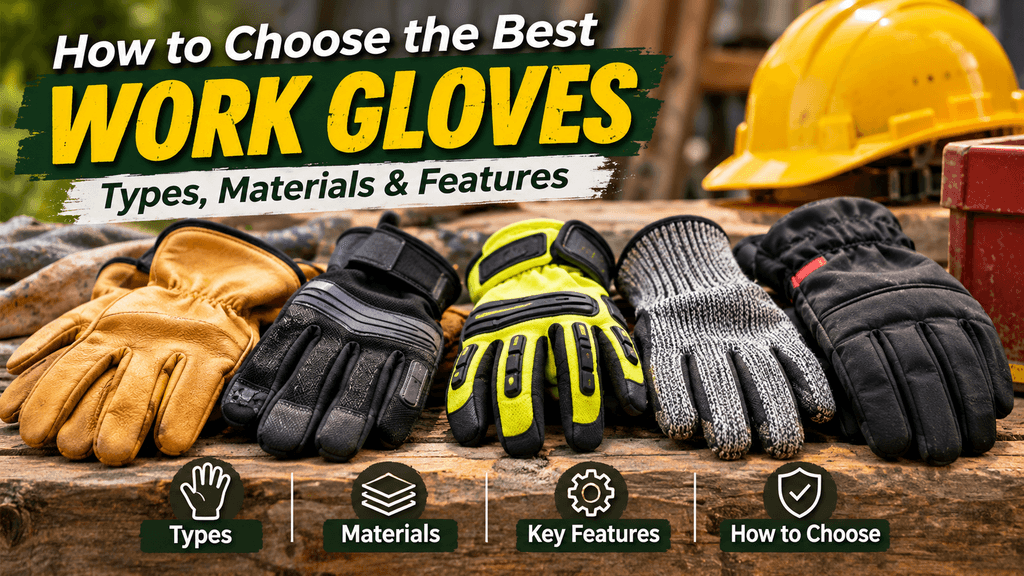
Why Choosing the Right Work Gloves Matters
Your hands are involved in almost every physical task. From lifting and carrying materials to operating tools and handling equipment, they are regularly exposed to friction, rough surfaces, changing temperatures, and other workplace hazards.
A suitable pair of work gloves can help:
- Reduce exposure to rough surfaces and everyday abrasion.
- Improve grip when handling tools and equipment.
- Provide additional comfort during extended tasks.
- Keep hands warmer during outdoor work in cold weather.
- Offer task-specific protection against certain cuts, impacts, or moisture.
- Support better control when handling smaller objects.
The important thing is to match the gloves to the actual work. A lightweight pair designed for flexibility may be suitable for general handling but not for a task involving sharp metal edges. Similarly, insulated winter gloves may keep your hands warm but could make detailed work more difficult.
Before buying, identify the conditions your hands will face and choose gloves designed for those requirements.
1. Understand the Different Types of Work Gloves
Work gloves come in several styles, each designed around different tasks and working conditions. Understanding the differences makes it easier to narrow down your options.
Leather Work Gloves
Leather work gloves are a popular choice for general handling, construction-related tasks, landscaping, and outdoor projects. Leather is valued for its durability and its ability to handle contact with rough materials.
Depending on the design, leather gloves may feature a full leather construction or reinforced leather palms and fingers. These details can influence their flexibility, durability, and comfort.
Consider leather work gloves when you regularly handle tools, wood, building materials, or other rough objects. Check the glove’s construction and intended use before relying on it for a particular hazard.
Mechanic and High-Dexterity Gloves
Mechanic gloves are designed for tasks that require hand movement, control, and a secure grip. They are commonly used for vehicle maintenance, equipment handling, repairs, and general mechanical work.
Many designs use synthetic leather, flexible fabric, reinforced palms, or padded sections. Some also include touchscreen-compatible fingertips, which can be useful when operating compatible devices without removing your gloves.
High-dexterity work gloves are worth considering when you need to handle tools, small components, or equipment throughout the day. Look for a close fit that allows natural finger movement without feeling restrictive.
Cut-Resistant Work Gloves
Cut-resistant gloves are designed for tasks where sharp edges or cutting hazards are a concern. They may be used in manufacturing, metal handling, glass processing, and other environments where workers regularly handle sharp materials.
These gloves are made with specialized fibers and construction methods intended to resist cuts. However, cut resistance does not mean cut-proof. The level of protection varies between products.
When selecting cut-resistant gloves, check the manufacturer’s test information and applicable ANSI/ISEA 105 cut-resistance rating. Choose a level based on the actual hazards identified in your workplace rather than assuming every cut-resistant glove provides the same protection.
Impact-Resistant Work Gloves
Some jobs involve handling heavy equipment, working around machinery, or dealing with situations where the back of the hand may be exposed to impact.
Impact-resistant gloves may include molded protective sections or thermoplastic rubber (TPR) padding across the knuckles and fingers. These features are intended to help reduce the force of certain impacts.
They can be useful for selected mechanical, industrial, and equipment-handling tasks. Check the product specifications and testing information to understand the level of protection offered.
Insulated and Winter Work Gloves
Cold weather can make outdoor work more difficult. When temperatures drop, gloves with thermal insulation or fleece-style linings can help keep hands warmer.
Winter work gloves may include insulated interiors, water-resistant materials, extended cuffs, or weather-resistant outer layers. Some designs also combine insulation with textured palms to help maintain grip.
Consider insulated work gloves for outdoor maintenance, winter projects, equipment handling, and other cold-weather activities. Choose a design that provides enough warmth without making it difficult to hold tools or perform the task.
Explore the available work gloves and cold-weather glove styles to compare different designs.
2. Compare Common Work Glove Materials
The material used in a pair of work gloves affects its feel, flexibility, durability, grip, and suitability for different environments.
Here are some common materials to understand before making a purchase.
Genuine Leather
Genuine leather is widely used in traditional work gloves because it offers a durable surface for general handling and contact with rough materials.
Leather gloves are available in different constructions and thicknesses. Some prioritize durability, while others are designed to provide more flexibility.
If you prefer traditional workwear, leather is worth considering for general outdoor tasks and material handling. Always check whether the specific glove is suitable for the conditions in which you plan to use it.
Synthetic Leather
Synthetic leather is commonly used in mechanic gloves and modern work glove designs. It can provide a flexible feel and may be combined with reinforced palms, padding, or stretch panels.
It is a practical option when you want a glove that balances grip, comfort, and movement.
Cotton and Knit Fabrics
Cotton and knit materials are used in lightweight gloves and glove liners. Depending on their construction, they may provide basic coverage, comfort, or an additional layer under heavier gloves.
They are not automatically suitable for sharp objects, chemicals, or demanding industrial hazards. Check the intended use before selecting a lightweight fabric glove.
Neoprene and Rubber-Based Materials
Neoprene and other rubber-based materials appear in gloves designed for particular wet or chemical-related applications. Their suitability depends on the specific chemical, concentration, exposure time, and glove construction.
Do not assume that any rubber or neoprene glove is safe for every chemical. Always check the manufacturer’s chemical compatibility information.
Insulated Linings
Winter work gloves may use fleece, synthetic insulation, wool, or other lining materials to improve warmth.
The amount and type of insulation affect how a glove feels and how easily you can move your fingers. For work involving tools or small objects, consider the balance between warmth and dexterity.
3. Important Features to Look for in Work Gloves
Material is only one part of the decision. The design and features of a glove can be just as important.
Grip and Palm Design
A secure grip helps when handling tools, equipment, and materials. Some work gloves include textured palms, rubberized surfaces, or reinforced palm sections to improve handling.
Think about the surfaces you regularly work with. Dry materials, wet equipment, and oily components may require different glove designs. Check the manufacturer’s grip information rather than assuming one coating works in every condition.
Fit and Finger Movement
A glove should fit securely without squeezing your fingers or restricting movement. If it is too loose, your grip and control may suffer. If it is too tight, it can become uncomfortable during extended use.
Look for a design that allows you to bend your fingers naturally, hold tools comfortably, and move your hands without excessive material bunching around the fingertips.
Reinforced Palms and Fingers
Some gloves feature additional material in areas that experience frequent contact and wear. Reinforced palms, fingertips, and thumb sections can be useful for repeated handling tasks.
Check the product description to understand which areas are reinforced and what materials are used.
Cuff Style
The cuff affects how a glove sits around your wrist.
Common options include:
- Open cuffs: Easy to put on and remove.
- Elastic cuffs: Provide a closer fit around the wrist.
- Secure cuffs: May use adjustable closures to help keep the glove in place.
- Extended cuffs: Offer additional coverage around the wrist.
Choose a cuff style that suits your task, clothing, and preferred level of coverage.
Touchscreen Compatibility
Some modern work gloves include touchscreen-compatible fingertips. This can be convenient for workers who regularly use smartphones, tablets, or other compatible devices.
If this feature matters to you, confirm that the specific product lists touchscreen compatibility.
Waterproofing and Water Resistance
Water-resistant and waterproof are not interchangeable terms. A water-resistant glove may handle light moisture, while a waterproof design is intended to provide a stronger barrier against water when used as directed.
For outdoor work in wet conditions, check the product specifications carefully. Also consider whether the glove offers enough grip and flexibility for your task.
4. How to Choose Work Gloves for Different Jobs
The best work gloves depend on the type of work you perform. The following examples can help you narrow down your choices.
| Type of Work | Features to Consider |
|---|---|
| Construction and material handling | Durable construction, reinforced palms, secure grip |
| Automotive and mechanical work | Flexible design, high dexterity, grip and suitable padding |
| Warehouse and general handling | Comfortable fit, grip, abrasion resistance |
| Landscaping and outdoor maintenance | Durable materials, secure fit, weather suitability |
| Cold-weather work | Insulation, warm lining, suitable grip |
| Metal and glass handling | Task-appropriate cut-resistant gloves with verified ratings |
| Wet or chemical-related tasks | Gloves specifically tested and rated for the substance involved |
This table is a starting point, not a substitute for a workplace hazard assessment. Some jobs involve several risks at once and may require specialized protective equipment.
5. How to Find the Right Work Glove Size
Even a well-made pair of work gloves can be uncomfortable if the size is wrong. Proper fit also matters for grip, control, and finger movement.
Follow these steps when choosing your size:
- Measure around the widest part of your palm, excluding your thumb.
- Compare the measurement with the manufacturer’s sizing chart.
- Check the finger length to make sure the fingertips are not excessively tight or loose.
- Move your fingers and make a fist to test flexibility.
- Check that the wrist and cuff feel secure without restricting circulation.
Sizing can vary between brands and glove styles. Always use the sizing chart provided for the specific product rather than assuming your size will be identical across every brand.
If you plan to wear insulated gloves, consider how the lining affects the fit. The glove should provide enough room for comfortable movement without becoming loose.
6. Work Gloves vs. Tactical Gloves: What’s the Difference?
Work gloves and tactical gloves can look similar, but they are designed with different priorities.
Work gloves generally focus on practical tasks such as material handling, construction-related work, maintenance, and equipment use. Depending on the design, they may prioritize durability, grip, insulation, or specialized protection.
Tactical gloves are often designed for duty-related activities, training, equipment handling, and outdoor use. Their features may include reinforced palms, flexible construction, knuckle protection, or additional grip surfaces.
Neither category is automatically better. The right choice depends on the task and the protection required.
If you need gloves for everyday work, compare the options in the Work Gloves collection. For a broader selection of duty, military, and outdoor styles, explore the Gloves collection.
7. How to Care for Your Work Gloves
Regular care can help keep work gloves comfortable and in usable condition. Cleaning and maintenance requirements depend on the material and construction.
Keep these basic practices in mind:
- Follow the manufacturer’s cleaning instructions.
- Remove dirt and debris after use when the care instructions allow it.
- Allow damp gloves to dry properly before storing them.
- Avoid exposing gloves to excessive heat unless the manufacturer permits it.
- Check seams, palms, fingertips, and protective sections for signs of damage.
- Replace gloves when they are worn out or no longer provide the required protection.
Do not continue using damaged protective gloves simply because they still look wearable. Tears, worn coatings, damaged seams, and compromised protective sections can affect their performance.
8. Where to Buy Work Gloves
When shopping for work gloves, compare more than appearance and price. Consider the material, construction, fit, intended use, and product specifications.
Army Navy USA offers work glove styles from brands including Carhartt, Mechanix Wear, Rothco, and other manufacturers. The selection includes leather gloves, mechanic gloves, high-dexterity designs, insulated gloves, and other options for different work and outdoor requirements.
You can browse the Army Navy USA Work Gloves collection to compare available styles and features.
For additional options, visit the full Gloves collection, which includes work, tactical, military, and cold-weather styles.
Compare the product details and choose a pair that matches your daily tasks and the conditions in which you work.
Frequently Asked Questions About Work Gloves
What are the best work gloves for everyday use?
The best work gloves for everyday use depend on the tasks you perform. Leather gloves can suit general handling, while mechanic and high-dexterity gloves may be more practical when you need flexibility and control.
Are leather work gloves better than synthetic gloves?
Neither material is best for every situation. Leather is commonly chosen for durability and traditional work applications, while synthetic materials can offer flexibility, lighter construction, and specific grip features. Compare the design and intended use before choosing.
What are the best work gloves for construction?
Construction tasks vary, so the right glove depends on the hazards involved. Consider grip, abrasion resistance, fit, and whether the job requires verified cut or impact protection.
What gloves are suitable for cold-weather work?
Insulated work gloves with suitable linings can help keep hands warm during outdoor tasks. Look for a design that balances warmth, grip, and finger movement.
How tight should work gloves fit?
Work gloves should fit securely without restricting circulation or movement. Your fingertips should sit comfortably inside the glove, and you should be able to bend your fingers and hold tools naturally.
How often should work gloves be replaced?
Replace work gloves when they become damaged, excessively worn, or unsuitable for the hazards involved. Follow the manufacturer’s care and replacement guidance, especially for protective gloves.
Can one pair of work gloves be used for every task?
No. Different jobs expose hands to different hazards. General-purpose gloves should not be treated as a substitute for specialized cut-resistant, chemical-resistant, heat-resistant, or electrically insulating gloves.
Final Thoughts
Choosing the best work gloves is about finding the right balance between protection, comfort, grip, and flexibility. Start by identifying the tasks you perform and the hazards you may encounter. Then compare materials, fit, cuff styles, and features that support your work.
Whether you need durable leather gloves for general handling, flexible mechanic gloves for equipment work, or insulated gloves for colder conditions, taking time to compare your options can help you make a more suitable choice.
