

A good pair of work boots should do more than look tough. If you spend eight, ten, or even twelve hours on your feet, the right boots can make a noticeable difference in how you move through the workday. The problem is that Carhartt work boots come in different constructions, safety-toe options, heights, traction systems, and weather protections, so choosing a pair isn’t simply a matter of picking the most rugged-looking style.
Think about a typical workday. A construction worker may move between concrete, dirt, ladders, and wet surfaces. Someone working in a warehouse may spend most of the day walking on hard floors. A landscaper may deal with mud and rain, while an outdoor worker may need protection from changing weather. Each situation creates different priorities.
That is why the best Carhartt work boots for men aren’t necessarily the same for everyone.
This guide will help you compare the features that matter, understand Carhartt steel toe work boots, Carhartt composite toe work boots, waterproof options, traction, fit, and boot height, and ultimately choose footwear that makes sense for your actual job.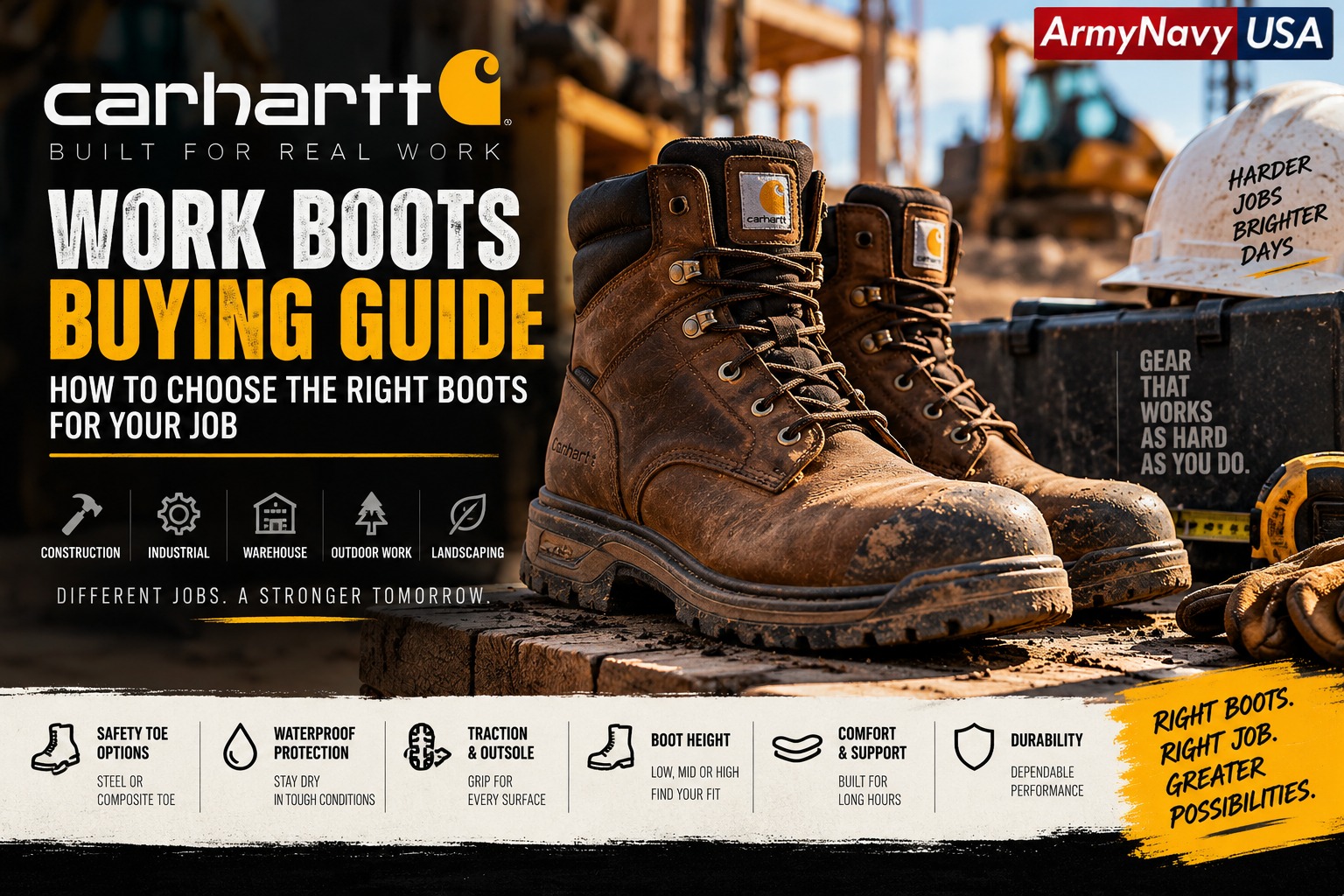
Start With Your Job, Not the Boot
Before searching for the best Carhartt work boots, start with one simple question:
What does my workday actually put my feet through?
If you’re working around heavy materials or equipment, toe protection may be your first priority. If you work outdoors, waterproofing and traction could matter more. If you’re walking or standing for long shifts, comfort, fit, cushioning, and weight deserve much more attention.
For example, someone looking for Carhartt work boots for construction may need a safety toe, dependable traction, electrical hazard protection, and durable construction. Meanwhile, someone looking for Carhartt work boots for outdoor work may place greater emphasis on waterproofing, ankle coverage, and grip.
There isn’t one boot that is automatically right for every job. The better approach is to match the boot’s features with your working environment.
What Makes Carhartt Work Boots Different?
Carhartt has built its work footwear around the practical needs of workers rather than treating boots as ordinary everyday shoes. Depending on the model, you’ll find features designed around protection, weather resistance, traction, durability, and comfort.
When comparing Carhartt work boots for men, pay attention to:
- Safety-toe construction
- Waterproof or water-resistant protection
- Slip-resistant traction
- Electrical hazard protection
- Boot height
- Outsole construction
- Cushioning and footbed support
- Leather or other upper materials
- Insulation for colder conditions
- Fit and available widths
The important part is not simply finding a boot with the longest list of features. It’s finding the combination that matches your work.
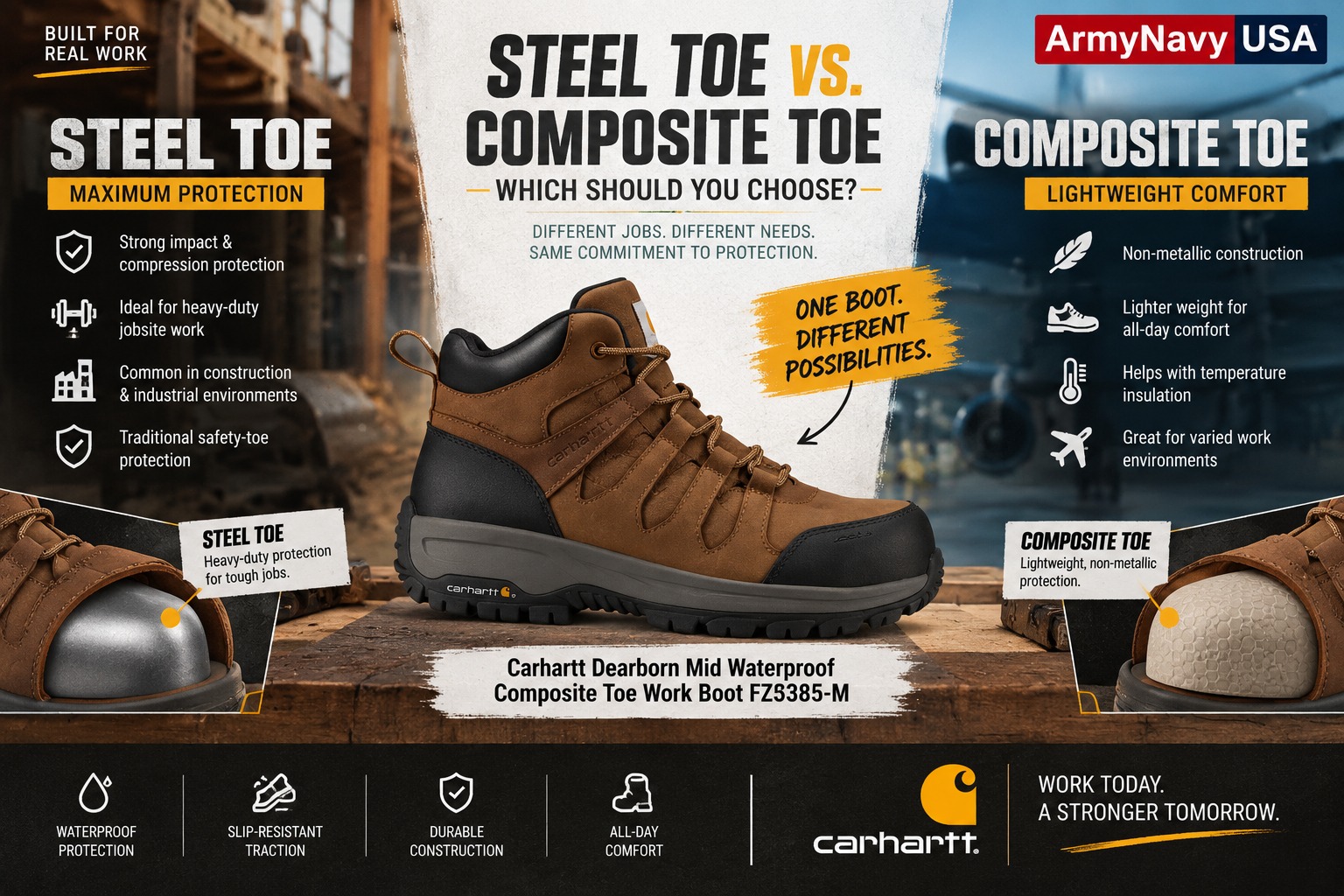
Steel Toe vs. Composite Toe: Which Should You Choose?
One of the biggest decisions when buying safety footwear is whether you need a steel toe or composite toe.
| Feature | Steel Toe | Composite Toe |
|---|---|---|
| Impact protection | ✓ | ✓ |
| Non-metallic | No | Yes |
| Weight | Typically heavier | Typically lighter |
| Cold environments | Can feel colder | Often preferred |
| Metal-free workplaces | Not suitable | Potentially suitable |
| Best for | Traditional heavy-duty applications | Jobs where lighter, non-metallic footwear is preferred |
Carhartt Steel Toe Work Boots
Carhartt steel toe work boots are a traditional choice for jobs where impact and compression protection are required. Steel provides a strong protective barrier around the toes and is commonly found in heavy-duty work footwear.
If your workplace requires a specific safety-toe standard, always check the individual boot’s specifications rather than assuming that every steel-toe boot meets the same requirements.
Steel toe may be worth considering when you’re looking for:
- Carhartt steel toe work boots for men
- Heavy-duty jobsite footwear
- Construction work boots
- Work boots for industrial environments
- Traditional safety-toe protection
Carhartt Composite Toe Work Boots
Carhartt composite toe work boots use non-metallic protective materials. They can be an appealing option for workers who prefer a lighter-feeling safety toe or work in environments where non-metallic footwear is useful.
Composite-toe footwear may be particularly interesting when you’re comparing:
- Weight
- Workplace requirements
- Cold-weather conditions
- Non-metallic footwear needs
- Long-shift comfort
The choice isn’t about declaring steel or composite universally better. Check your employer’s requirements first, then consider which construction makes more sense for your working conditions.
Do You Need Waterproof Carhartt Work Boots?
If your work regularly takes you outside, wet feet can become more than an inconvenience.
Rain, puddles, wet grass, mud, snow, and damp job sites can all make waterproof protection valuable. That’s why Carhartt waterproof work boots are worth considering for outdoor occupations and jobs where moisture is unavoidable.
Look at waterproof footwear if you’re searching for:
- best Carhartt waterproof work boots
- Carhartt waterproof steel toe work boots
- Carhartt work boots for wet conditions
- Carhartt work boots for landscaping
- Carhartt work boots for outdoor jobs
- Waterproof work boots for construction
But don’t assume every Carhartt boot is waterproof. Check the individual product specifications before buying.
For someone working mostly indoors in a dry warehouse, waterproofing may be less important than lightweight construction and cushioning. For a landscaper or outdoor construction worker, the priorities could be completely different.
Don’t Overlook Traction
A work boot can have excellent upper construction and still be the wrong choice if its outsole doesn’t suit your working environment.
Carhartt slip resistant work boots can be worth considering when you’re regularly dealing with surfaces where dependable traction matters. Wet floors, smooth concrete, jobsite debris, and uneven outdoor terrain all create different traction challenges.
Before choosing a boot, think about where you’ll actually wear it.
If most of your day is spent:
- On polished or smooth floors
- Around wet surfaces
- On construction sites
- Outdoors
- On uneven ground
- Around mud or changing terrain
then outsole traction deserves a place near the top of your checklist.
Electrical Hazard Protection: When Does It Matter?
Some workers specifically need footwear designed with electrical hazard protection.
If your job involves electrical systems or environments where this type of protection is required, look at boots that specifically identify the appropriate protection in their product specifications.
Don’t choose a boot simply because the product title contains the word “work.” Safety features vary by model.
The same principle applies to toe protection, puncture resistance, waterproofing, and slip resistance: verify the specifications of the exact boot you’re considering.
That’s especially important when buying Carhartt safety toe boots for a workplace with formal footwear requirements.
6-Inch vs. 8-Inch Carhartt Work Boots
Boot height can change how a pair feels and performs during a working day.
6-Inch Work Boots
A 6-inch boot is a practical middle ground for many workers. It provides more ankle coverage than a low shoe while remaining relatively easy to wear throughout a long shift.
They’re worth considering when you want:
- Everyday work footwear
- Moderate ankle coverage
- A versatile work boot
- Construction or warehouse footwear
- A balance between coverage and mobility
8-Inch Work Boots
An 8-inch boot extends higher up the ankle and lower leg. This can be useful when you want additional coverage or when your working conditions make a taller boot preferable.
They can make sense for:
- Outdoor work
- Rough terrain
- Certain construction environments
- Jobs where additional coverage is preferred
- Cold or wet conditions
The right height ultimately depends on your job, personal preference, and the conditions you’ll encounter.
Choosing Carhartt Work Boots for Construction
Construction sites can change throughout the day. You might start on dry concrete, move onto dirt, encounter rain, climb ladders, and spend hours standing or walking.
That makes Carhartt work boots for construction a category where several features may need to work together.
Before choosing a pair, consider:
Safety toe: Does your job require steel or composite protection?
Traction: Will you encounter wet, dusty, oily, or uneven surfaces?
Waterproofing: Do you regularly work outdoors?
Electrical hazard protection: Is it required for your work environment?
Height: Would a 6-inch or 8-inch boot provide the coverage you prefer?
Comfort: How many hours will you spend wearing them?
Rather than choosing the boot with the most features, choose the boot that addresses the actual hazards and demands of your job.
Carhartt Work Boots for Long Hours on Your Feet
A boot can meet your safety requirements and still become uncomfortable after several hours.
If you’re searching for Carhartt work boots for standing all day or Carhartt work boots for long hours, pay attention to the complete fit rather than just the cushioning.
Look for a combination of:
- Appropriate width
- Secure heel fit
- Adequate toe room
- Supportive footbed
- Comfortable cushioning
- Manageable boot weight
- Breathable or moisture-managing features where appropriate
- Outsole traction suited to your floor or terrain
Your work surface matters, too. Standing on concrete for eight hours can feel very different from moving around a grassy outdoor jobsite.
A comfortable boot starts with the right size and shape for your foot.
How Should Carhartt Work Boots Fit?
If you’ve ever bought a pair of boots that felt fine for ten minutes but uncomfortable after several hours, you already know why fit matters.
When trying Carhartt work boots for men, your heel should feel secure without excessive slipping. Your toes should have enough room to move without pressing against the front of the boot.
Also consider width.
A boot that’s too narrow can create pressure points even if the length is correct. A boot that’s too loose may allow unnecessary movement inside the footwear.
A few practical tips:
- Try boots with the work socks you normally wear.
- Check both length and width.
- Walk around before deciding.
- Make sure your toes aren’t hitting the front.
- Check that the heel feels secure.
- Consider how the fit feels after extended movement, not just while standing still.
Your normal sneaker size is a useful starting point, but don’t assume every boot will fit identically.
Which Carhartt Work Boots Are Best for Different Jobs?
Instead of asking which boot is universally the best, ask which features are best for your situation.
Construction Workers
Look at required toe protection, traction, durability, and any job-specific safety requirements.
Warehouse Workers
Comfort, fit, traction, and manageable weight may be especially important when walking across hard floors for long periods.
Landscapers
Waterproofing, traction, durability, and weather protection can become major considerations.
Mechanics
Focus on traction, durability, toe protection if required, and the conditions of your shop.
Outdoor Workers
Consider waterproofing, boot height, traction, ankle support, and the weather you’ll encounter.
Workers in Wet Conditions
A waterproof construction may be more valuable than features designed primarily for dry indoor environments.
This is why searches such as Carhartt work boots for construction workers, Carhartt work boots for outdoor work, and Carhartt work boots for wet conditions don’t have one universal answer. The working environment determines what matters most.
What About Carhartt Work Boot Comfort?
Comfort isn’t a luxury when boots are worn throughout an entire shift. It’s part of choosing practical work footwear.
Pay attention to the relationship between:
Fit + cushioning + weight + support + socks + working surface
A heavily cushioned boot won’t solve a poor fit. A lightweight boot isn’t necessarily comfortable if the width is wrong. And a waterproof boot may not be the right choice if you spend all day in a dry indoor environment.
Think about your entire workday rather than how the boots feel during the first five minutes.
A Simple Carhartt Work Boot Buying Checklist
Before you find Carhartt work boots for your next job, run through this checklist:
☐ What hazards do I encounter?
☐ Does my employer require a safety toe?
☐ Should I choose steel toe or composite toe?
☐ Do I need waterproof protection?
☐ How much traction do I need?
☐ Is electrical hazard protection required?
☐ Would a 6-inch or 8-inch boot suit my work?
☐ Will I wear these boots for several hours every day?
☐ What width fits my feet best?
☐ What type of socks will I wear?
☐ Do I need insulation for cold conditions?
☐ Have I checked the specifications of the exact model?
This approach makes it much easier to narrow down the options without getting distracted by features you don’t actually need.
How to Choose the Right Carhartt Work Boots
The best pair isn’t necessarily the heaviest, tallest, or most feature-packed boot.
It’s the pair that fits your job, environment, safety requirements, and feet.
If you work construction, start with the protection your job requires. If you’re outdoors, consider weather and terrain. If you’re on concrete all day, focus closely on fit and comfort. If you’re dealing with wet surfaces, waterproofing and traction deserve more attention.
Once you’ve identified those priorities, comparing Carhartt steel toe work boots, Carhartt composite toe work boots, waterproof styles, safety footwear, and everyday work boots becomes much easier.
Shop Carhartt work boots at Army Navy USA and compare available styles based on the protection, fit, weather resistance, and workday comfort you actually need.
Whether you’re replacing an old pair or preparing for a demanding job, take the time to match the boot to the conditions you’ll face. The right footwear should work with you throughout the day—not become another problem you have to think about.
Frequently Asked Questions About Carhartt Work Boots
What are the best Carhartt work boots?
The best pair depends on your job and required features. Consider safety-toe protection, waterproofing, traction, electrical hazard protection, boot height, fit, and comfort before choosing a model.
Are Carhartt work boots good for construction?
Many Carhartt work boots are designed around demanding work environments, but the appropriate model depends on the specific hazards and safety requirements of your construction job.
Are Carhartt work boots waterproof?
Some models provide waterproof protection while others do not. Always check the specifications of the individual boot before purchasing.
Should I choose steel toe or composite toe Carhartt work boots?
Both have different characteristics. Steel toe is a traditional option, while composite toe provides non-metallic protection. Your employer’s requirements, work environment, weight preference, and personal needs should guide the decision.
Are Carhartt work boots good for standing all day?
They can be suitable for extended workdays when you choose the correct size, width, cushioning, support, and construction for your feet and working surface.
How should Carhartt work boots fit?
Your heel should feel secure, while your toes should have enough room to move without touching the front of the boot. Width is equally important, especially during long shifts.
What should I look for in Carhartt work boots for outdoor work?
Consider waterproofing, traction, boot height, ankle coverage, durability, and weather conditions. Your specific job may also require safety-toe or electrical hazard protection.
Where can I find Carhartt work boots?
You can discover Carhartt work boots at Army Navy USA and compare available styles according to your work environment and footwear requirements.
