

Tactical Gear Essentials: What You Really Need for Work, Hiking & Outdoor Use
Tactical gear is no longer limited to military and law enforcement professionals. Today, tactical gear for everyday use has become popular with hikers, campers, hunters, outdoor workers, first responders, security professionals, and anyone who needs dependable equipment in demanding environments. The right gear can help you stay organized, protected, and prepared whether you’re heading into the backcountry, working outdoors, or simply building a practical everyday-carry setup.
But with so many tactical bags, clothing, footwear, tools, accessories, and survival products available, choosing the right equipment can be overwhelming. Instead of buying everything at once, it’s better to understand which tactical gear essentials actually match your activities and environment.
This guide explains the most useful tactical equipment for work, hiking, camping, hunting, travel, and everyday outdoor use, along with practical tips for choosing reliable gear.
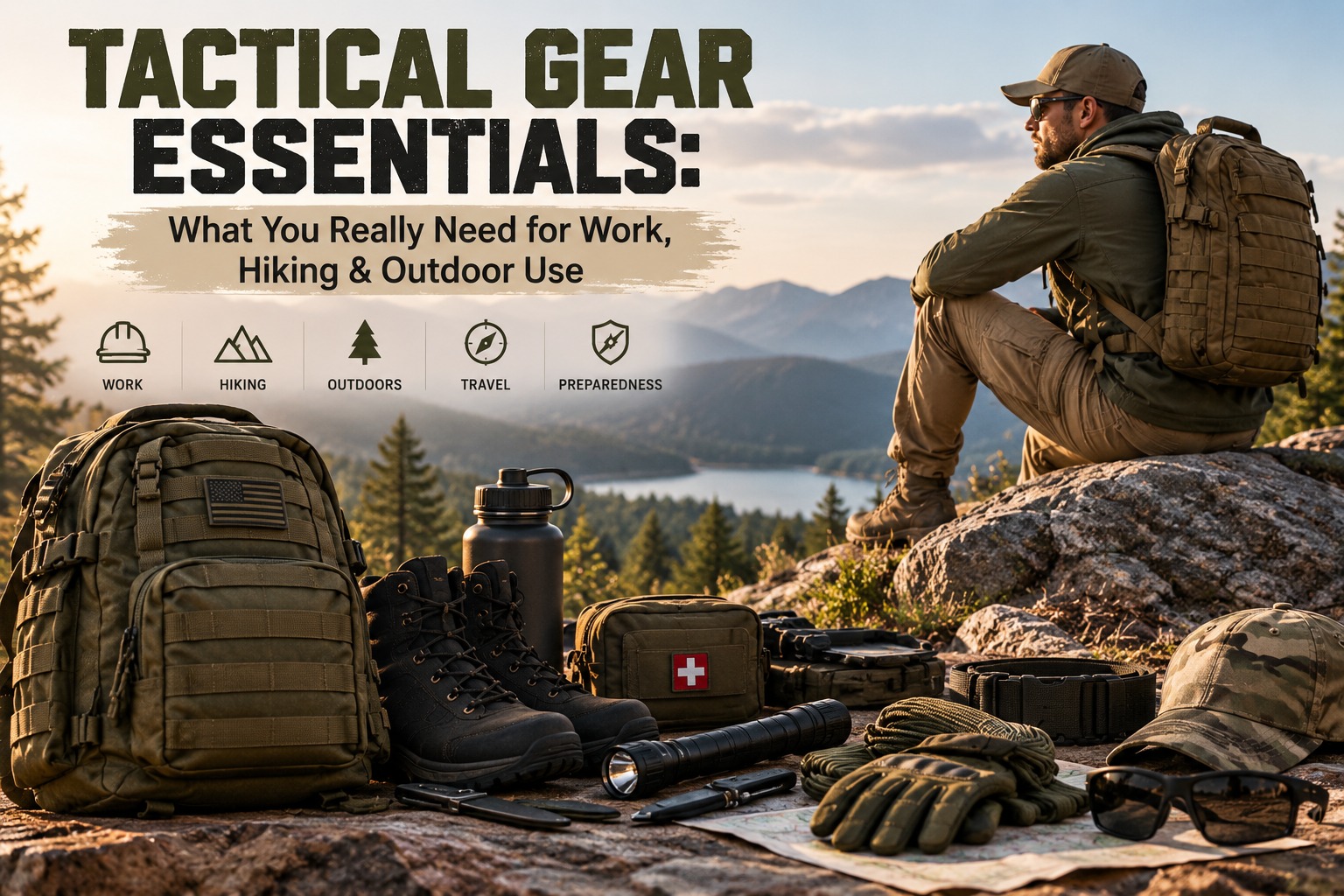
What Is Tactical Gear?
Tactical gear refers to equipment designed for durability, organization, mobility, and practical performance in demanding conditions. Although the term originated largely around military and professional applications, tactical products are now widely used for outdoor recreation, work, travel, emergency preparedness, and everyday carry.
Common examples include:
- Tactical backpacks
- MOLLE bags and pouches
- Tactical pants
- Combat and tactical boots
- Utility and tool bags
- First-aid kits
- Flashlights
- Outdoor knives and tools
- Tactical belts
- Hydration equipment
- Survival equipment
- Workwear
- Outdoor clothing
The best tactical equipment isn’t necessarily the most expensive. The goal is to choose products that provide the functionality, durability, storage, and comfort required for your particular activity.
1. Start With a Durable Tactical Backpack
A backpack is one of the most useful pieces of tactical equipment for work, hiking, camping, travel, and everyday use.
When choosing a tactical backpack for hiking and outdoor activities, consider its capacity, materials, compartments, shoulder straps, and overall construction.
Look for features such as:
- Multiple storage compartments
- Reinforced stitching
- Adjustable shoulder straps
- Padded back panels
- Water-resistant materials
- MOLLE-compatible attachment points
- Dedicated pockets for smaller equipment
- Comfortable weight distribution
A compact tactical backpack may be sufficient for everyday carry, while longer hiking trips may require a larger pack with additional storage.
The important thing is to avoid choosing a backpack simply because it has a tactical appearance. Your backpack should actually accommodate the equipment you plan to carry.
2. Choose Tactical Pants for Mobility and Storage
For outdoor work, hiking, hunting, range activities, and demanding jobs, tactical pants can provide advantages over ordinary casual pants.
A good pair of tactical pants for work and outdoor activities should offer comfortable movement while providing enough pockets to keep frequently used items accessible.
Useful features include:
- Reinforced construction
- Multiple utility pockets
- Durable fabric
- Flexible waistbands
- Reinforced knees
- Comfortable fit
- Quick-access storage
Cargo and tactical-style pants are particularly useful when you need to carry small tools, flashlights, gloves, phones, or other everyday equipment.
For people who spend long hours outdoors, comfort is just as important as durability. A pair of pants that restricts movement can become uncomfortable during hiking, climbing, kneeling, or physical work.
3. Invest in Reliable Tactical Boots
Footwear can make a major difference when you’re spending hours on your feet.
The right tactical boots for hiking, work, and outdoor use should provide a balance of traction, support, durability, and comfort.
Depending on your environment, consider:
- Waterproof or water-resistant construction
- Slip-resistant outsoles
- Ankle support
- Breathable materials
- Durable leather or synthetic uppers
- Cushioned insoles
- Strong outsole construction
For hiking, traction and comfort are particularly important. For construction and outdoor work, durability and protection may be higher priorities.
Don’t forget socks. Moisture-wicking performance socks can help improve comfort during long periods of walking or standing.
4. Add MOLLE Gear for Better Organization
One of the biggest advantages of tactical equipment is modular organization.
MOLLE gear allows compatible pouches and accessories to be attached to backpacks, belts, vests, and other equipment. This makes it easier to customize your setup according to your specific needs.
For example, a backpack can be configured with separate pouches for:
- First-aid supplies
- Flashlights
- Navigation tools
- Communication equipment
- Small tools
- Personal items
- Emergency supplies
Instead of carrying one large compartment filled with loose equipment, a modular setup allows you to organize items according to frequency of use.
For hikers and outdoor workers, this can make frequently needed equipment easier to access.
5. Carry a Reliable Flashlight
A flashlight is one of the simplest but most useful pieces of outdoor equipment.
A tactical flashlight for camping, hiking, and emergencies should ideally be compact, durable, and easy to operate.
Consider:
- Brightness
- Battery life
- Beam distance
- Water resistance
- Impact resistance
- Size and weight
- Ease of carrying
A flashlight can be useful when navigating trails after dark, working around vehicles, checking equipment, or dealing with unexpected power outages.
For everyday carry, a compact flashlight is usually more practical than a large model.
6. Keep a First-Aid Kit Ready
A first-aid kit should be part of almost every outdoor or emergency setup.
Whether you’re going camping, hiking, hunting, traveling, or working outdoors, minor injuries can happen unexpectedly.
A basic first-aid kit for hiking and outdoor emergencies may include supplies such as:
- Adhesive bandages
- Gauze
- Medical tape
- Antiseptic supplies
- Disposable gloves
- Blister treatment
- Basic wound-care supplies
The size of the kit should match your activity. A small personal kit may be appropriate for everyday carry, while larger groups and longer outdoor trips may require more comprehensive supplies.
It’s also important to regularly check expiration dates and replace used or damaged supplies.
7. Select Gear Based on Your Environment
The best tactical gear depends heavily on where and how you plan to use it.
For example, tactical gear for hiking may prioritize lightweight construction, comfortable backpacks, weather-resistant clothing, and footwear with good traction.
For outdoor work, you may need:
- Durable work pants
- Protective footwear
- Tool bags
- Work gloves
- Weather-resistant clothing
- High-visibility equipment
For camping, useful equipment can include:
- Backpacks
- Flashlights
- First-aid supplies
- Hydration equipment
- Weather-appropriate clothing
- Navigation equipment
- Multi-purpose tools
This is why there isn’t one universal tactical gear setup. Build your equipment around your actual needs rather than buying products simply because they’re marketed as tactical.
8. Build a Practical Everyday Carry Setup
You don’t need a huge backpack full of equipment to create an effective everyday-carry setup.
A practical tactical everyday carry kit can include a few compact essentials such as:
- Wallet
- Flashlight
- Phone
- Small first-aid supplies
- Pen
- Compact multitool
- Personal emergency items
The goal is convenience rather than carrying unnecessary weight.
When building an EDC setup, ask yourself which items you genuinely use or may reasonably need during your normal routine. This helps keep your load comfortable and useful.
9. Don’t Ignore Weather Protection
Outdoor conditions can change quickly, especially during hiking, camping, hunting, and outdoor work.
Your clothing system should match the weather and environment.
Depending on conditions, useful outdoor clothing can include:
- Lightweight base layers
- Insulating layers
- Waterproof outerwear
- Wind-resistant jackets
- Durable work shirts
- Tactical jackets
- Cold-weather accessories
Layering is often more practical than relying on one heavy garment because it allows you to adjust your clothing as temperatures change.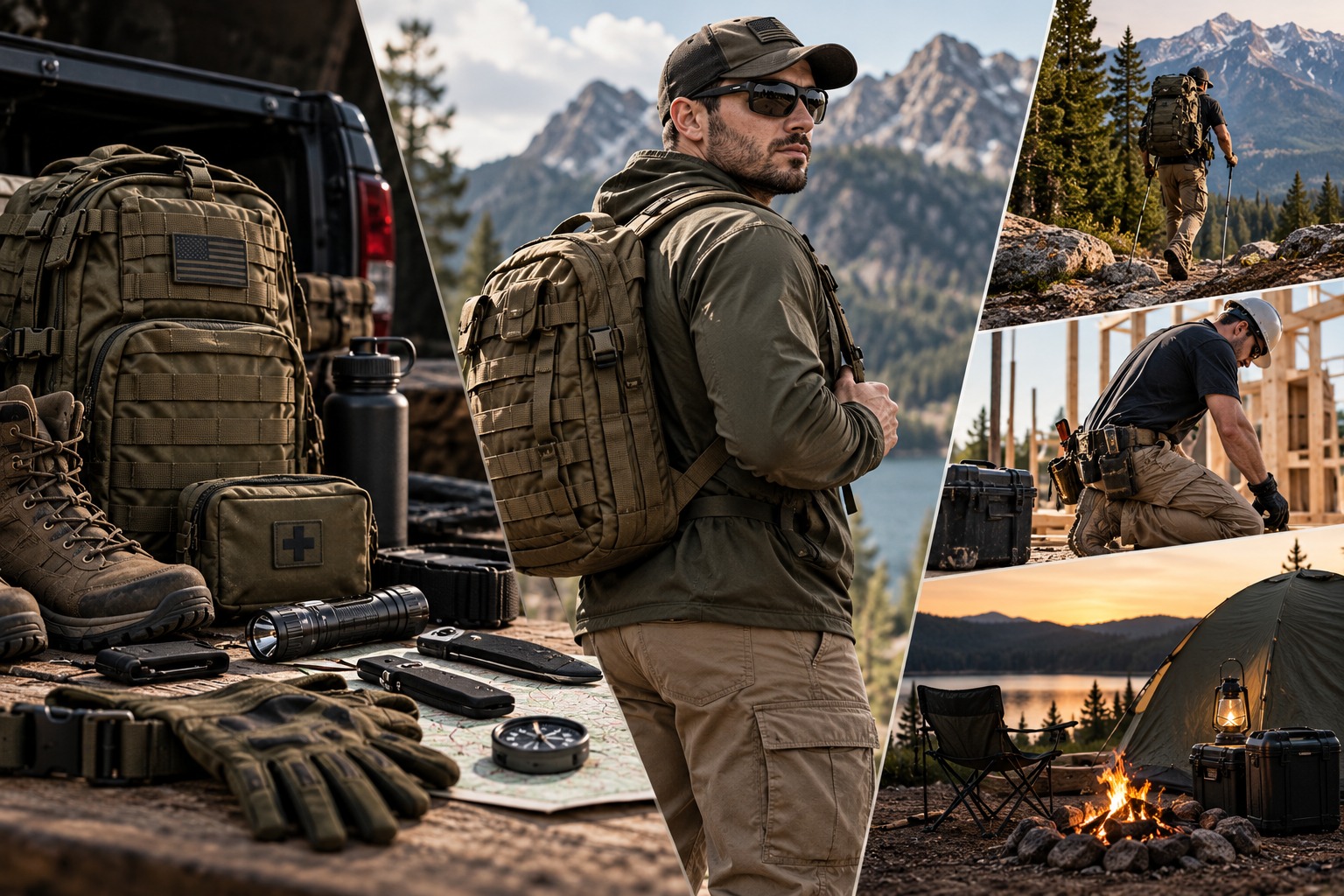
10. Organize Your Gear Before You Leave
Even high-quality equipment becomes less useful if it’s poorly organized.
Before heading out, create a simple packing system. Keep emergency equipment together, frequently used items accessible, and heavier items positioned where they won’t create unnecessary strain.
For example:
Quick-access items: flashlight, phone, first-aid supplies, navigation tools
Main compartment: clothing, food, hydration equipment, larger equipment
External pouches: small tools and accessories
This organization makes it easier to find what you need without unpacking your entire bag.
How to Choose the Best Tactical Gear
Before purchasing tactical equipment, ask these questions:
What will I use it for?
Determine whether your main purpose is hiking, camping, hunting, work, travel, emergency preparedness, or everyday carry.
How often will I use it?
If you’re using equipment every day, prioritize comfort and durability. Occasional users may not need professional-grade equipment.
What environment will I be in?
Rain, snow, heat, mud, rocky terrain, and urban environments can all require different gear.
How much weight can I comfortably carry?
More equipment isn’t always better. Excess weight can make hiking and outdoor work more tiring.
Does the gear work together?
Consider compatibility between backpacks, MOLLE pouches, belts, clothing, and other accessories when building a modular setup.
Tactical Gear Checklist for Beginners
If you’re starting from scratch, you don’t need to purchase everything at once. A basic tactical gear checklist for beginners can start with:
- Durable tactical backpack
- Tactical or durable outdoor pants
- Comfortable tactical boots
- Flashlight
- First-aid kit
- Water or hydration equipment
- Weather-appropriate clothing
- Basic outdoor tools
- MOLLE-compatible pouch
- Personal emergency supplies
From there, expand your setup according to your activities.
Why Quality Matters
Tactical equipment is often used in situations where reliability matters. A backpack may be exposed to rough terrain, boots may be worn for hours, and outdoor clothing may encounter rain, dirt, or extreme temperatures.
That’s why construction quality should be one of your primary considerations.
Look for products with durable materials, reinforced stitching, functional designs, comfortable construction, and features that actually serve a purpose.
A product doesn’t have to be overloaded with features to be useful. Simple, durable, practical equipment is often the best choice.
Final Thoughts
The best tactical gear setup isn’t about owning the largest collection of equipment. It’s about choosing the right combination of tactical clothing, backpacks, footwear, tools, outdoor equipment, and emergency essentials for the way you actually spend your time.
Whether you’re preparing for a weekend hiking trip, working outdoors, going camping, building an everyday-carry kit, or preparing for unexpected situations, start with the essentials and build from there.
For dependable tactical gear for work, hiking, camping, outdoor adventures, and everyday use, explore the selection at Army Navy USA and find equipment designed to help you stay prepared wherever your next adventure takes you.
Ready to build your gear setup? Visit Army Navy USA to explore tactical clothing, backpacks, footwear, outdoor equipment, bags, and essential gear for everyday and outdoor use.
